Gospel according to Saint Matthew 20:1-16a:
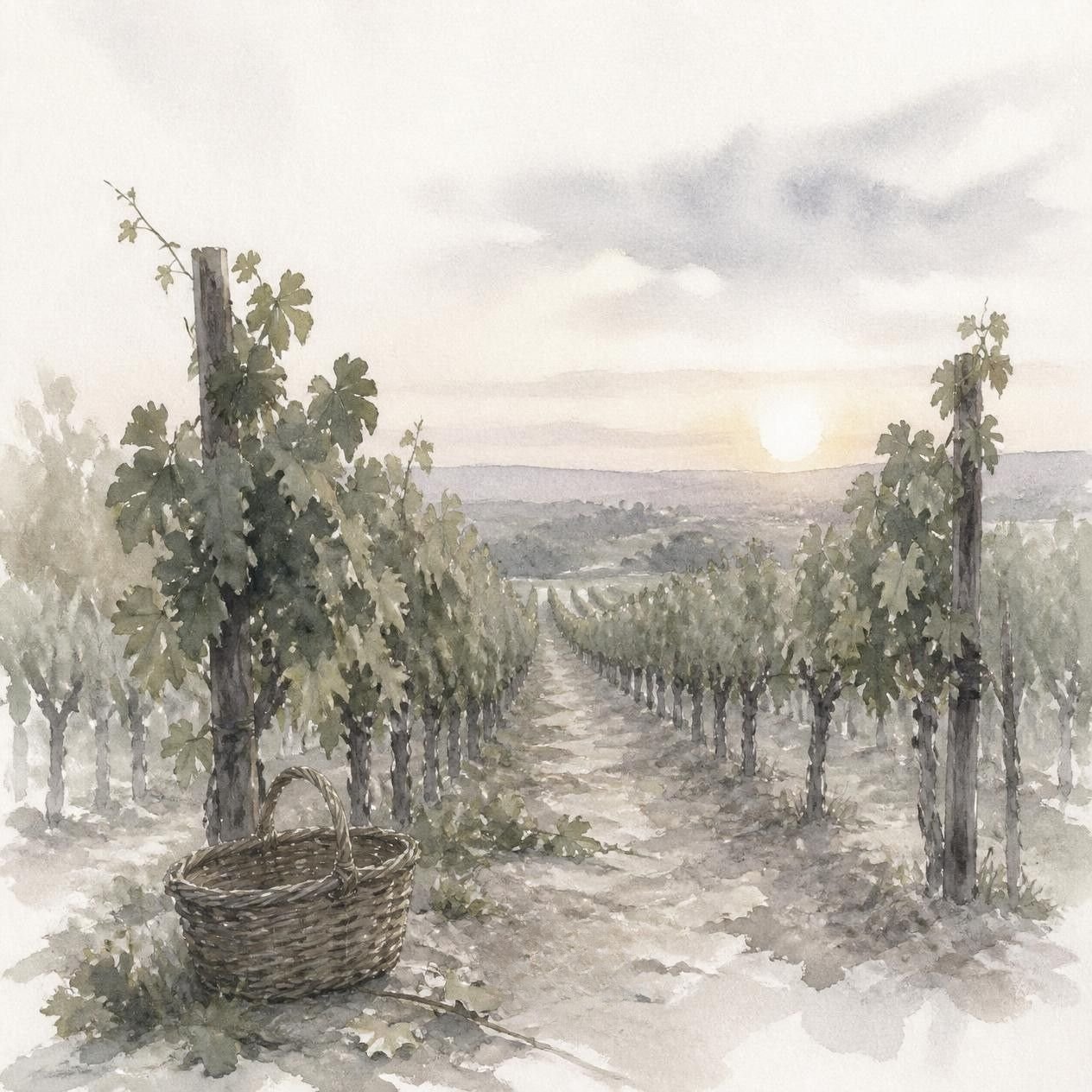
Jesus told his disciples this parable: “The kingdom of heaven is like a landowner who went out at dawn to hire laborers for his vineyard. After agreeing with them for the usual daily wage, he sent them into his vineyard.
Going out about nine o’clock, the landowner saw others standing idle in the marketplace, and he said to them, ‘You too go into my vineyard, and I will give you what is just.’ So they went off. And he went out again around noon, and around three o’clock, and did likewise. Going out about five o’clock, the landowner found others standing around, and said to them, ‘Why do you stand here idle all day?’ They answered, ‘Because no one has hired us.’ He said to them, ‘You too go into my vineyard.’
When it was evening the owner of the vineyard said to his foreman, ‘Summon the laborers and give them their pay, beginning with the last and ending with the first.’ When those who had started about five o’clock came, each received the usual daily wage. So when the first came, they thought that they would receive more, but each of them also got the usual wage. And on receiving it they grumbled against the landowner, saying, ‘These last ones worked only one hour, and you have made them equal to us, who bore the day’s burden and the heat.’ He said to one of them in reply, ‘My friend, I am not cheating you. Did you not agree with me for the usual daily wage? Take what is yours and go. What if I wish to give this last one the same as you? Or am I not free to do as I wish with my own money? Are you envious because I am generous?’ Thus, the last will be first, and the first will be last.”
No one has hired us
Luis CASASUS President of the Idente Missionaries
Rome, September 20, 2026 | XXV Sunday in Ordinary Time
Isa 55:6-9; Phil 1: 20c-24.27a; Mt 20: 1-16
In 1853, the American writer Herman Melville published a short story in a magazine that is considered one of his finest works. It is titled after the story’s protagonist, Bartleby, a copyist who, in a bustling office, becomes increasingly invisible, silent, and unneeded.
His repeated response, “I would prefer not to,” was not an act of defiance toward his superiors; rather, it was the expression of someone who felt no calling, who could not find a place where his existence had meaning. He eventually refused to leave the office, even after being fired. He was arrested as a vagrant and died of starvation in jail.
The character has been analyzed on numerous occasions and has given rise to psychological, anthropological, and sociological interpretations of all kinds, surely because Bartleby reflects so many human beings who live in a state of empty waiting, without being called upon by any meaningful bond. Thus, his identity gradually fades because there is no gaze to recognize him. Bartleby is the literary face of the day laborer who says: No one has hired me.
It is a confession of profound vulnerability, for human beings depend on being called in some way; they cannot bestow their own value upon themselves. They need to be welcomed in order to exist fully. This is the anthropology of the receptive, not the self-sufficient, self.
In today’s Gospel, “No one has hired us” is the self-description of a person who finds no place, no value, and no recognition in the social and symbolic fabric of life.
In the biblical world, being hired meant being seen, being chosen, being valued. To say “no one has hired us” is equivalent to stating that “no one has deemed us worthy,” or “our existence is not necessary to anyone.”
It is the experience of social invisibility—we might say, the wound of not being chosen—; it is the condition of the discarded subject, who does not fit into the logic of performance.
When Christ describes the day laborers waiting in the square, he is not speaking merely of an employment issue; he is telling us that waiting is fundamental to the human condition. For we live in tension toward a call, and our identity is shaped by a relationship that summons us—something we sometimes refer to in spiritual life as a “vocation.” Without a call, the human being remains suspended, formless.
Thus, we can understand the different reactions of those who do not feel called or needed by anyone—something we can all observe around us:
֍ Reactions of isolation and withdrawal, in which a person distances themselves from friends and family under the premise of “why bother if nobody cares about me.” In extreme cases, this can lead to total isolation, such as the phenomenon of hikikomori, a Japanese term describing a state in which a person shuts themselves away in their own home and does not participate in society for six months or more. This occurs with alarming frequency among young people.
Others fall into apathy, a profound lack of motivation. Activities that once brought joy no longer do so, as the individual feels that their actions have no impact on the world.
In others, a tendency toward self-invisibility is observed—adopting a submissive or passive stance in groups, trying “not to make a fuss” or draw attention, assuming that their presence is irrelevant.
֍ Defensive and compensatory reactions, such as radical hyper-independence, lead the person to adopt the philosophy that “I don’t need anyone because no one needs me.” They refuse to ask for help and build thick emotional walls to avoid being vulnerable.
Others seek refuge in achievement or work, trying to compensate for a lack of emotional connection by making themselves indispensable in the workplace or in academia. They seek external recognition to fill the inner void.
Finally, there are those who obsessively devote themselves to caring for others (or any cause, or a pet) to force a sense of being needed, often neglecting their own basic needs.
֍ Reactions of hostility, resentment, or cynicism. Sometimes, the “unnoticed” person develops a bitter attitude toward society and human relationships. They often criticize the “hypocrisy” of others as a defense mechanism to justify their own isolation.
In some cases, especially among young people, the pain of being invisible transforms into a need to be seen at any cost, leading them to resort to provocation or rebellion.
—ooOoo—
Certainly, there are people who seem to overcome this situation of not being called by creating their own purpose, forging a path through art, philosophy, a hobby, spirituality, or new projects in their lives, but these alternatives are necessarily limited and sometimes very individualistic, as happened to the younger son in the parable (Luke 15:11–32), the young man called the “prodigal,” who repented of having sought a life’s purpose in a reckless way.
Certainly, the parable the Master offers us today sheds light on the only way out of that downward spiral experienced by those who do not feel called, useful, or—above all—truly loved. Our heavenly Father is the owner of the vineyard, who never tires of going out into the marketplaces to seek day laborers. We know full well that a vineyard requires great care and constant attention, for fungi, animals, and pests are ever-present threats; Christ chose this image so that his listeners would clearly understand that the Kingdom of Heaven, here in this world, demands that we accompany every human being with care and without growing weary, so that their talents, their qualities, and the best of themselves may bear the greatest possible fruit.
Everything we call “mystical life” can be understood as the vineyard owner’s effort to help us embrace his call: it inspires mercy in us, gradually convinces us of the emptiness of our idols, and frees us from our desire for self-sufficiency.
In this way, the Holy Spirit, united with the Father and the Son, continually leads us to do something generous for our neighbor, which, at the same time, is a path to freedom, and that explains why Jesus promised the first disciples that he would make them “fishers of men”—that is, joyful instruments, capable of rescuing others from the slavery of the world, the devil, and the flesh.
This experience is so powerful that St. Paul describes it today as a dilemma: between the supreme joy of accompanying Christ in heaven and the joy of living out a spiritual fatherhood or motherhood with those whom Providence places before us, however demanding this may be.
In the First Reading, Isaiah repeats that God’s plans—His ways—are higher than ours, which means—among other things—that we cannot imagine either the greatness of divine forgiveness or the grace He has in store for “criminals and the wicked” who are willing to open their hearts. That is why today’s parable concludes by affirming that the last will be first, and the first will be last. Christ himself experienced this when he saw the faith of the Canaanite woman distressed over her daughter (Mt 15:21–28) or the Roman centurion (Mt 8:5–13) grieved by his servant’s illness—in stark contrast to some Pharisees and teachers of the Law, who did not seem to be “last,” but rather “first.”
Sometimes we see this for ourselves when we witness unexpected repentance or our own determination to accept the invitation of the owner of the vineyard to do something new—a selfless act of love, an act of forgiveness wrapped in fresh patience and unexpected empathy…
The owner of the vineyard hits the nail on the head regarding our malice: Are you going to be jealous just because I am good? A few weeks ago, I had the opportunity to listen to two sensitive, intelligent people who are highly competent in their professional work. But the view each had of the other was the same: they believed they perceived the other as an unbearable, rigid, and proud person… there was a perfect and regrettable symmetry in their perceptions. Both considered the other “impossible,” a true lost cause. In light of today’s Gospel, this reminds me of our deep tendency to be at odds with God and with our neighbor. This can be called by various names, but it manifests itself in the form of distrust, envy, and—in the lives of nobly spiritual people—what our Founder calls contraverberation, which can be understood as the deepest antagonism between soul and spirit, the most painful division within us, which the Holy Spirit uses to draw us to His side.
—ooOoo—
Of course, we are capable of spurning the Father’s mercy, as happened with the workers who had spent the whole day under the sun, or as with the older brother of the Prodigal Son: I have served you for so many years, never disobeying you, and you have never given me even a young goat to celebrate with my friends. Neither he nor those workers had enjoyed what had already been granted to them: the kingdom of heaven; they had missed the opportunity to bear witness to generosity throughout their lives—which is not the same as a single heroic gesture. Of course, we cannot compare the act of a martyr with the long life of self-sacrifice of someone who left everything for Christ and never looked back.
Today’s Gospel invites us to reflect very seriously on our apostolic life. Are we truly convinced that “the other” is sought by our heavenly Father to work in the vineyard—not merely to be forgiven for their sins? This has to do with the regrettable indifference we sometimes show—not only toward a person starving on the street, but also toward those right beside us whom we instinctively label as “obstacles” rather than “missions.”
_____________________________
In the Sacred Hearts of Jesus, Mary and Joseph,
Luis CASASUS
President