Gospel according to Saint Matthew 18:21-35:
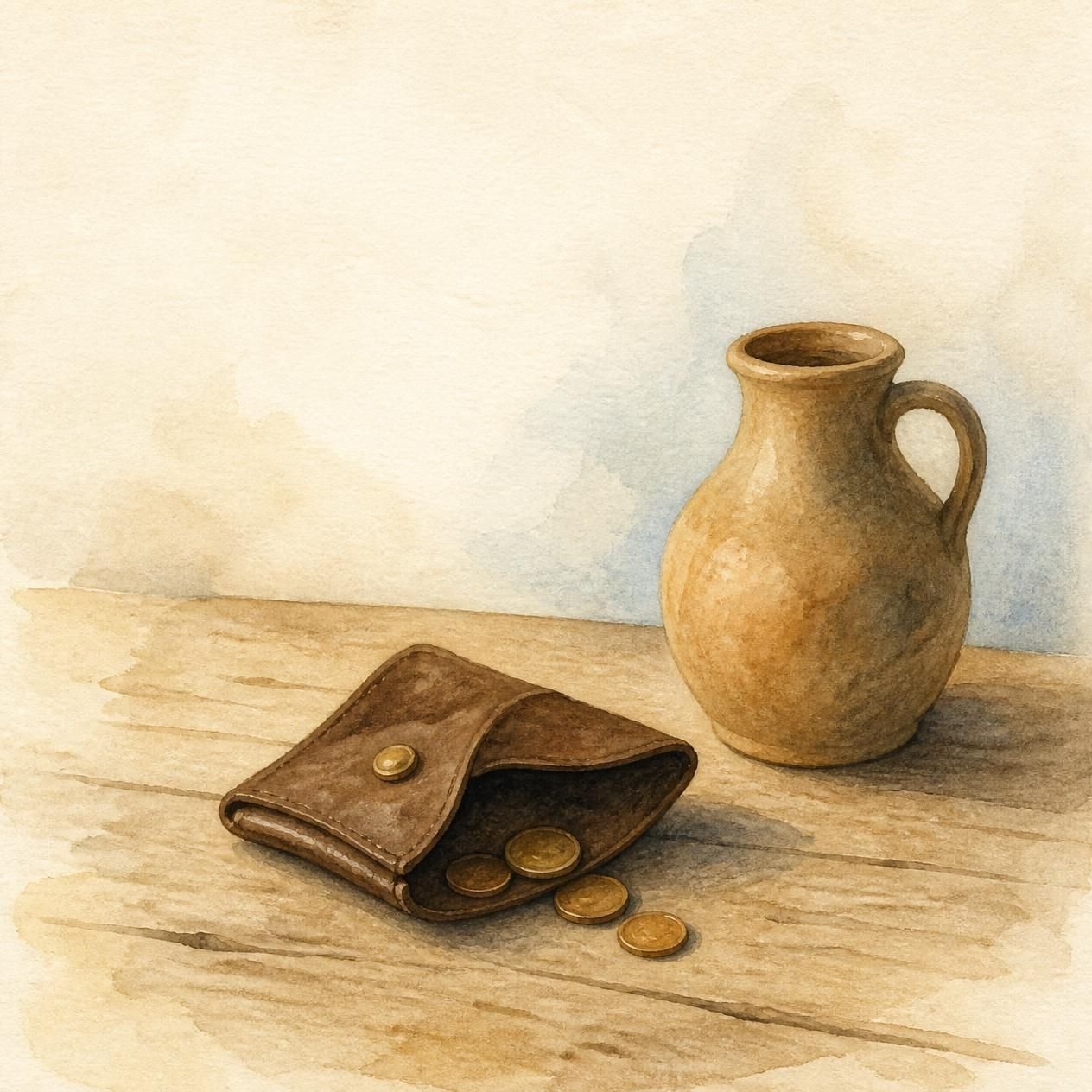
Peter approached Jesus and asked him, “Lord, if my brother sins against me, how often must I forgive? As many as seven times?” Jesus answered, “I say to you, not seven times but seventy-seven times. That is why the kingdom of heaven may be likened to a king who decided to settle accounts with his servants. When he began the accounting, a debtor was brought before him who owed him a huge amount. Since he had no way of paying it back, his master ordered him to be sold, along with his wife, his children, and all his property, in payment of the debt. At that, the servant fell down, did him homage, and said, ‘Be patient with me, and I will pay you back in full.’ Moved with compassion the master of that servant let him go and forgave him the loan.
When that servant had left, he found one of his fellow servants who owed him a much smaller amount. He seized him and started to choke him, demanding, ‘Pay back what you owe.’ Falling to his knees, his fellow servant begged him, ‘Be patient with me, and I will pay you back.’ But he refused. Instead, he had the fellow servant put in prison until he paid back the debt.
Now when his fellow servants saw what had happened, they were deeply disturbed, and went to their master and reported the whole affair. His master summoned him and said to him, ‘You wicked servant! I forgave you your entire debt because you begged me to. Should you not have had pity on your fellow servant, as I had pity on you?’ Then in anger his master handed him over to the torturers until he should pay back the whole debt. So will my heavenly Father do to you, unless each of you forgives your brother from your heart.”
Forgiving from the Heart
Luis CASASUS President of the Idente Missionaries
Rome, September 13, 2026 | XXIV Sunday in Ordinary Time
Sir 27: 33-28,9; Rom 14: 7-9; Mt 18: 21-35
For those who think that forgiveness is a weakness, a futile act, or a “practice for Christians,” it is helpful to read both real-life accounts and works of fiction, such as the novel Resurrection by Leo Tolstoy (1828–1910).
In this story, forgiveness unleashes profound effects. It is perhaps the work in which this Russian author explores most deeply how forgiveness can awaken a dormant conscience, right a wrong, and radically transform a life.
The story is inspired by a real-life case that a lawyer friend of Tolstoy’s told him about with great emotion.
The protagonist is Dimitri Nekhlyudov, a nobleman who discovers that the woman he seduced and abandoned years ago—Katyusha Maslova—has fallen from grace, has been forced into a life of prostitution, and is being unjustly tried. Upon seeing her, Nekhlyudov experiences a moral upheaval: he realizes that he is responsible for her downfall.
What is striking is that Katiusha, despite the harm she has suffered, does not shut herself off in resentment. Her forgiveness—first silent and then explicit—acts as a force that awakens in Nekhlyudov a desire for total transformation.
Nekhlyudov abandons his comfortable life and decides to make amends, even renouncing his privileges. In a powerful way, Katiusha’s forgiveness breaks the spiral of self-contempt and opens up a new life for him. Likewise, by forgiving, Katiusha ceases to be defined by her past and regains her dignity.
Tolstoy convincingly shows that forgiveness is a force that “resurrects” a person, bringing them back from moral death. This brilliant novelist does not present forgiveness as a sentimental gesture, but as an energy that reorganizes one’s entire life. Katiusha’s forgiveness not only frees Nekhlyudov—it transforms him into a new man, capable of loving, serving, and making amends; thus, we see clearly that forgiveness is always creative; it opens paths that did not exist before.
—ooOoo—
Even if we are morally dishonest and ungrateful, we must acknowledge that we have been forgiven many times by God and by others.
Personally, I remember some of my sins—I don’t know if they can be classified as very minor or very serious—but they are the kind that “would deserve” a complete loss of God’s trust. Thank goodness I don’t hold a seat in the Holy Trinity… Nor should I forget the countless times I have been forgiven by the people who have loved me, starting with my parents. As happened to Nekhlyudov, I have experienced many times that receiving forgiveness opens new paths, just as Christ sought to teach in Capernaum to those who brought the paralytic to him so that he might walk. The first concern the Master took into account was not that person’s obvious disability, but the burden of his sins, which undoubtedly prevented him from making the most of himself, even while in that difficult physical situation.
Christ does not write a treatise on forgiveness; rather, he simply tells Peter that he must forgive more than he imagines, or believes himself capable of forgiving (Mt 9:1–8).
Christ’s plea— Father, forgive them, for they do not know what they are doing—affirms that many harmful actions stem from an inner blindness, not from fully conscious wickedness.
In reality, most cruel acts stem from a heart that cannot see. Even the most inhumane acts come from a person who has been wounded, distorted, and darkened. Such a person, on many occasions, when receiving undeserved forgiveness, understands for the first time the evil they have done and becomes capable of choosing the good.
In truth, we often do not know what we are doing, because we act driven by hatred, frustration, and despair. Our hearts are blind.
—ooOoo—
The forgiveness that Christ asks us to practice is often contrasted with the famous Law of Retaliation, which existed in various forms, the most famous being the Code of Hammurabi, king of Babylon, written 18 centuries before our Era. However, one of the main positive aspects of the Law of Retaliation (famous for the phrase “an eye for an eye, a tooth for a tooth”) was that it placed a limit on excessive vengeance in ancient times. Although it may seem like a brutal punishment today, in its historical context it served to establish the so-called principle of proportionality in justice.
Before its emergence, if a member of one tribe injured someone from another, the response was often all-out war or the massacre of entire families. This put a stop to the escalation, preventing a minor offense from triggering endless conflicts between clans. Furthermore, it ensured that the punishment imposed could not exceed the original harm suffered and introduced a fixed standard for punishment, regardless of the victim’s anger.
Interestingly, we can express the exhortation Jesus gives us today by drawing on the experience used in the Law of Retaliation: Your fellow citizen did this to you; therefore, do the same to him. Christ tells us something deeper and more essential today: The very forgiveness that God has bestowed upon you, pour it out upon the one who offended you.
This drawing on personal experience is essential and necessary for true forgiveness: If no one has ever loved me, how can I know how to love others? If I have never been forgiven, how can I manage to forgive when I feel offended?
Jesus concludes his parable of the unforgiving servant today with a harsh ending: That person is thrown into prison and subjected to torture. Of course, his listeners, accustomed to the language of the Old Testament, would have grasped the message well. Perhaps for us it requires a translation: If you do not forgive, you will never be able to participate in the mission of the kingdom; you have excluded yourself.
This may still seem like a punishment or a condemnation to us, but above all, it is a call to become aware, to awaken to the reality of the forgiveness I have received directly from God and through my neighbor. Like the unmerciful servant, I have no concept of what ten thousand talents mean… Jesus uses an intentionally exaggerated figure to highlight that this servant was not moved by the mercy he had received, while his fellow servants were deeply saddened by his cruelty.
Are we sensitive to the forgiveness we have received? Usually not. For several reasons:
– Sometimes forgiveness refers to opportunities to do good that I have disregarded, toward which I have been indifferent or blind. However, forgiveness is evident in the fact that my faith is not taken away from me. I cannot take this for granted; perhaps I have grown accustomed to it and assume that my lack of sensitivity deserves constant and unconditional understanding.
– At other times, it involves ongoing forgiveness for my blunders (always the same ones) in the way I carry out my mission (self-centered, arrogant, thoughtless…) and certainly I am no longer sensitive to the negative effects of my “style”, which does not change and places a heavy demand on the patience and understanding of my neighbor.
– Even worse, I downplay my most serious mistakes, thinking only that I must “recover from my bad attitude,” without looking at my victims, without being able to do as Zacchaeus did—the chief tax collector in the city of Jericho—who returned more than what he had stolen or swindled. That should always be an immediate consequence of forgiveness.
The forgiveness Jesus refers to today is “forgiving from the heart,” not simply forgetting or refraining from revenge. Forgiving from the heart means reaching out to the one who has offended me or done wrong. I can do this if I have truly experienced the power of forgiveness—its ability to open new paths, as we said before. Jesus “reached out” to Judas Iscariot, who was stealing from the community, by entrusting him with the group’s finances. In this way, he shows us the path to follow in imitating him through forgiveness:
֍ Jesus, knowing what was in Judas’s heart and aware of his weaknesses, did not publicly expose him to the other disciples, nor did he remove him from his position. On the contrary, by leaving him in charge of the group’s finances, he granted him the highest level of human trust within the community. This was not negligence; it was an act of extreme love. Jesus “reached out” to his wound (greed or attachment to money) by confronting him with it, giving him until the very last moment the opportunity to reconsider, repent, and overcome his weakness. His weapon was to show him disproportionate generosity.
He did something very similar with Peter, who did know how to take advantage of and embrace the forgiveness he received. On the shores of the Sea of Tiberias after the Resurrection, Jesus not only absolves Peter of the guilt of having denied him three times during the Passion; he goes much further. For Jesus, forgiving from the heart means completely restoring the other person’s dignity.
According to the world’s logic, when someone betrays such great trust as Peter did, forgiveness is usually accompanied by a trial period, a demotion, or a rebuke. Jesus does not impose a humiliating penance on him nor does he cast him out of the group. Jesus’ forgiveness consists in restoring to Peter, intact, the leadership he had promised him (Mt 16:18).
֍ This approach by Jesus is never coercive or manipulative. Giving Judas the money bag demonstrates that God risks his own mission by trusting in human freedom. Jesus did not tie Judas’ hands to prevent him from stealing, but rather appealed to his conscience.
֍ Finally, Christ acts in a manner entirely consistent with his own teaching.
In the same Gospel, Jesus teaches us to love our enemies and to forgive without limits. If Jesus had marginalized Judas or kept him under strict surveillance because of his petty, everyday thefts, he would have contradicted his own message of mercy. The “forgiveness from the heart” that he demanded of Peter translates here into not treating Judas according to his current sins, but according to his dignity and his potential for conversion.
________________
Forgiveness is also a journey, something we must learn. We could use Jesus’ own words to say: Whoever does not forgive the little will not forgive the much either. The clumsiness, forgetfulness, and lack of sensitivity of those around us require “forgiving from the heart”—a forgiveness that goes beyond simply overlooking mistakes; it must include working with our brother or sister to make amends for their errors and to learn how to avoid them in the future.
Only prayer can tell me how to do this in each situation.
_____________________________
In the Sacred Hearts of Jesus, Mary and Joseph,
Luis CASASUS
President