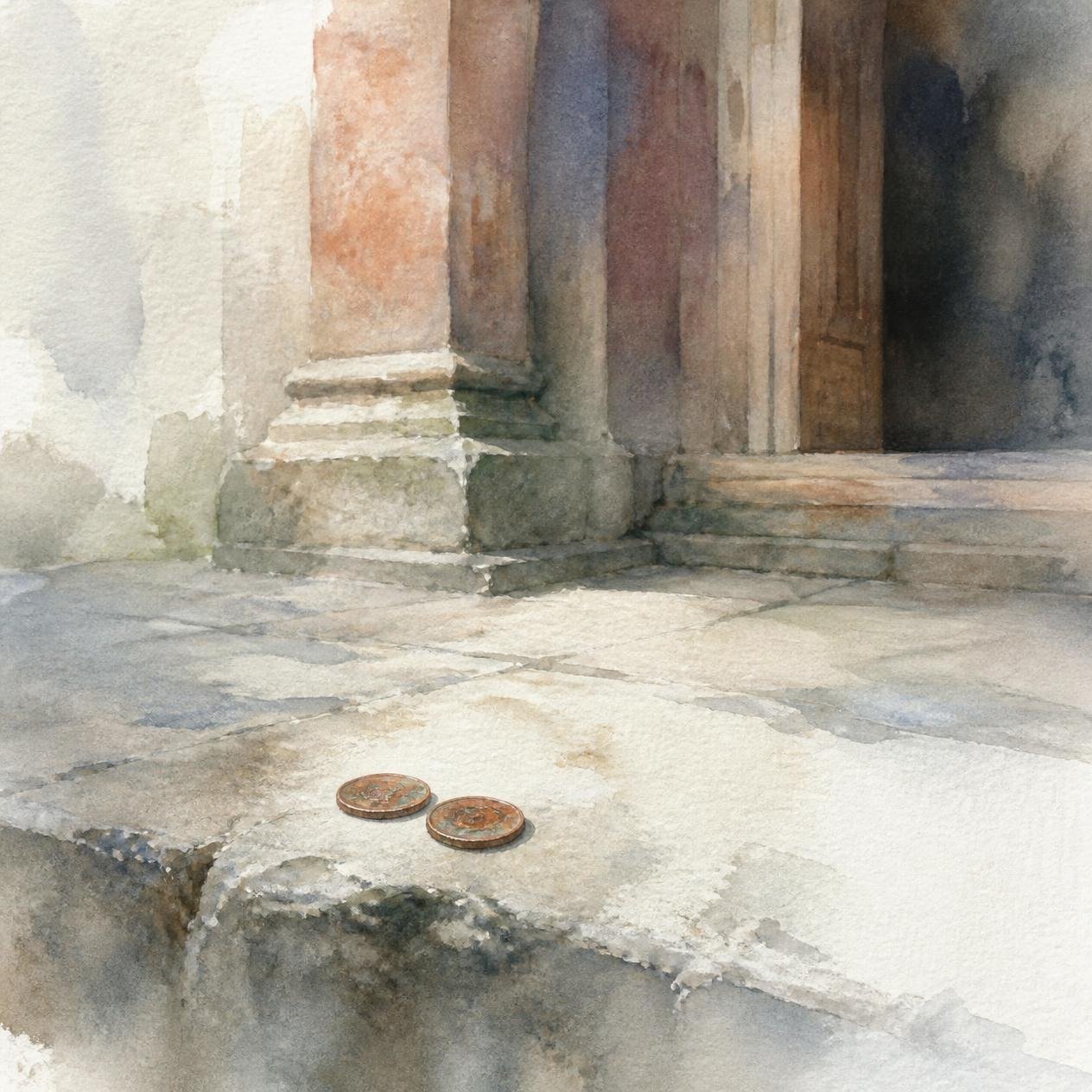
Gospel according to Saint Matthew 22:34-40:
When the Pharisees heard that Jesus had silenced the Sadducees, they gathered together, and one of them, a scholar of the law tested him by asking, “Teacher, which commandment in the law is the greatest?” He said to him, “You shall love the Lord, your God, with all your heart, with all your soul, and with all your mind. This is the greatest and the first commandment. The second is like it: You shall love your neighbor as yourself. The whole law and the prophets depend on these two commandments.”
<h1 style=”font-weight: 400;”><strong>Idols for Every Taste</strong></h1>
<p style=”font-weight: 400;”><strong>Luis CASASUS President of the Idente Missionaries</strong></p>
<p style=”font-weight: 400;”>Rome, October 25, 2026 | XXX Sunday in Ordinary Time</p>
<pre style=”font-weight: 400;”>Exod 22: 20-26; 1Thess 1: 5c-10; Mt 22: 34-40</pre>
<p style=”font-weight: 400;”>Christ’s response to the Pharisee’s wicked question does not seem very original, since it repeats a phrase from Deuteronomy, which was written centuries earlier: <em>You shall worship the Lord your God and serve Him (…) you shall not follow other gods</em> (Deut. 6:13–14).</p>
<p style=”font-weight: 400;”>However, the answer left those teachers of the Law speechless. Perhaps because Jesus included “the second commandment,” which made the Pharisees feel accused, since their hypocrisy and legalism far outweighed the scant mercy they showed toward others.</p>
<p style=”font-weight: 400;”>If we read the parallel passage in the Gospel of Mark, specifically in (Mark 12:32–34), it is noted that the scribe did not argue with him, but—disarmed and feigning agreement—praised Jesus’ wisdom, saying: <em>Well said, Teacher; you have spoken the truth</em>…, upon which Jesus acknowledged that he was not far from the kingdom of God. Of course, it seems he did not tell him that he was “within the kingdom of God,” but rather subtly accused him of not having entered it—of being one of the guests at the Banquet who chose instead to devote themselves to their comfortable and privileged lifestyle.</p>
<p style=”font-weight: 400;”>In reality, the idea of an “idol” or “other gods” explains almost any human behavior, no matter how trivial or neutral it may seem.</p>
<p style=”font-weight: 400;”>Sometimes, the idol “takes hold” of a group or an entire society. This is masterfully recounted by Nobel Prize winner Pearl S. Buck in her novel <em>Other Gods</em> (1940).</p>
<p style=”font-weight: 400;”>The story begins in the Himalayas. Bert, a young, rough-hewn but athletic mechanic from the countryside, takes part in a mountaineering expedition. Due to a series of accidents that sideline the rest of the team, Bert becomes the only man to reach the summit of an unexplored mountain called Therat.</p>
<p style=”font-weight: 400;”>Upon his return home, the media and the general public immediately transform him into an absolute national hero, a living deity of popular culture and sports. Shortly thereafter, Bert meets and marries Kit, a cultured, intelligent woman of profound sensitivity who comes from an elite family.</p>
<p style=”font-weight: 400;”>At its core, the novel explores the painful reality of married life behind closed doors. Kit quickly discovers the harsh truth: the man whom millions of people adore as a demigod is, in private, a beautiful puppet—an empty, selfish, immature man practically devoid of intellect. Bert possesses none of the heroic, ethical, or romantic virtues that the press and the masses have falsely attributed to him.</p>
<p style=”font-weight: 400;”>Kit finds herself trapped in a devastating moral dilemma: even though her initial love turns to disappointment; she is forced to become her husband’s invisible pillar of support. She knows she cannot reveal Bert’s true personality because it would shatter the illusion of an entire country. Thus, she becomes part of a vast commercial and social machine dedicated to protecting and perpetuating the lie of her false hero.</p>
<p style=”font-weight: 400;”>The Gospel and the New Testament texts teach that we are compelled to choose between idols and God as a consequence of our spiritual nature and freedom of choice. In biblical theology, human beings were created to give glory to God, but due to a propensity for sin, the human heart tends to seek substitutes (idols) if it decides to turn away from its Creator.</p>
<p style=”font-weight: 400;”>The most important Gospel passage regarding this mandatory choice is found in Jesus’ words in the Sermon on the Mount: <em>No one can serve two masters; for either he will hate the one and love the other, or he will be devoted to the one and despise the other. You cannot serve both God and wealth</em> (Matt. 6:24).</p>
<p style=”font-weight: 400;”>From the Gospel’s perspective, human nature is inherently <em>worshipful</em>. It does not matter whether a person calls themselves a <em>believer</em>, an <em>atheist</em>, or an <em>agnostic</em>. If a person does not worship the true God, they will inevitably end up worshiping or prioritizing created realities (money, power, the ego, status), which function as modern idols. We are always worshiping something.</p>
<p style=”font-weight: 400;”>The New Testament epistles explore this dilemma in depth; for example, Paul (Rom 1:21–25) argues that humanity, having known God, did not glorify Him as God, but became vain in their reasoning, exchanging “<em>the glory of the incorruptible God for an image resembling a corruptible man</em>” and exchanging “<em>the truth of God for a lie, honoring and worshiping the creatures rather than the Creator</em>.”</p>
<p style=”font-weight: 400;”>St. John, too, at the end of his first epistle (5:21), issues a direct warning that alerts us to this tendency: <em>Little children, keep yourselves from idols</em>.</p>
<p style=”font-weight: 400;”>The “obligation” to choose does not stem from an arbitrary external imposition, but from the fact that the human heart cannot remain in a spiritual void; the nature of our will leads us to place ourselves under God’s lordship or under the dominion of whatever we have turned into an idol. In this context, worship is not limited to kneeling before a wooden statue or attending a place of worship; it is defined as that which occupies the center of my life, dictates my decisions, and is the object of my greatest trust or hope for happiness.</p>
<p style=”font-weight: 400;”>If someone believes they have found nothing to believe in (no god, ideology, money, or ambition), experience shows that they may end up in three kinds of situations:</p>
<p style=”font-weight: 400;”>֍ <strong><em>The ego becomes the absolute idol</em></strong>. When a person rejects God and feels that nothing material or intellectual fulfills them, the spiritual void turns inward. The individual becomes his or her own god, his or her own moral rule, and his or her own supreme authority. In the Bible, original sin (Gen. 3:5: <em>when you eat from that tree, your eyes will be opened and you will become like God</em>) is precisely this: radical autonomy, where the “I” becomes the center of the universe. But this does not happen just once in a lifetime; rather, it is a constant inclination of our ego, which—of course—we cannot eliminate.</p>
<p style=”font-weight: 400;”>This explains why our Founder, Fernando Rielo, in the Examination of Perfection, places at the end of prayer—as <strong><em>the deepest prayerful effort—what he calls “the abnegation of the ego”</em></strong>, which is possible only if we embrace the grace that God offers us.</p>
<p style=”font-weight: 400;”>Surely, the Pharisees who questioned Jesus with the desire to trap him found themselves in this situation and sought to extinguish the light that exposed their hypocrisy and their desire for self-sufficiency and admiration. Often, a person does not realize the power of that idol and appears to be hypnotized by its hold.</p>
<p style=”font-weight: 400;”>֍ <strong><em>This emptiness is experienced as anguish or despair</em></strong>. If a person truly manages to empty themselves of all external and intellectual attachments but does not turn to God, the saints and many thinkers (such as Søren Kierkegaard or Saint Augustine) affirm that they will experience a profound existential crisis.</p>
<p style=”font-weight: 400;”>St. Augustine summed it up in his <em>Confessions</em>: <em>You have made us for Yourself, O Lord, and our hearts are restless until they rest in You</em>. Without the true Absolute (God Himself) and without false substitutes (idols) that act as anesthetics, human beings experience meaninglessness, apathy, or existential despair.</p>
<p style=”font-weight: 400;”>A stark and profound example of this existential crisis is found in the Book of Ecclesiastes (Qoheleth). The author sets out to examine human life stripped of God’s active presence. To describe this perspective, he uses the phrase “under the sun,” that is, purely earthly reality, without any connection to the Absolute.</p>
<p style=”font-weight: 400;”>Throughout the book, the protagonist decides to systematically test and discard all false substitutes (idols) to see if they can fill his life, and upon discovering that none of them serve as an anesthetic, he falls into utter existential despair:</p>
<p style=”font-weight: 400;”>Thus, he discards the idol of pleasure and material possessions: <em>I said in my heart, “Come now, I will test you with pleasure…” Then I looked at all the works my hands had done… and behold, all was vanity and a striving after wind</em> (Ecclesiastes 2:1–11).</p>
<p style=”font-weight: 400;”>He also rejects the idol of intellect and human wisdom: <em>And I applied my heart to understanding wisdom… I realized that even this was a burden on the spirit. For in much wisdom there is much vexation; and whoever increases knowledge increases sorrow</em> (Ecclesiastes 1:17–18).</p>
<p style=”font-weight: 400;”>Finally, it rejects the idol of work and success: <em>I came to hate life… I also came to hate all my labor that I had done under the sun, which I will have to leave to another who will come after me</em> (Ecclesiastes 2:17–18).</p>
<p style=”font-weight: 400;”>The result is the harsh experience of meaninglessness. Having been left without the true God in his daily life (“under the sun”) and having stripped away the masks of all idols (money, sex, power, fame, knowledge), the author experiences radical apathy and despair. The Hebrew word he uses more than 35 times is <em>Hebel</em>, which is translated as “vanity” but literally means “smoke,” “vapor,” or “a breath.” It represents the frustration of someone trying to catch the wind: life becomes absurd, repetitive, and empty. His conclusion in the face of an existence without the Absolute and without any form of escapism is devastating: <em>Vanity of vanities, said the Preacher; vanity of vanities, all is vanity</em> (Ecclesiastes 1:2).</p>
<p style=”font-weight: 400;”>֍ <strong><em>The danger of the “return of worse evils”</em></strong>. Jesus himself addressed the psychology of spiritual emptiness and neutrality in a parable in the Gospel of Matthew (12:43–45). In it, He explains that when an unclean spirit leaves a person, it wanders through desolate places and, finding no rest, returns to its former home. Finding it “empty, swept clean, and adorned,” it goes and brings seven other spirits worse than itself, and they take up residence there.</p>
<p style=”font-weight: 400;”>—ooOoo—</p>
<p style=”font-weight: 400;”>The message of this passage is clear: neutrality or permanent spiritual emptiness do not exist. If the human heart remains clean and “empty” but is not filled with God, it will end up being occupied by even more destructive forces or “idols” (addictions, nihilism, cynicism, etc.).</p>
<p style=”font-weight: 400;”>A brilliant example from literature that demonstrates humanity’s need to worship idols—if God is not worshiped—is William Golding’s famous novel <em>Lord of the Flies</em> (1954).</p>
<p style=”font-weight: 400;”>In this work, a group of British children becomes stranded on a deserted island without adult supervision. As their civilized social structure crumbles, an irrational fear of a supposed “beast” inhabiting the island takes hold of them. To appease this terror and make sense of their chaotic new surroundings, the group—led by one of them named Jack—creates a physical idol: the head of a wild boar impaled on a stake, which they call “The Lord of the Flies.”</p>
<p style=”font-weight: 400;”>The characters turn to this idol for various psychological and social reasons.</p>
<p style=”font-weight: 400;”>One of these is the attempt to <strong><em>channel their fear</em></strong>. Unable to understand or control their inner fears and isolation, they personify the danger in a physical object to which they pay homage. Second, they desperately seek <strong><em>social cohesion</em></strong>. The idol and the violent rituals that develop around it serve as the “glue” that binds the savage tribe together, creating a common identity based on shared worship. And, no less important, there is the need to <strong><em>justify the power they crave</em></strong>. In this case, Jack uses the figure of the idol to consolidate his control over the other boys, legitimizing his tyranny through superstition. This is reminiscent of the attitude of many powerful figures and politicians—whom Golding surely intended to criticize—and he wrote <em>Lord of the Flies</em> as a political and social allegory that refutes the idea that humanity is inherently good.</p>
<p style=”font-weight: 400;”>Let us pray with faith and be consistent in our prayer, so that what Paul says today in his letter to the Thessalonians may be manifested in us and in our communities:</p>
<p style=”font-weight: 400;”><em>By turning away from idols, you have returned to God to serve the living and true God and to wait for the return of his Son Jesus from heaven, whom he raised from the dead and who delivers us from the coming wrath</em>.</p>
<p style=”font-weight: 400;”>_____________________________</p>
<p style=”font-weight: 400;”>In the Sacred Hearts of Jesus, Mary and Joseph,</p>
<p style=”font-weight: 400;”>Luis CASASUS</p>
<p style=”font-weight: 400;”>President</p>