Gospel according to Saint Matthew 21:28-32:
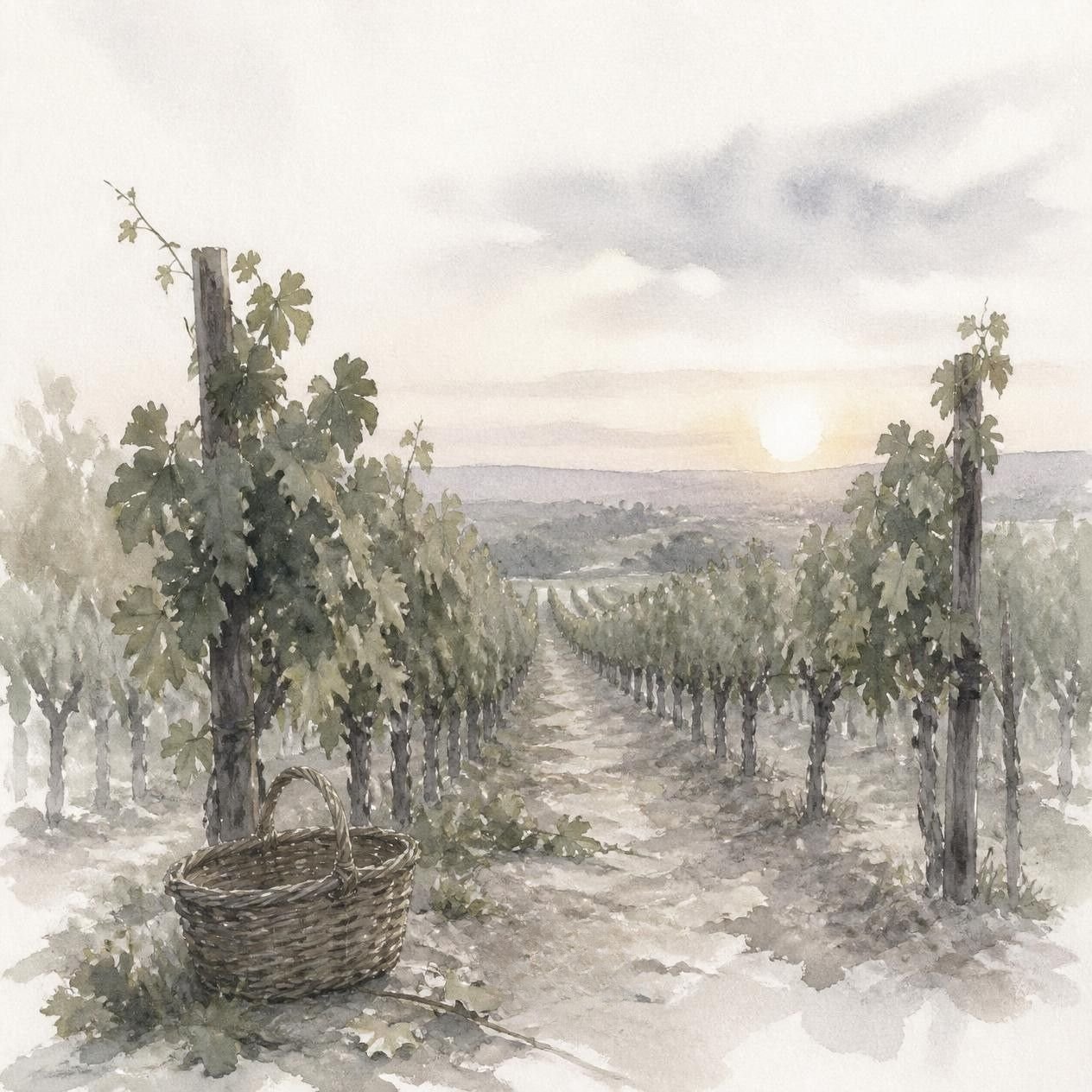
Jesus said to the chief priests and elders of the people: “What is your opinion? A man had two sons. He came to the first and said, ‘Son, go out and work in the vineyard today.’ He said in reply, ‘I will not,’ but afterwards changed his mind and went. The man came to the other son and gave the same order. He said in reply, ‘Yes, sir, ‘but did not go.
Which of the two did his father’s will?” They answered, “The first.” Jesus said to them, “Amen, I say to you, tax collectors and prostitutes are entering the kingdom of God before you. When John came to you in the way of righteousness, you did not believe him; but tax collectors and prostitutes did. Yet even when you saw that, you did not later change your minds and believe him.”
We are not prisoners of our sins
Luis CASASUS President of the Idente Missionaries
Rome, September 27, 2026 | XXVI Sunday in Ordinary Time
Ezek 18: 25-28; Phil 2: 1-11; Mt 21: 28-32
A man left his brand-new bicycle unattended at the market while he was shopping and walked home. The next morning, he remembered the bicycle he had left there and rushed back to the market, thinking it had been stolen, since the place was a common hangout for thugs. But the bicycle was exactly where he had left it. Overjoyed, the man immediately went to a nearby parish church to thank God for keeping it safe, but as he was leaving the church, he realized that a parishioner had stolen the bicycle he’d left leaning against the baptismal font.
In today’s parable, Jesus speaks of a father and his two sons. Of course, contrary to what one might imagine with our clumsy and simplistic logic, there is no third son who says to the father, “Yes, I’ll go work in the vineyard” and immediately sets to digging. That’s not how it is; the parable is addressed to human beings like you and me—like the tax collectors, the prostitutes, the teachers of the Law, the first disciples… all perfectly capable of doing good and evil, and each with their own mediocrity and inconsistencies.
What matters is the final conclusion: Even so, with a heart that tends to be divided, we can do the Father’s will.
The parable is a true gem of teaching and pedagogy. First of all, Jesus does not begin by accusing the corrupt teachers of the Law, but rather makes them see themselves portrayed in the second son, the one who is hypocritical toward his father. Furthermore, let us note that Christ does not tell his wayward listeners that they “will not enter the Kingdom of Heaven,” but rather that they would come after the public sinners and the hated tax collectors. This means that God the Father will continue to forgive us until the very end, because forgiveness is his most powerful tool for drawing us to Him. This explains why Jesus preferred to reach out to lepers, outcasts, and the sick—those despised by everyone: naturally, they were more willing to embrace the Gospel than those who considered themselves righteous.
Of course, the parable is not moralistic; it is a diagnosis of the human heart and its mechanisms of self-deception, conversion, and resistance.
All of us are constantly in danger of coming up with excuses, apologies, pretexts, and justifications to avoid facing the painful reality that we are neither perfect nor better than others (who could compare? Who could measure it?). Accepting the reality of who we truly are can be very painful, as it means dismantling the unrealistic “construct” we have created of ourselves. Instead of adopting the Socratic maxim “Know thyself” as our motto, it is more comfortable to follow the unspoken motto “Do not know thyself.” This brings to mind the old fable by Aesop, who lived in Ancient Greece around the 6th century B.C.:
Once upon a time, a fox walked past a vineyard where some large, beautiful grapes had just ripened, and she felt a terrible urge to taste them. They looked truly very sweet.
The fox stretched, but could not reach the cluster because it was too high. She tried to jump, but even that was not enough. She tried to climb the fence, but she was already old and the boards kept breaking. The fox jumped and climbed in every way imaginable, but always ended up back on the ground.
The fox, now completely exhausted, began to pant as if she had just run a marathon. Her tongue hung out of her mouth as she gasped for breath, her fur standing on end, but it was all in vain. Finally, the fox lowered her tail and walked away without having achieved anything.
Well, what does it matter? the fox said to herself. Those grapes were probably very sour anyway. Even if I’d managed to climb up, I would not have enjoyed them.
But the fox was wrong. The grapes were sweet. Deep down, she knew it very well, but she criticized them on purpose so she would not feel bad about not having reached them.
—ooOoo—
A cinematographic analogy for this parable is the famous film The Mission (1986), which depicts the struggle among the absolute monarchies of Europe for power and influence in South America in the 18th century. It is not a simple analogy: the film dramatically portrays the tension between saying and doing, between declared identity and transformed identity, between verbal obedience and true conversion.
The character of Rodrigo Mendoza—a mercenary, slave trader, violent, and proud man—represents the son who says “no.” His life is a practical denial of the Father’s will. He represents the human being whose first existential word is rejection, resistance, and closed-off self-assertion. But, like the first son in the parable, he is not fixed in his initial “no.”
Mendoza has killed his brother in a fit of rage. Then, his identity as a mercenary, slave trader, and violent man crumbles. He seeks atonement, and Father Gabriel proposes a penance that is not a punishment, but a path of truth: to tie to his body an enormous burden containing his armor, his sword, his instruments of slavery—everything that symbolizes his old self.
The rope tightens around his chest, and every step is an act of voluntary humiliation. A group of Jesuits and Guaraní people make its way through the humid, steep, almost vertical jungle. Mendoza trails behind, dragging the bundle that snags on roots, rocks, and tree trunks. In this long scene, there are no speeches—only effort, sweat, clumsiness, and falls.
The Guaraní watch without judging; they do not humiliate him, but simply look at him with a mixture of bewilderment and compassion. They, who were enslaved by Mendoza, are now witnesses to his descent into the depths of his own soul.
At one point during the climb, the load gets caught on a rock. Mendoza tries to free it, but he cannot. He becomes desperate, and that is when the penance reveals its truth: he is not capable of saving himself alone.
One of the Guaraní approaches, looks at Mendoza, takes a knife, and cuts the rope. The armor falls over the cliff; Mendoza is set free and collapses, weeping. This gesture is grace: liberation that comes from another, not from one’s own effort.
The scene of penance, in which Mendoza drags his armor through the jungle, is a very powerful visual metanoia. That act is his “going to the vineyard”—it is not a verbal gesture, but a physical one; it is not a speech, but concrete obedience.
But the similarity to the parable does not end there. The “religiously correct,” the diplomats, the bureaucrats, the representatives of power, and some members of the powerful ecclesiastical hierarchy are excluded from the truth of the Kingdom. They do not protect the Guaraní people and do not act according to the truth they proclaim, but rather according to their own interests,
However, the Guaraní people embrace the Gospel with purity, as demonstrated by their forgiveness and their help to Rodrigo Mendoza.
This compels him to give himself over, just as Father Gabriel did, and both give their lives, swept up in a situation driven by the political interests of the European nations and their colonies.
—ooOoo—
It is worth noting that Christ refers to St. John the Baptist today because his testimony exposes the hypocrisy and resistance to change found in many people. In fact, Herod imprisoned him and took his life because neither he nor his illegitimate wife, Herodias, could bear his moral authority—rooted in humility and modesty—which, to them both, shone a light on their own wicked conduct.
We should also recognize that we react with criticism, sadness, or hatred as soon as we feel accused by a comment or by someone’s good example. The first son—mediocre and spiritually lazy, just like you and me—shines a light today on the path to follow: we have the grace to change; we have been granted the opportunity to go to the vineyard and contribute to the Kingdom of Heaven. As last Sunday’s Gospel reminded us, it is never too late to live in faithfulness, to get to work, like the day laborers who were hired at the last hour.
A single act of kindness, done in the name of the owner of the vineyard—that is, with passion, love, dedication, and a spirit of faithfulness—can merit rewards far greater than those we are deprived of by so many acts of kindness performed coldly and solely for the sake of self-aggrandizement and vanity.
St. Paul, speaking today to the Philippians, gives us the Gospel remedy for overcoming hypocrisy and self-deception: to live authentically united, in communion. That communion is a true antidote to arrogance and pride, for two reasons: first, the need to prove that “I am someone special” disappears; and—more importantly—by being in communion, we receive a grace that is truly special: the presence of Christ among us, as he promised (Mt 18:20).
This is not a “supplement” to the life of a disciple, but rather an essential part of the path that Jesus Christ offers us: holiness, in one form or another, is lived in community. Paul goes so far as to say something that many Christians find difficult to accept, as one religious sister confessed to me: Always consider others better than yourselves. Let us emphasize: it is not a matter of comparing another’s life with my own, but of recognizing how the Holy Spirit is working in their soul, making possible in that person what Christ himself declared: “Truly, truly, I say to you, whoever believes in me will also do the works that I do; and greater works than these will he do, because I am going to the Father” (Jn 14:12).
Even in numerical terms, a clear example occurred on the day of Pentecost, when the apostle Peter preached and thousands of people were converted in a single day.
May we rejoice as we reflect on today’s Gospel, for it proclaims this good news: you are not condemned by your past, you are not a prisoner of your sin, you are not a hostage to your mistakes.
_____________________________
In the Sacred Hearts of Jesus, Mary and Joseph,
Luis CASASUS
President