Gospel according to Saint Matthew 10:26-33
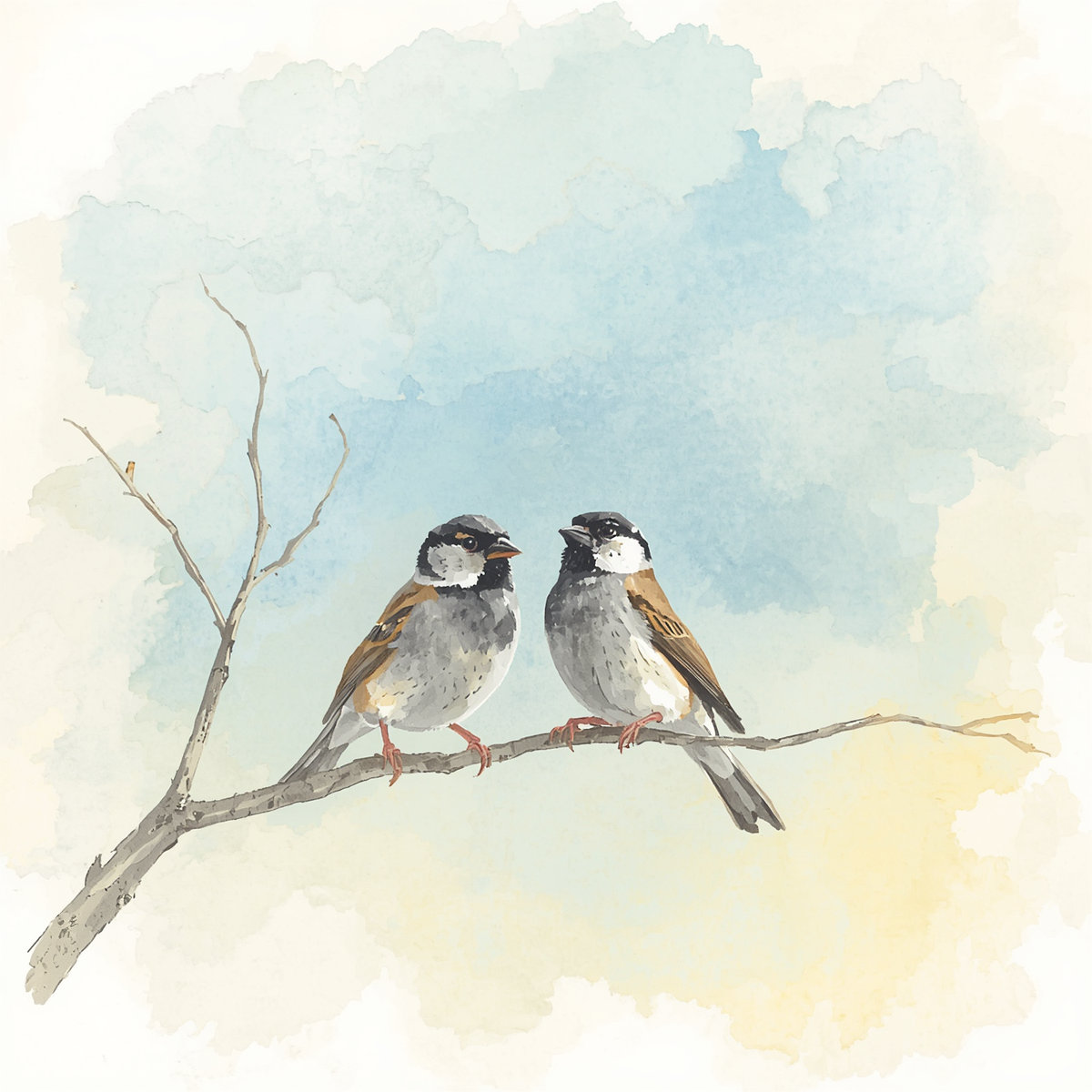
Jesus said to the Twelve: “Fear no one. Nothing is concealed that will not be revealed, nor secret that will not be known. What I say to you in the darkness, speak in the light; what you hear whispered, proclaim on the housetops. And do not be afraid of those who kill the body but cannot kill the soul; rather, be afraid of the one who can destroy both soul and body in Gehenna. Are not two sparrows sold for a small coin? Yet not one of them falls to the ground without your Father’s knowledge. Even all the hairs of your head are counted. So do not be afraid; you are worth more than many sparrows. Everyone who acknowledges me before others I will acknowledge before my heavenly Father. But whoever denies me before others, I will deny before my heavenly Father.”
You will be my witnesses
Luis CASASUS President of the Idente Missionaries
Rome, June 21, 2026 | XII Sunday in Ordinary Time
Jer 20: 10-13; Rom 5: 12-15; Mt 10: 26-33
A striking example of the devastating power of fear in classical Greek literature can be found in Sophocles' Oedipus Rex.
In this play, fear is not merely a fleeting emotion; it is the invisible force driving the entire plot. It is not a physical fear of a monster, but something far more terrible: the fear of one's own fate and the truth. The power of fear in Oedipus Rex functions as a tragic paradox: the characters commit their worst mistakes while trying to escape what they fear.
When the Oracle of Delphi warns Laius and Jocasta that their son will kill his father and marry his mother, panic overtakes them. Driven by fear, they order the infant Oedipus to be abandoned in the mountains with his feet bound. Had they not been afraid, Oedipus would have grown up in his home and known his biological parents, thus avoiding the tragedy.
Even as a young man, Oedipus hears the same rumor about his fate. Terrified by the idea of harming those he believes to be his true parents (the kings of Corinth), he flees his home. That journey of escape, driven purely by fear, leads him straight to the crossroads where, without knowing it, he kills his true father, Laius.
As the play progresses, fear takes on a new form: it becomes panic at the revelation.
When Jocasta begins to piece things together, she begs Oedipus to stop investigating. Fear makes them prefer to live in lies and ignorance rather than confront an intolerable reality, so Jocasta commits suicide. Oedipus gouges out his eyes because he cannot bear to see so much pain. Fear keeps the audience in unbearable tension as they watch the hero willingly rush toward his own destruction, driven by the fear of being a cursed ruler.
Although today we may try to explain fear in other ways, Sophocles' tragedy illustrates the power of fear and guilt, which lead us to deny and gloss over reality, resulting in pain and the destruction of our ability to joyfully unite with God and our neighbor.
Truly, only the experience of being united with God the Father can free us from fear. Fernando Rielo, founder of the Idente Missionaries, describes in one of his Legends his longing for union with a merciful God the Father—the only way to overcome fear and guilt:
I ask you, in this hour of your kiss, to turn my filial frailty into merit because, in truth, I am, more than the author, the victim of sin.
This reality of fear and guilt, which many try to deny, thereby increasing their pain, allows us to understand Christ's statement when he encourages the disciples today not to be afraid:
Even the hairs of your head are all numbered. So do not be afraid; you are worth more than many little birds.
As that phrase strikingly assures us, divine Providence takes into account every detail of our existence. Nothing about me is insignificant to God. My frailty, my doubts, my wounds, my joys… everything is seen, loved, and sustained. Even all that which I am not capable of perceiving at this moment, such as the number of my hairs.
But How is all that compatible with the harsh reality of misunderstandings, of my own inconsistency, of the apparent failure of the most generous initiatives that seem to bear no fruit?
The answer to this painful question is not a pious slogan. It is a mystery that must be lived through, not a problem to be solved from the outside.
But truly, no violence is capable of depriving the disciple of the one lasting good: the life he has received from God and which no one can take away from him. Paul was deeply convinced of this, based on his experiences of all kinds of difficulty: Yes, I am sure: neither tribulation, nor distress, nor persecution, nor hunger, nor nakedness, nor the sword… nothing will ever be able to separate us from the love of God that has been revealed in Christ Jesus, our Lord (Rom 8:35-39).
Therefore, to affirm that even our hairs are numbered does not promise success, nor understanding, nor immediate satisfaction. It promises the presence of the Divine Persons.
►Our heavenly Father, in the midst of the doubt, uncertainty, and weariness that overwhelm us, invites us to unite ourselves to Him, maintaining the absolute trust that Jesus showed on the Cross: Into your hands I commend my spirit. The saints experience the Heavenly Father precisely by uniting themselves to that same filial attitude of Jesus; without “leaving the world,” we feel drawn only to the One who is our destiny, for whom it is worth crossing, without bitterness, all the deserts that lie before us.
►Christ reminds us in those moments that He wept before us, because few listened to Him and many hated Him: Jerusalem, Jerusalem, you who kill the prophets and stone those sent to you by God! How often I wanted to gather your children together, as a hen gathers her chicks under her wings, but you were not willing! (Mt 23:37). In fact, the Jewish people and their leaders were looking for a political and military liberator to crush the Roman Empire, unaware that the Messiah's true mission was to bring about a spiritual kingdom of salvation. Today, as he sends out his disciples, he reminds them that they must not fear men, even if they are despised and misunderstood, just as he was by his own family (Mk 3:20-21).
► The Holy Spirit acts as the “Comforter,” just as Christ announced. He does not fill us with optimism or fleeting joys, but with an inexplicable strength. An extreme example is Saint Lawrence during his martyrdom on the gridiron, who, moved by the Spirit, maintained such serenity that he was able to joke with his executioners.
True disciples experience a genuine paradox: physical or moral suffering coexists with an unshakable peace in the depths of the soul. This peace is the fruit par excellence of the Holy Spirit (Galatians 5:22). It does not eliminate tears or pain, but it removes bitterness, anguish, and fear, leaving an absolute certainty that we are in God's hands, that he will gather our tears and our blood to bring about a good we cannot imagine. This is the wisdom that, united with the gift of piety, sustains us in situations that overwhelm us.
—ooOoo—
Let's talk a little more about the fear of acknowledging one's own identity, as happened to Oedipus.
The phrase The truth will set you free comes from the Gospel of John (Jn 8:32) and is one of the most famous statements by Jesus of Nazareth, spoken during a debate with the Jews who had believed in Him. Of course, we know that, in the context of the Gospel, “truth” is not an abstract or scientific concept, but a person and a message; Jesus is the truth, and therefore, knowing the truth means entering into a personal and profound relationship with Christ.
But there is more. The truth of the person of Christ, for those who have come to know Him, helps shed light on what keeps us from that freedom we long for but cannot attain out of fear of change, of exposing our weaknesses and mistakes—thus fulfilling what Christ affirmed: Everyone who commits sin is a slave to sin (Jn 8:34). It is not a fear of the unknown, but of what we do not wish to know.
It is liberation from the chains of selfishness, guilt, fear of various forms of death, and estrangement from God. And truly, we all experience authentic liberation every time we confess, when we awaken from the illusion of being flawless, whenever we acknowledge our own mistakes, weaknesses… and virtues.
However, the world has a pathological fear of God, which is why it seeks to expel Him from society and culture: God prevents us from being happy, He represents a threat, and He is merely an imaginary figure whose presence in our minds seeks to punish us and makes us feel guilty.
But what Jesus says today explains this absurd attitude: Do not fear those who kill the body but cannot kill the soul; rather, fear the one who can destroy both soul and body in Gehenna. It is neither an exaggeration nor difficult to understand: my soul dies because its sensitivity is dying; attachment to the world and to myself makes a relationship of harmony and brotherhood with my neighbor impossible, for the need to defend myself, to appear righteous, educated, and valuable, demands that I wear too many masks and silence the voice of the Spirit (1 Thess 5:19).
That fear to which the Master refers, the one he recommends we feel, is a useful fear—the fear of the reality of my heart, divided by its own falsehood between the world and heaven.
The First Reading offers us an admirable example in the person of the young Jeremiah, who did not let himself be overcome by fear, neither because the priest Pashur ordered him to be flogged and chained, nor because his own friends planned to kill him. Despite everything, he feels God's presence and knows that the truth will ultimately triumph over the corrupt authorities of Jerusalem. That is why, in his famous hymn, he says:
But you, Lord, are with me like an invincible warrior; those who pursue me will fall, and they will not be able to defeat me; they will fail, they will be put to shame, covered forever with unforgettable disgrace.
May we, on that day, through the witness of Jeremiah, Paul, and the first disciples, learn to listen more closely to the Divine Persons, precisely in those moments when fear seeks to close our ears and our eyes.
_____________________________
In the Sacred Hearts of Jesus, Mary and Joseph,
Luis CASASUS
President