Gospel according to Saint Matthew 10:37-42
Jesus said to his apostles: “Whoever loves father or mother more than me is not worthy of me, and whoever loves son or daughter more than me is not worthy of me; and whoever does not take up his cross and follow after me is not worthy of me. Whoever finds his life will lose it, and whoever loses his life for my sake will find it.
“Whoever receives you receives me, and whoever receives me receives the one who sent me. Whoever receives a prophet because he is a prophet will receive a prophet’s reward, and whoever receives a righteous man because he is a righteous man will receive a righteous man’s reward. And whoever gives only a cup of cold water to one of these little ones to drink because the little one is a disciple— amen, I say to you, he will surely not lose his reward.”
A bed, a table, a chair, a lamp… and a pair of hands
Luis CASASUS President of the Idente Missionaries
Rome, June 28, 2026 | XIII Sunday in Ordinary Time
2Kgs 4: 8-11.14-16a; Rom 6: 3-4.8-11; Mt 10: 37-42
I have fond memories of Sister Nagasé, a Japanese nun from the Sisters of the Child Jesus, who ran the Welcome Center for the Diocese of Ndjamena. Missionaries and volunteers would arrive there after landing in Chad, a predominantly Muslim country with a difficult history, where our community served until 2008.
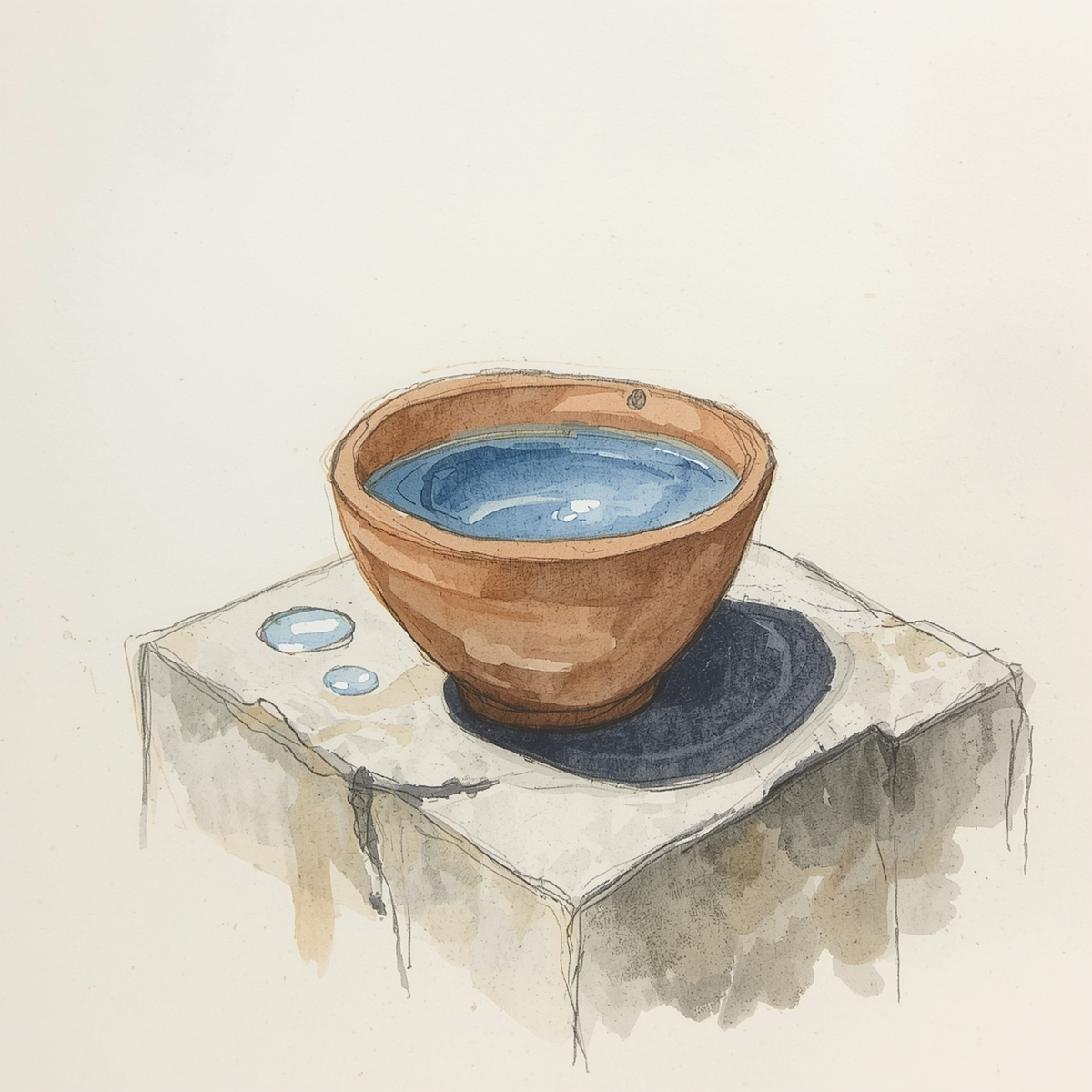
This sister welcomed everyone arriving from the airport to begin a mission anywhere in the country with a proverbial smile and warmth. She didn’t speak the common languages very well, but her hospitality overcame every language barrier. As I read the First Reading, the Shunammite woman reminds me of this nun’s diligence in addressing every request from the travelers, who found themselves at home and warmly welcomed despite the Center’s limited resources. I am certain that she embodied the words Jesus speaks to us today: Whoever gives even a cup of cold water to one of these little ones because they are my disciples, I assure you, will not lose their reward.
Certainly, each of us now has a mission to fulfill for the kingdom of heaven, but today Christ tells us just how sublime it is to care for the mission of any brother or sister, because the Holy Spirit can be working miracles through a glass of cool water.
For example, those who make an effort to serve their neighbor often go through periods of apathy, aridity, or vacillation, for what they see and feel does not always match their expectations nor is it proportional to their effort; however, by feeling welcomed, even if only by a single person, they receive wordless confirmation of God’s presence in their own lives.
This is what the Shunammite woman’s words to her husband convey when she refers to Elisha: Now I understand that this man who always passes by our house is a holy man of God.
Furthermore, this reading is one of the most exquisite texts in the Old Testament regarding how God acts in secret and transforms generosity into new life, turning what was barren in our existence into a field of unexpected fruitfulness. Elisha discovers that the woman has no children and knows that her husband is elderly. She had not asked for it—perhaps out of long-standing resignation—but God knows her silent wounds and, through the prophet, announces to her: Next year, around this time, you will hold a son in your arms.
Our humble hospitality toward others is always a room prepared to welcome divine blessing.
—ooOoo—
The Second Reading serves as a very fitting introduction to understanding the message of the Gospel text. St. Paul speaks (very) insistently to the Romans about the meaning of Baptism: the passage from a state of death to a life “for God in Christ Jesus.” Today, St. Matthew presents the conclusion of Christ’s so-called Missionary Discourse, in which the Master specifies exactly what to do with that life: to lose it for His sake.
A common interpretation of this message is to emphasize the difficulty and sacrifice required of us to live this missionary spirit. However, it is not a matter of testing our faith, no matter how demanding it may be to be a missionary disciple; rather, it is a matter of being faithful to the capacity received at Baptism to give one’s life as Christ did in order to bear fruit that the world cannot produce.
Oscar Wilde’s story The Nightingale and the Rose (1888) is a tragic fable about idealized love, selfless sacrifice, and human superficiality.
In a silent garden, a young student wept because he needed a red rose to declare his love to the woman he loved… but it was winter, and there were none.
A nightingale, who had heard his lament, understood that the boy desired something true, something worthwhile. So, he sought out a rosebush and asked it for a flower. The rosebush replied: I can give you a rose, but only if someone offers me their blood.
The nightingale hesitated. He was small, fragile, and his song was his life. But he saw the young man’s sadness and decided to give himself up. He pierced his chest with a thorn and sang all night long. As his blood fell, the rose turned a deep red. When the sun rose, the rose was perfect. The nightingale, however, lay lifeless beneath the rosebush.
The young man found the flower and ran to offer it to the girl. She rejected it in favor of a more expensive gift she had received from another suitor. Disappointed, the young man threw the rose in the trash and returned to the routine of his books.
But the story does not end there, because although the young man did not understand the sacrifice, the nightingale had indeed found its fulfillment: it had given its life for love, and in that act its existence became eternal, more real than any success or recognition. In the logic of the world, the nightingale lost. In the logic of love, it gained life in its fullest sense.
Our witness through our lives should be the most compelling reason to inspire those you know to follow Christ. Today He mentions the cross that each of us must carry, but it must be said again that this is not a “test.” The way we bear that cross inspires in others a sense of wonder and a true courage to live a life dedicated to others despite our own suffering. In the case of the first disciples, it is clear that they were inspired by Christ in this way, even though they did not fully understand everything the Master was conveying to them through his words.
—ooOoo—
Jesus has spoken on many occasions of the love he feels for his Father and how he himself seeks to please him in everything. But today he shifts his discourse to help us understand that He is the measure of love, for our love for our parents—something already required by the Fourth Commandment—cannot be complete or holy without loving Him deeply, that is, by showing profound gratitude for having set us free, for showing us the way to our heavenly home, and also the way to love our parents with freedom, without emotional dependence, without distinctions, without possessiveness or fear, without the conditions that worldly love sometimes imposes.
Indeed, when we do not love Christ deeply, our love for our neighbor is conditioned by the response we receive from them, by our fear, and by our perspective. However, after receiving the gift of piety, we can say: We love because He first loved us (1 Jn 4:19).
That is why gratitude is, in a certain sense, the first virtue because it recognizes the good as a gift, and that recognition is the starting point of all moral and spiritual life.
But we know well that abstract discourses on love and charity are often useless and sometimes dangerous. Christ described and defined his love for us as friendship, as the Second Vatican Council recalls: The invisible God speaks to men as friends, moved by his great love, and dwells with them to invite them into communion with himself and to welcome them into his company (Dei Verbum 2)
Christ calls us “friends” when we move from a relationship of servants to one of intimacy, trust, and obedience. This crucial moment occurs during the Last Supper, when Jesus reveals to his disciples the profound, sacrificial love he has for them.
Today is a fitting day for us to make a very precise and very evangelical examination, in just three questions, to determine whether we are in line with that love of authentic friendship with Christ and with our neighbor. It is a matter of recalling three moments when Jesus speaks of his friendship with each one of us:
►Jesus calls us friends because He entrusts us with God’s secrets and purposes. He no longer wishes to hide anything from us, for we have access to His truth. I no longer call you servants, because a servant does not know what his master is doing; but I have called you friends, because everything I have heard from my Father I have made known to you (Jn 15:15). Do I truly share EVERYTHING with Him, including my dreams, my doubts, my frustrations, and my faults? There are matters we cannot or should not share with our parents, but there is no exception to what we must share with Christ.
►Jesus, in the previous verse, gives us a clear indicator: You are my friends if you do what I command you (Jn 15:14). True friendship with Him is demonstrated through obedience in the love for our neighbor that He asks us to show Do I make an effort to LET MY NEIGHBOR KNOW that I truly desire to live in friendship with him?
The Pharisee Simon, who invited Christ to eat at his house (Lk 7:36-50), did not show the Master the basic courtesy expected in those days; yet the sinful woman hastened to wash and kiss his feet with costly perfume, thus demonstrating the possibility of friendship between very different people, between those with differing opinions, between man and God. Jesus himself explains why this is possible: If she shows so much love, it is because her many sins have been forgiven.
As St. John Bosco affirmed, it is not enough to love young people; they must realize that they are loved. In this way, my neighbor feels valued, secure, and understood, and thus their path to heaven is paved, just as Jesus did for the criminal who was beside him on Golgotha.
►Finally, Jesus’ friendship is an unconditional friendship. Immediately before revealing his friendship to them, Jesus expresses to the disciples the magnitude of his self-giving: No one has greater love than this, that one lay down his life for his friends (Jn 15:13). He calls us “friends” despite our mediocrity, even our betrayals, just as he did with Judas Iscariot: Friend, what you have come to do, do it now (Mt 26:50). This friendship was inconceivable to anyone reflecting on human relationships in the cultures of that time (…and even less so today) Does my friendship and affection for people depend on their likability, on their affinity with me?
In truth, our friendship with Christ is always a work in progress, always growing, just like true friendship with our neighbor, which is not spontaneous. To this end, we must make use of the love received through God’s forgiveness and the generosity of some (or many) people, thus starting from gratitude, as we mentioned earlier.
_____________________________
In the Sacred Hearts of Jesus, Mary and Joseph,
Luis CASASUS
President