Gospel according to Saint Matthew 13:44-52:
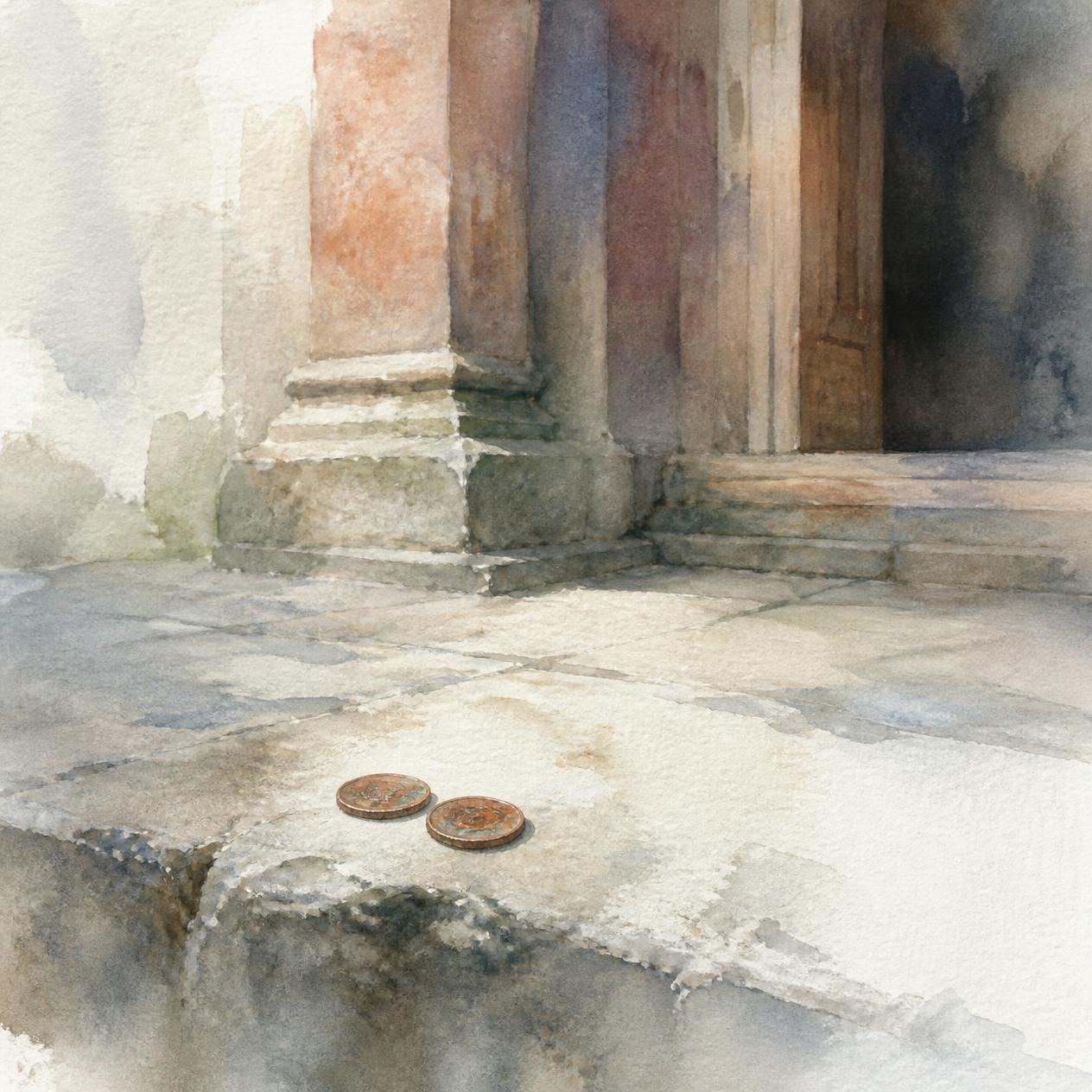
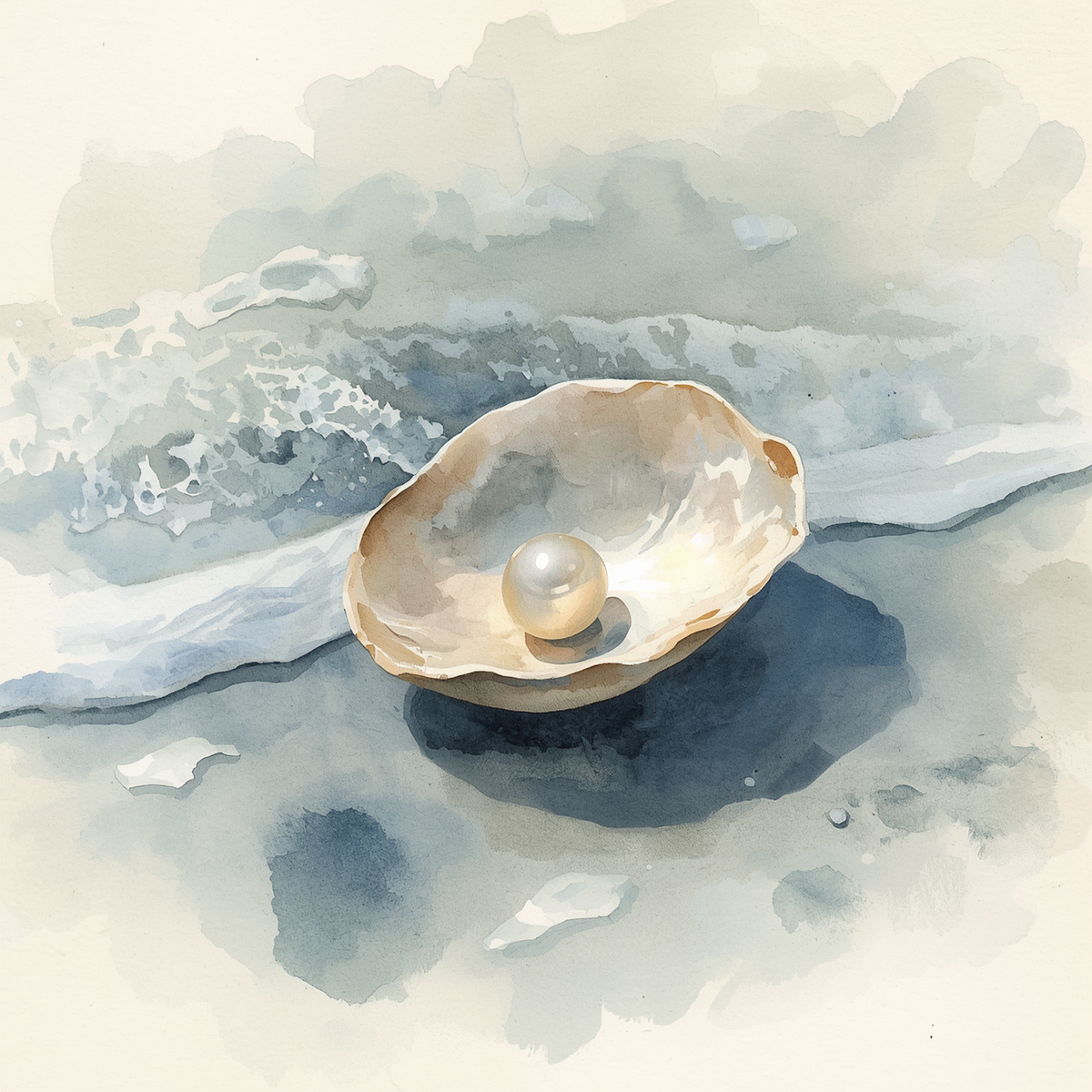
Jesus said to his disciples: “The kingdom of heaven is like a treasure buried in a field, which a person finds and hides again, and out of joy goes and sells all that he has and buys that field. Again, the kingdom of heaven is like a merchant searching for fine pearls. When he finds a pearl of great price, he goes and sells all that he has and buys it. Again, the kingdom of heaven is like a net thrown into the sea, which collects fish of every kind. When it is full they haul it ashore and sit down to put what is good into buckets. What is bad they throw away. Thus it will be at the end of the age. The angels will go out and separate the wicked from the righteous and throw them into the fiery furnace, where there will be wailing and grinding of teeth.
“Do you understand all these things?” They answered, “Yes.” And he replied, “Then every scribe who has been instructed in the kingdom of heaven is like the head of a household who brings from his storeroom both the new and the old.”
A wise and intelligent heart
Luis CASASUS President of the Idente Missionaries
Rome, July 26, 2026 | XVII Sunday in Ordinary Time
1Kings 3: 5.7-12; Rom 8: 28-30; Mt 13: 44-52
Today, all three Readings end where they begin: with Wisdom. In the First Reading, we see Solomon asking God for that kind of discernment, and in the Gospel, Jesus concludes by asking his disciples: Have you understood all this?
Whoever understands and embraces what the Master is telling us today becomes more than just a “scribe”; they become a true disciple of his, characterized by knowing how to use the new and the old, making use of what is truly important and rejecting what is useless for that moment.
The third of today’s parables speaks not only of the end of the world, but of what a good fisherman, a true apostle, a competent scientist, and a person who knows how to live in community must continually do: reject what is useless and embrace what is truly valuable at that moment. This is easy to say, but we see how the Rich Young Man—an intelligent person and lover of the Law—was unable to take this lesson to heart.
What Jesus asked of this young man is the same thing he tells us in today’s Gospel text: we must sell all our possessions, we must eliminate the useless fish, and thus we will be able to fill our baskets with the best that our nets can catch.
In reality, it is what a child does to learn to walk: stop using their hands and knees so they can make full use of their feet.
Mary, the Mother of Jesus, exemplifies the wisdom of “bringing out of her treasure both new and old things.” She is the daughter of a people who live by the ancient promise, know the Scriptures, pray the psalms, and await the promised Messiah. She represents fidelity to tradition, the accumulated wisdom of generations who have walked with God.
But, at the Annunciation, she receives something absolutely new: the incarnation in her of the Son of God. She does not reject it because it is new, nor does she accept it without discernment. She asks, she ponders, she discerns: How can this be…? And then she responds freely: Let it be done to me according to your word. Saint Luke repeats a key phrase twice: Mary kept all these things, pondering them in her heart.
The Greek verb used here is very expressive (syn-tērein); it literally means “to join, weave, or combine.” Mary brings together what she already knew about God with what God is doing now. It is the gesture of the scribe of the Kingdom: preserving the old while opening oneself to the new.
But wisdom is not something received once and for all. We must draw upon this treasure day after day. In fact, at the wedding at Cana, Mary acts out of tradition (hospitality, concern for others) and at the same time opens the door to Jesus’ first sign, which inaugurates the messianic newness.
Her words are the exact definition of Wisdom: Do whatever he tells you. Indeed, with the help of the Holy Spirit, we realize that it is always to Jesus that we look as we take our small steps toward acquiring wisdom.
As St. Paul says: For those whom God has called, whether Jews or Gentiles, Christ is the power of God and the wisdom of God (1 Cor 1:24).
—ooOoo—
The parables of the precious pearl and the hidden treasure offer a perspective to keep in mind regarding the Kingdom of Heaven: its impact on the Christian’s life is unpredictable. This is true both for the poor day laborer, who could not have imagined what would happen on an ordinary day’s work, and for the pearl merchant, who surely harbored the hope of finding an extraordinary one. In both cases, their reaction leads them to let go of everything else—the few possessions of the former and all the other pearls in the case of the merchant.
If we think about it for a moment, ALL of us have experienced being taken by surprise by the Kingdom of Heaven—sometimes by receiving it without having sought it, and other times by having it come to us unexpectedly, even in ways contrary to our expectations.
We all remember the case of Saint Paul, who found himself completely surpassed in his knowledge and his highest expectations:
What was gain to me I now consider loss for the sake of Christ. More than that, I consider everything a loss compared to the surpassing worth of knowing Christ Jesus my Lord; for his sake I have lost all things and count them as rubbish, that I may gain Christ (Phil 3:7-8).
From the way the Kingdom unfolds its energy and light, we can understand why Jesus calls this reality the “Kingdom”—something the corrupt Procurator Pilate could not comprehend (Mk 15:2). Christ’s reign surprises and challenges us, while at the same time opening our hearts.
Nathanael is one of the most interesting examples of how the Kingdom surprises a person who is not seeking it, and moreover, shatters his limited prior expectations. His encounter with Jesus (Jn 1:45–51) is a model of what it means to be surprised by God.
Nathanael was not actively searching for the Messiah; he is not restless, just sitting under a fig tree, probably praying or meditating, but with no expectation that anything would change that day. But then, Philip calls him and says: We have found the one about whom Moses and the prophets wrote. He is surprised in a way contrary to his expectations, for the Messiah was supposed to come from an important place and fulfill certain expectations that Nathanael and all the people had imagined.
Can anything good come out of Nazareth? The Kingdom not only arrives unexpectedly: it arrives from where he least expected it. Nathanael is taken aback: How do you know me?
And Jesus reveals that he knows him before Nathanael knows him. The Kingdom surprises him in his innermost being: his inner truth, his sincerity, his silent search.
Without needing to physically encounter Christ, we too have a similar experience of the Kingdom of Heaven. And this happens continually, through people we believe incapable of giving us anything good, through situations we judge to be useless and negative, or through moments that do not seem “spiritual” to us. This is the Inspiration to which Fernando Rielo, our Founder, gives the meaning of “attraction.” It is the Holy Spirit, who blows on our sails to draw us ever closer to Christ and the Father.
That metaphor of the wind and the sail is particularly powerful because it illustrates two realities at the same time: human action and a force that transcends it.
The sailor can study the charts, hold the helm, mend the ropes, and decide where he wants to go. All of that depends on him, but there is one thing he cannot create: the wind. He can prepare the boat to catch it, but he cannot produce it.
When the wind begins to blow and fills the sails, the sailor continues working; he does not abandon the helm nor stop making decisions. But he discovers that the main momentum does not come from his own strength. A greater energy makes progress possible.
This is how divine inspiration can be understood. It does not replace human freedom nor turn a person into a passive object. The mind continues to think, the will continues to choose, and the heart continues to love. But suddenly, the person perceives a clarity, a strength, or a conviction that seems to exceed what they could generate on their own. What once required exhausting effort begins to move with unexpected vigor.
Moreover, the wind does not eliminate the need for guidance. An inexperienced sailor may have a favorable wind and still get lost. In the same way, divine inspiration does not dispense with discernment, prudence, or responsibility. The gift needs to be welcomed and directed.
The irresistible power of this inspiration does not lie in its compulsion, but in the fact that, when recognized, it reveals a possibility greater than one’s own calculations. The sailor might even resist, lower the sails, or try to remain motionless. But if he keeps them open, he experiences that the ship was made precisely for this: to be carried by a force that does not originate from it and yet guides it, drawing it toward its destination.
That is why the metaphor is so powerful: the sail does not create the wind, but was created to receive it; and when the wind fills it, the ship discovers a speed and a horizon it would never have reached otherwise. Thus, divine inspiration does not nullify human nature, but leads it to the fullness for which it was already secretly prepared.
It is harder to turn back to the idols of the past; it is harder to think of the little pearls we sold, and the price we paid for the field that hid the treasure. We understand the Master’s counsel: Do not store up for yourselves treasures on earth (Mt 6:19). Despite what our instincts constantly demand of us, Wisdom allows us to persevere joyfully in that inner struggle with the ego that we call self-denial. Despite the effort and sacrifice required, today’s parables show us that the Kingdom of Heaven fills us with joy, dynamism, and creativity.
Wisdom not only allows us to distinguish what comes from God from what makes us impure. Its effects reach far:
The wisdom that comes from above is first of all pure, then peaceable, gentle, open to reason, full of mercy and good fruits, without partiality or hypocrisy. (James 3:17).
According to the mindset of the time, the sea was the realm of diabolical forces, enemies of life. That is why the disciples are entrusted with the mission of “being fishers of men,” snatching them from the power of evil. Uncontrollable passions, selfishness, and lusts lash out at us like raging waves that, like a vortex, drag us into the abyss. The Kingdom of Heaven is a net that pulls us out, lets us breathe, and leads us toward the light, toward salvation.
_____________________________
In the Sacred Hearts of Jesus, Mary and Joseph,
Luis CASASUS
President