Gospel according to Saint John 14:1-12
Jesus said to his disciples: “Do not let your hearts be troubled. You have faith in God; have faith also in me. In my Father’s house there are many dwelling places. If there were not, would I have told you that I am going to prepare a place for you? And if I go and prepare a place for you, I will come back again and take you to myself, so that where I am you also may be. Where I am going you know the way.”
Thomas said to him, “Master, we do not know where you are going; how can we know the way?” Jesus said to him, I am the way and the truth and the life. No one comes to the Father except through me. If you know me, then you will also know my Father. From now on you do know him and have seen him.”
Philip said to him, “Master, show us the Father, and that will be enough for us.” Jesus said to him, “Have I been with you for so long a time and you still do not know me, Philip? Whoever has seen me has seen the Father. How can you say, ‘Show us the Father’? Do you not believe that I am in the Father and the Father is in me? The words that I speak to you I do not speak on my own. The Father who dwells in me is doing his works. Believe me that I am in the Father and the Father is in me, or else, believe because of the works themselves. Amen, amen, I say to you, whoever believes in me will do the works that I do, and will do greater ones than these, because I am going to the Father.”
What testimony can Christ not give that we can?
Luis CASASUS President of the Idente Missionaries
Rome, May 03, 2026 | Fifth Sunday of Easter
Acts 6: 1-7; 1Pe 2: 4-9; Jn 14: 1-12
A Legend. A young man from Israel named Mattaniah was walking toward Jerusalem during a time when many were debating the Law and true wisdom. Some said: The truth lies in the ancient words. Others, however, proclaimed that the truth is held by the new teachers. Finally, there were those who maintained that the truth simply does not exist; each person constructs it to suit themselves.
Mattaniah listened to everyone, but his heart remained restless, for he felt the call of knowledge—not out of curiosity, but to give meaning to his life, since he sincerely desired to do good, to be useful to a society for which he did not know how to fight and alleviate so much suffering of every kind.
As he climbed the road leading from Jericho, he saw a group of men gathered around a young rabbi. They were not arguing; they were listening attentively. There was a peace among them that Mattaniah had never seen in any scribe. The rabbi was instructing them to visit various towns, going two by two.
The rabbi looked up and saw him approaching. Mattaniah felt that gaze pierce him without hurting him, as if the rabbi had known him since before he was born. With a gesture, he invited him to sit among those who were listening.
Teacher—he dared to interrupt—I have sought the truth in many places. Where can I find it?
The rabbi did not respond with an argument. He did not cite schools or traditions. He simply took a step toward him: Mattaniah, the truth is not a thought you must understand, but someone who calls you by name.
Mattaniah felt his heart burn. He understood that the truth was not something he could keep in a book, nor an idea he could master. He had the impression that the living presence of that Teacher was inviting him to walk. A few seconds passed.
Follow me, said the rabbi.
And Mattaniah understood that truth is not defined, but rather found in a face. Without fully understanding, he joined the group that was preparing to set out with Rabbi Jesus. He discovered that truth was not a path leading somewhere, but someone who became the way for him.
—ooOoo—
The insatiable and intrepid curiosity of the apostles Thomas and Philip is characteristic of anyone who has had a spiritual experience and always hopes for more, but nothing can replace a full, definitive encounter. As we read in the Old Testament:
I thirst for God, for the living God. When shall I come before God? My tears are my bread day and night, while they ask me at all hours: Where is your God? (Psalm 42:2-3).
Jesus’ response goes beyond our expectations, for He not only says that God the Father is visible in the works He does, but that the disciples will perform works that are even greater. This is a surprising statement, often interpreted as a proclamation of the Church’s expansion throughout the world. Certainly, this continues to happen, amid tribulations and difficulties of every kind.
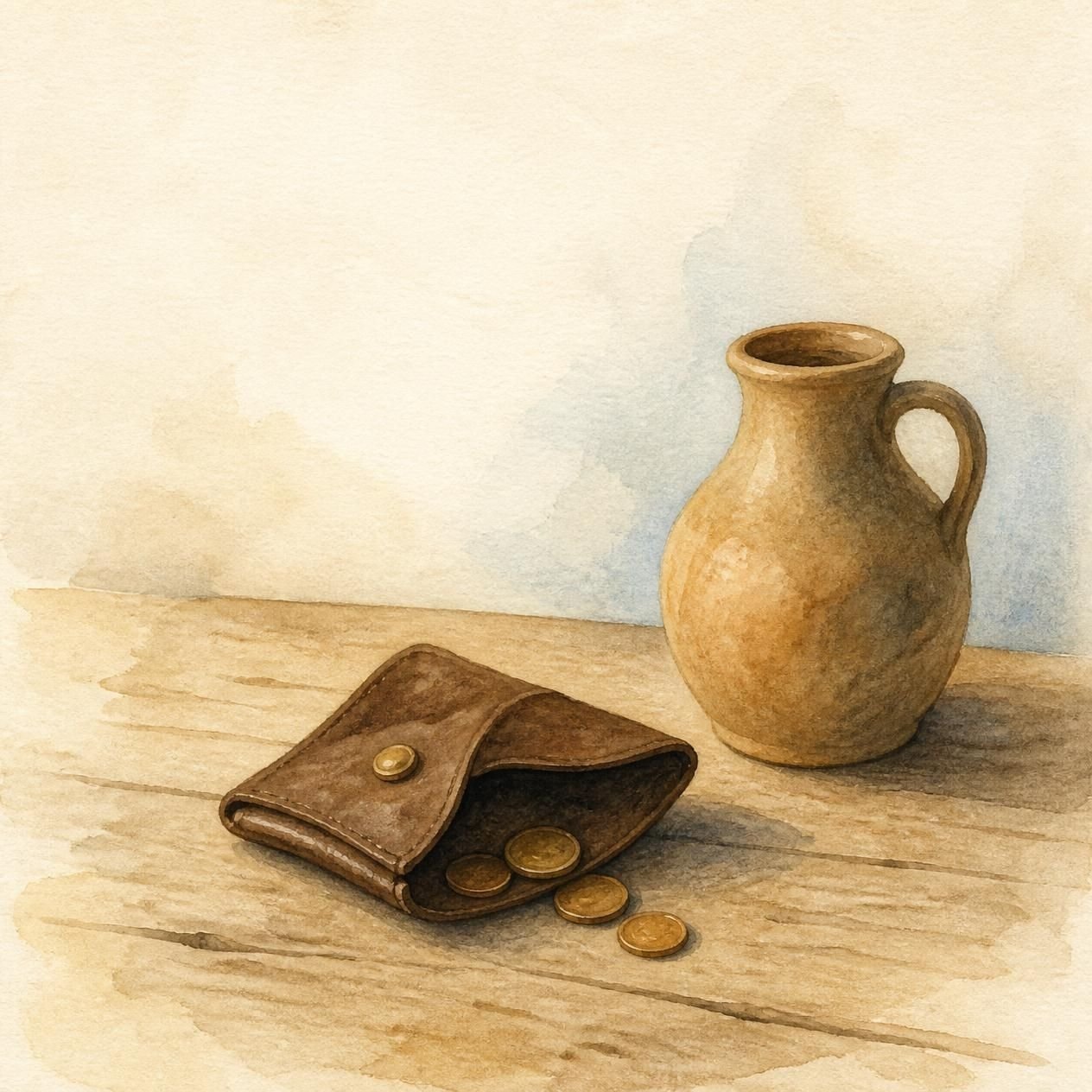
It does not seem that Jesus is referring to our performing miracles more spectacular than raising the dead or healing all kinds of the sick. In any case, more than the territorial reach of the Church, there is something not seen in Christ but seen in those of us who follow Him: a testimony of those who are sinners, of those whose hearts are divided, and yet, through the work of the Holy Spirit, the miracle occurs that we can rise again and again, and that we are those fragile vessels, bearers of an incomparable treasure (2 Cor 4:7).
Christ, having no knowledge of sin, could not bear witness to repentance. We, evidently, can.
Jesus had already announced that there is more joy in heaven over one sinner who repents and is converted than over ninety-nine righteous people who have no need to repent (Lk 15:7). What is not mentioned in the Gospel is that Christ points to anyone who does NOT need to be converted… This should lead us to realize that we can always, continually, bear witness to our conversion. In fact, this was the very first thing St. John the Baptist asked his disciples and all who came to him to do.
It is very possible—indeed, almost certain—that we do not remember acts of uncharity we have committed, that we are slow to become aware of offenses against our neighbor or of the good we failed to do. We are very creative when it comes to justifying ourselves or interpreting our wrongdoings and omissions in a benevolent light.
This contrasts with the First Reading, which gives us a beautiful example of how we must be attentive to the countless needs of those around us: fears, illnesses, discouragement, interpersonal conflicts… all of these are new challenges that compel us to change our lives, often to abandon well-laid plans, to use our time differently. Christ knew the weaknesses and limitations of his first followers, but today we see how, patiently, with the certainty that they will receive the Holy Spirit, he comforts them and also promises them his personal help, in the verse that follows today’s text: Whatever you ask in my name, I will do; so that the Father may be glorified in the Son. Whatever you ask in my name, I will do.
—ooOoo—
As we contemplate the disciples in the Upper Room, their hearts filled with anguish and dismay, a very practical lesson we must learn is the reality of many young people who set out to follow Christ—sometimes in consecrated life—and after a time abandon that path, that is, they return to mediocrity or perhaps to the corruption of the world.
Judas had just left the group, so the Master, too, was deeply distressed (Jn 13:21), and we can imagine how doubt and hesitation were taking hold of the hearts of the eleven who were still faithful. Christ. In fact, Jesus had just foretold Peter’s threefold denial… The situation could not have been more tense. The comfort that Christ gives to that sad and frightened community is powerful, because it comes from someone who has suffered and is suffering a profound agony. He does not refer to a heaven that awaits them, but to something more immediate, something imminent: He will continue to be present to confirm to each of us that serving to the point of giving one’s life is fruitful, bearing a sure, indestructible fruit.
Christ returns, after having given his life, to tell his own to imitate him, because in truth it is the only thing worth doing. He does not use long speeches, but can say to them: I am the way; you can follow me to the Cross, with the certainty that death—no kind of death—is stronger than grace.
This brings to mind the mother of the seven Maccabean brothers, who were tortured and executed before her eyes; she encouraged them to give their lives and followed them in their martyrdom for remaining faithful to God’s Law.
Caring for the vocation of those who are beginning their pilgrimage with Christ, or who are going through a “midlife crisis,” means walking ahead of them, infecting them with the enthusiasm of one who feels transported into the light from the darkness, as the Second Reading says.
When we are about to undergo a delicate surgical procedure, we listen to the doctor, who instills confidence in us, always with the caveat that there may be unforeseen complications… But if we speak with someone who has undergone that procedure, our spirits are lifted by something other than scientific data. It is not the same to teach a geography class on Antarctica as it is to begin by saying: yesterday I returned from the South Pole…
In the life of St. Francis of Assisi, there is a story similar to this:
Ruggiero was a young man who had left his home to follow Christ in the nascent fraternity of Assisi. At first, everything seemed beautiful to him: the joyful poverty, the songs, the simple brotherhood. But soon came weariness, discomfort, and doubt. One night, after a hard day begging for bread and enduring mockery, Ruggiero sat down behind the little hermitage of the Porziuncola. He was exhausted, filled with shame and fear.
I’m not cut out for this, he told himself. I do not have the joy of the others. I do not have Francis’s strength. I have nothing to offer. He decided that at dawn he would leave.
As he was thinking about this, he heard footsteps. It was Francis, returning from praying in the woods. His tunic was torn, his feet covered in dust, but his face… his face had a light that did not come from this world. He sat down beside him without asking anything. Ruggiero tried to hide his tears, but the saint looked at him with a tenderness that disarmed him.
Brother, said Francis, why are you so sad?
Ruggiero burst into tears. Because I am not like you. Because I do not have your faith, nor your joy, nor your strength. Because I feel empty.
Francis was silent for a moment, as if listening to something deeper than words. Then he said: Do you think I am strong? Do you think I have never been afraid? When the Lord called me, I was the smallest of all, the most fragile, the most incapable. If you see light in me, it is not mine: it is His.
Ruggiero looked up. Francis continued: God did not choose you because you were capable, but to show His love through you. And if your heart is dark today, let me tell you this: I will believe for you until you can believe again.
Ruggiero felt something ignite within him, like an ember reigniting.
Francisco stood up, took him by the shoulders, and added: Brother, don’t leave. We don’t need perfect men, but hearts that let themselves be loved. Stay, and let’s walk together; tomorrow morning we’ll go together to visit a family in Rieti. Joy will return.
That night, Ruggiero received no theological explanations or heroic speeches, but something much greater: the living witness of a man who burned with God.
Years later, when he himself was accompanying discouraged young people, he used to say: The day I wanted to give up, God saved me through Francis’s faith. And I understood that holiness is contagious: it is enough for one person to burn so that another may be rekindled.
_______________________________
In the Sacred Hearts of Jesus, Mary and Joseph,
Luis CASASUS
President