Gospel according to Saint Matthew 28:16-20
The eleven disciples went to Galilee, to the mountain to which Jesus had ordered them. When they saw him, they worshiped, but they doubted. Then Jesus approached and said to them, “All power in heaven and on earth has been given to me. Go, therefore, and make disciples of all nations, baptizing them in the name of the Father, and of the Son, and of the holy Spirit, teaching them to observe all that I have commanded you. And behold, I am with you always, until the end of the age.”
The mission, a foretaste of heaven
Luis CASASUS President of the Idente Missionaries
Rome, May 17, 2026 | Ascension of the Lord
Acts 1: 1-11; Eph 1: 17-23; Mt 28: 16-20
One rainy afternoon, four-year-old Carlitos was playing in the living room while his mother finished some chores. Suddenly, a loud clap of thunder made the windows rattle. Carlitos froze, his eyes wide open.
It’s okay, sweetie—his mother said from the table—I’m here.
The boy didn’t answer. Another clap of thunder. Carlitos made a silent decision: he walked slowly over to where his mother was, dragging his favorite dinosaur toy in his hand.
She, without realizing it, kept talking:
Do you want me to explain what thunder is? Look, it’s like…
But Carlitos didn’t want an explanation. He didn’t want a picture, or a drawing, or another toy either. He just raised his arms.
His mother turned, saw him, and understood. She picked him up.
The boy rested his head on her shoulder, let go of the dinosaur, and took a deep breath. The next clap of thunder sounded louder than the previous ones, but this time Carlitos didn’t even flinch.
Is this better she whispered.
Carlitos said nothing. He just tightened his arms a little more around her neck. Carlitos felt the warmth of her skin and the heartbeat that had accompanied him since the womb. And in that wordless embrace, it became clear what he needed: not an explanation, but a body to hold him.
Something like this happens to us. Today, as we celebrate the Ascension of Christ, his final event here in this world, while thinkers strive to explain—or deny—what the spirit is, Christ, with his resurrected body, shows us and proves to us that our humble and fragile vessel, made of flesh and soul, will also go to heaven, transfigured like Jesus.
Just as in the story of the child, our heavenly Father wants to embrace us; He is not satisfied with a mere message—He wants us completely, fully, with the body, soul, and spirit that He once gave us for our journey through this strange world, which is not our true home, as St. Paul reminds us:
For our citizenship is in heaven, from where we also eagerly await a Savior, the Lord Jesus Christ, who will transform our bodies, from our state of humiliation, into the likeness of His glorious body(Phil 3:20-21).
—ooOoo—
But let us not forget that there is a second perspective from which to contemplate the Ascension, since the “two men dressed in white” say to the disciples: What are you standing there looking up at the sky for?
Indeed, surprise and fear prevented them from remembering the Master’s promise: I will be with you always, even to the end of the age (Mt 28:20). They were not to remain on the mountaintop, but to descend into the valley, even if it sometimes deserves the name “valley of tears,” as Psalm 84 says. This was only possible if they faithfully followed Jesus’ precise instructions: not to leave Jerusalem and to wait there for the coming of the Holy Spirit. So they did, and so it came to pass.
The Ascension also brings this message from Christ: From now on, I will no longer be visible, but you will be. Indeed, they set out to bring peace to the hearts of so many people who could not feel God’s presence precisely because of that lack of peace. The same is true for us: as Christ announced when he proclaimed the Beatitudes, the kingdom of heaven belongs to those who are peacemakers.
This means that whoever works tirelessly to reconcile people, to create conditions so that everyone may live with the greatest possible dignity, will be given the kingdom of heaven—a promise fulfilled right now, if we do not cease to bring His peace to friends and enemies alike. Indeed, Christ already announced it: The kingdom of God is within you (Lk 17:21).
St. Francis of Assisi experienced this reality and expressed it as best as possible, that is, in the poetic form of his famous prayer:
Lord, make me an instrument of your peace.
Where there is hatred, let me sow love.
Where there is injury, forgiveness;
Where there is doubt, faith;
Where there is despair, hope;
Where there is darkness, light;
Where there is sadness, joy;
O Divine Master! Grant that I may not seek to be consoled, but to console;
That I may not seek to be understood, but to understand;
That I may not seek to be loved, but to love;
For in giving we receive, In forgiving we are forgiven,
And in dying we are born to eternal life.
This is the message of our mission: that people may realize that, in addition to being on earth, they are already in heaven as well. The most human way of being in heaven—a deeply inner and intimate way—was the divinity of Christ, the Son of God (In the Heart of the Father).
It is remarkable that the last words of Jesus we read in the Gospel of Matthew are not a moral exhortation, but a mission entirely oriented toward our neighbor: Go, therefore, and make disciples of all nations, baptizing them in the name of the Father and of the Son and of the Holy Spirit, teaching them to observe all that I have commanded you.
Certainly, we find the answer to our anxieties by lifting our heads and contemplating our neighbor, their pain, and their dreams. It is so; we are ecstatic beings by nature; therefore, remaining in my pain, in my plans, in my reflections, is always unnatural, regardless of whether it can be described as good or bad. Once we undertake the task of giving our lives to others, a change takes place within us.
We can never emphasize this truth enough, which the Gospel teaches us time and again:
► The one who serves, as in the washing of the feet, enters into communion with Christ, enters into his way of thinking, and shares in his way of being.
In truth, service is not merely an action; it transforms the one who performs it, bringing them into communion with Christ: Unless I wash you, you have no part with me. The disciple becomes capable of loving as He does.
► Those who accept the mission receive new strength. As we see in Matthew 10:1–8, Jesus sends his own to heal, set free, and proclaim. And in the very act of sending them, he gives them new power: He gave them authority to drive out impure spirits and to heal every disease. They did not have that ability before. They receive it the moment they accept the mission. Thus, the mission transforms the missionary, who receives gifts they did not possess, and in this way, the power of Christ is manifested when one gives oneself.
► Those who welcome others, like the disciples of Emmaus, discover Christ and are reborn; self-giving to others opens spiritual understanding.
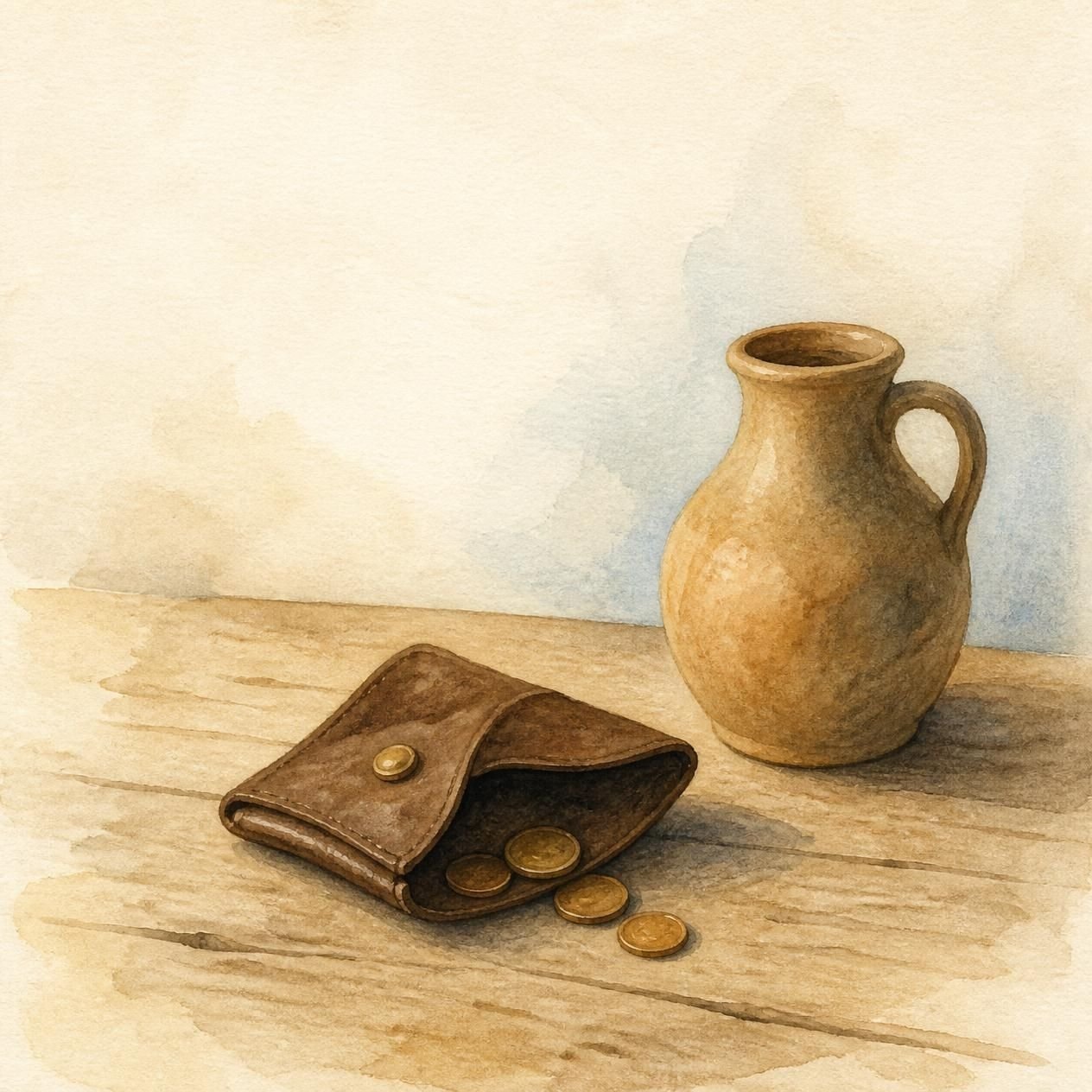
► In John 6:1–13, the episode of the multiplication of the loaves teaches us that a boy gives what he has—little, insufficient—but that act triggers a change and the little becomes abundant; the disciples move from helplessness to trust, and thus, Jesus makes them stewards of a miracle.
—ooOoo—
The First Reading states that Jesus ascended into heaven. Of course, the Acts of the Apostles seeks to teach us something more essential than a physical ascent into space. Regarding Jesus, it means that his communion with the Father is complete; furthermore, he gave himself to the Church as its head, as the Second Reading states.
As for us, it is true that we have experiences that can be called heavenly, especially when we embrace grace and are capable of loving unconditionally, overcoming selfishness.
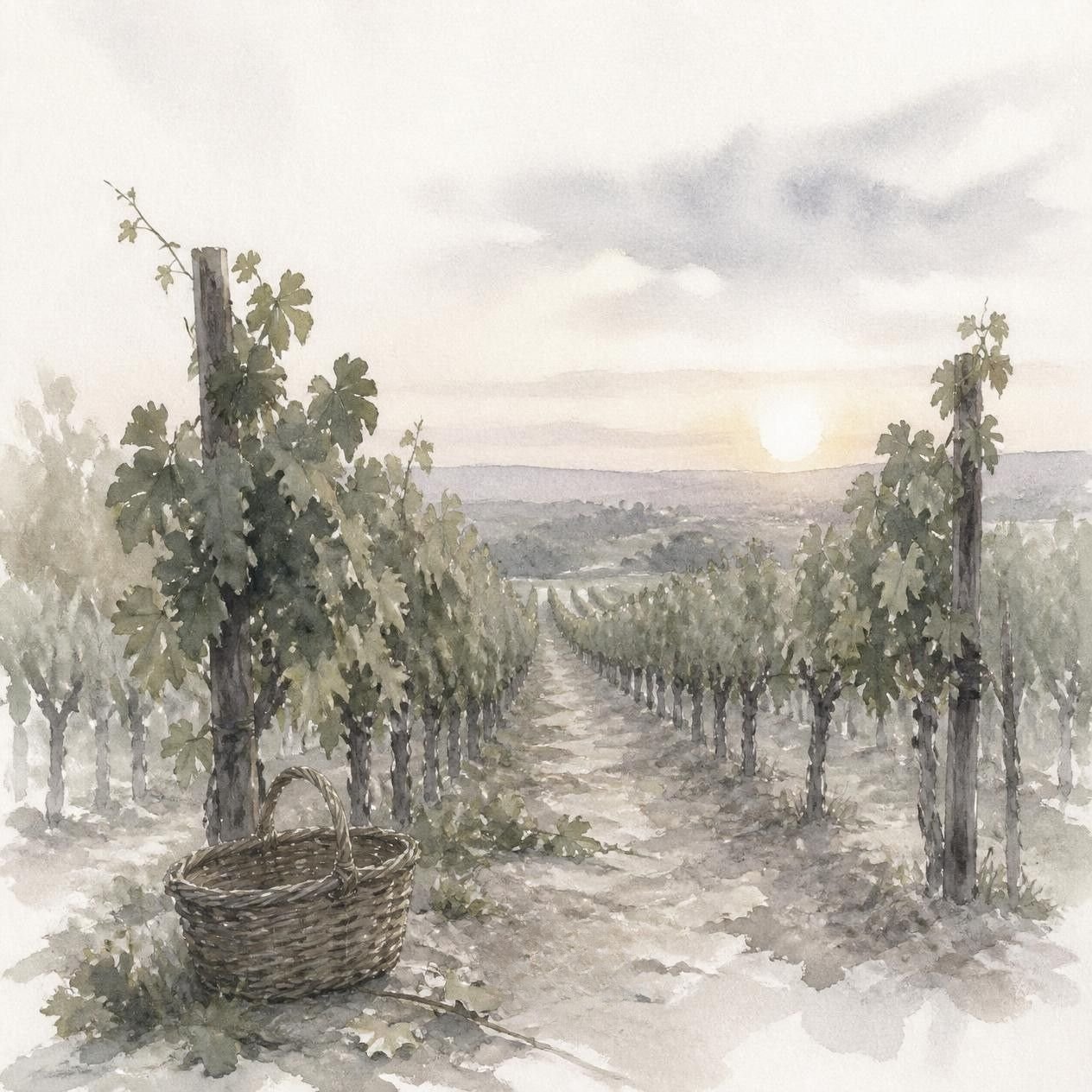
This is what theologians express with the phrase “Already but not yet” to convey that the Kingdom of God, understood as heaven, is already present in good deeds, justice, love, and generosity lived out according to the Gospel. Not yet in its fullness, because suffering and death still exist, but it is enough for us to be aware that we are children, that we have received as an inheritance the task of working in the same vineyard where Christ worked.
_______________________________
In the Sacred Hearts of Jesus, Mary and Joseph,
Luis CASASUS
President