Gospel according to Saint John 20:1-9
On the first day of the week, Mary of Magdala came to the tomb early in the morning, while it was still dark, and saw the stone removed from the tomb. So she ran and went to Simon Peter and to the other disciple whom Jesus loved, and told them, “They have taken the Lord from the tomb, and we don’t know where they put him.”
So Peter and the other disciple went out and came to the tomb. They both ran, but the other disciple ran faster than Peter and arrived at the tomb first; he bent down and saw the burial cloths there, but did not go in. When Simon Peter arrived after him, he went into the tomb and saw the burial cloths there, and the cloth that had covered his head, not with the burial cloths but rolled up in a separate place. Then the other disciple also went in, the one who had arrived at the tomb first, and he saw and believed. For they did not yet understand the scripture that he had to rise from the dead.
Memoirs of a Centurion
Luis CASASUS President of the Idente Missionaries
Rome, April 05, 2026 | The Resurrection of the Lord
Acts 10: 34a.37-43; Col 3: 1-4; Jn 20:1-9
My name is Julius Longinus, son of a veteran of Syria, and I have served in the cohort for twelve years. I will never forget that night. I have guarded gates, camps, prisoners… but I never thought I would be guarding a tomb.
The priests from the Temple arrived at dawn the previous day, agitated, almost trembling. They said that the body of a certain Jesus of Nazareth—a preacher executed for sedition—had to be guarded. They feared that his disciples would steal it and proclaim that he had risen. For us, it was a strange assignment, but not the most absurd one Rome has received from the locals.
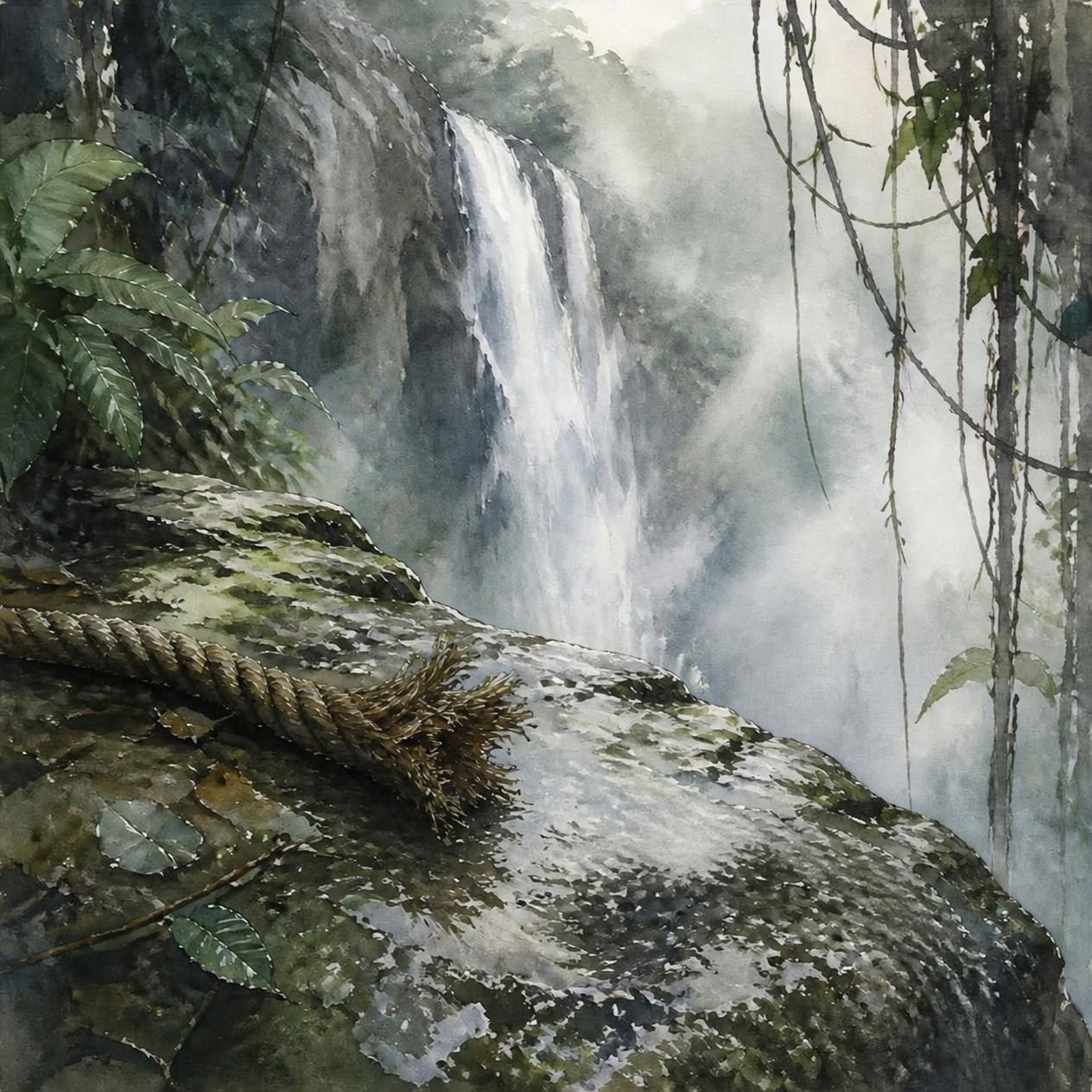
We sealed the stone with the official seal. I personally checked the rope and the clay. No one could move it without us noticing.
The night was cold. The air smelled of damp earth and olive trees. My companions murmured to keep themselves awake. I leaned on my spear, alert to any sound. Everything was silent—too silent for the outskirts of Jerusalem.
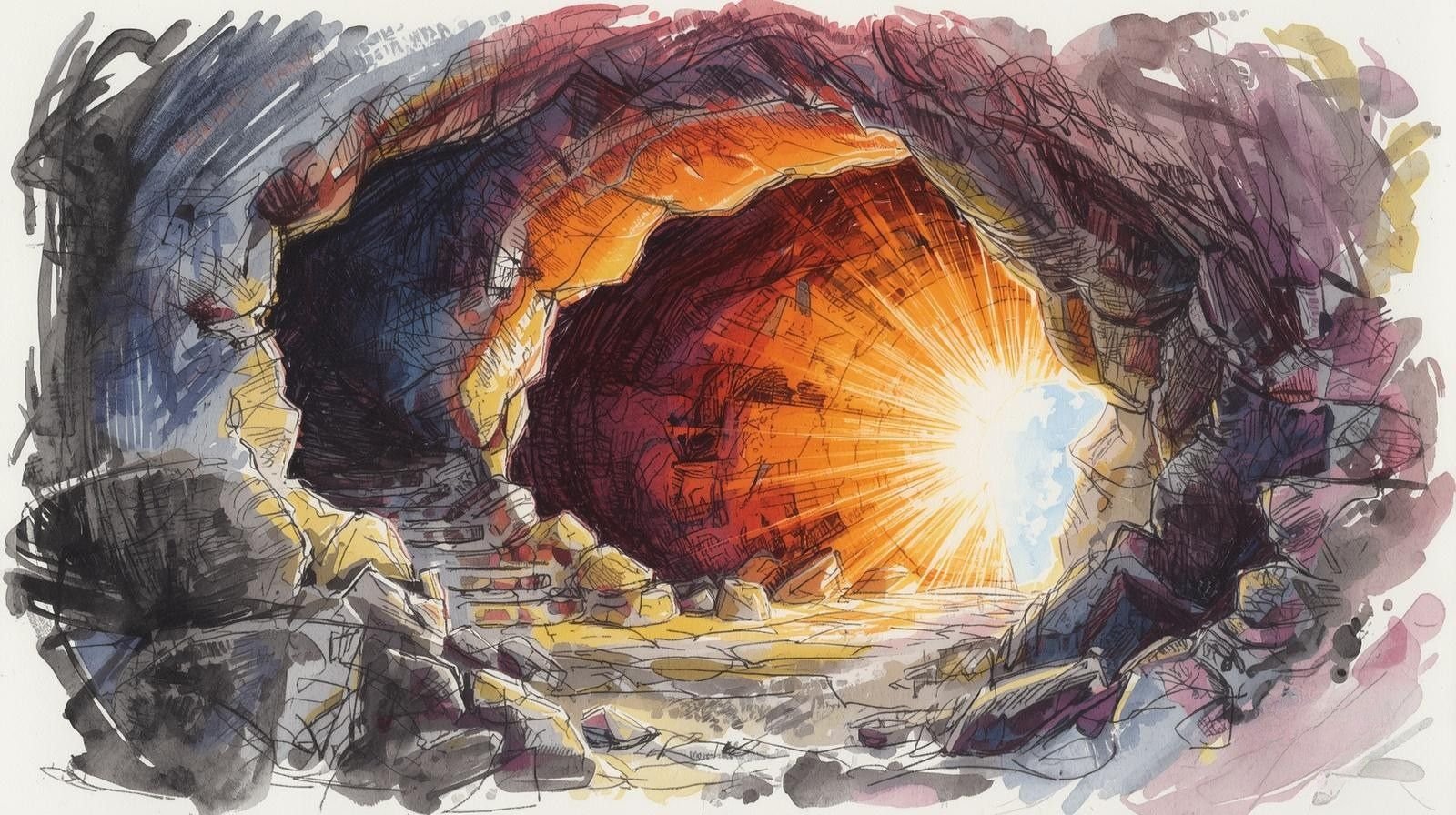
Then it happened. I do not know how to describe it without sounding like madness. It was not a normal tremor: the ground vibrated as if something from within the earth wanted to break free. The stone—a boulder that required several men to move—shifted as if pushed by an invisible force. Light enveloped us; it was not fire, nor a torch, nor lightning. It was… something else. White, alive, impossible to look at directly.
I felt my legs give way. Not out of cowardice, but because of something deeper: a mixture of fear and certainty, as if the truth itself had opened up before us.
I remember falling to the ground. My hands were shaking. I heard one of my companions shout, but his voice was lost in the roar. When the light faded, the tomb was open. Empty.
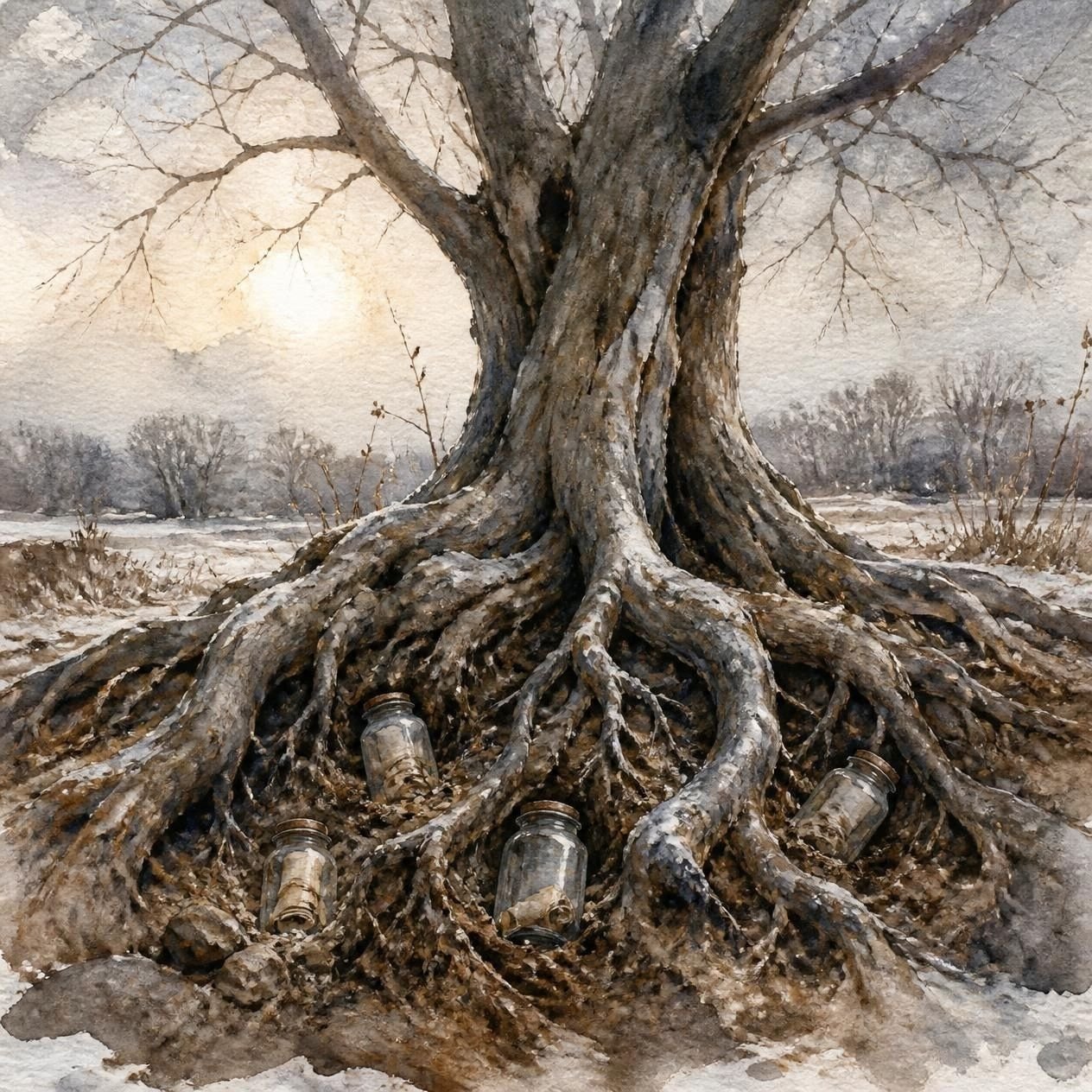
There were no signs of a struggle, no footprints, no broken ropes. Only the shroud, carefully folded. No thief would do that. No man could move the stone like that. No trickery could produce that light.
We ran. Not out of fear of the disciples, but out of fear of what we had seen. The priests ordered us to keep quiet and tell a different story. They paid us well. But money doesn’t erase what my eyes saw.
Ever since then, every morning I wonder if that man, Jesus, was really who he claimed to be. And if he was, then we weren’t guarding a corpse, but some kind of messenger whom the world still doesn’t understand.
—ooOoo—
And what is my memory of Christ’s Resurrection? Ironically, even though I am baptized, despite having made efforts to be faithful to the Master… it may be that the taste of the Resurrection in my memory and in my heart resembles what the centurion felt: I have not yet fully embraced his message; I still live as if his Resurrection had no connection to what I do every day, from the moment I open my eyes until the end of the day.
However, it is common among even minimally sensitive people that important events in the lives of those we love have a powerful influence on our own lives. Sometimes, it is a tragedy that marks us forever with deep pain. But, on other occasions, witnessing a happy event in a loved one’s life—such as a professional success, the birth of a child, or a full recovery from illness—is more important than anything that might happen to oneself.
This happens, for example, when someone welcomes their first grandchild, an event that can have such an impact on the family that any differences or distances disappear, and the grandparents center their lives on the newborn.
This should be a sign of how the Resurrection we celebrate today—a historical event—has a powerful effect on us and shapes our lives.
► Just as it happened to Mary Magdalene, Julius Longinus, and the disciples, it must create in us a confidence that is impossible to have without having heard of the Resurrection.
Indeed, the fear of death, “the end,” and even the signs of aging and weakness that foreshadow our death, hold a power that is ever-present in human beings. Today, for example, in our modern societies, there are symptoms such as an obsession with health, the cult of the body (always young, to “deny” death), the compulsive search for experiences (“living intensely” as a substitute for “living meaningfully”) …
Hyperactivity and productivity are very common (acting as a form of anesthesia), so that the frenetic pace of work and consumption functions as a mechanism of distraction. In reality, people fear stopping because they fear encountering their own finitude.
For the Christian who contemplates the Risen Christ, especially in difficult moments when everything seems to lose meaning, it becomes true that hope in the fruits of serving as Christ does is indestructible: Where, O death, is your victory? (1 Cor 15:55).
► If we consider that the Resurrection is the work of our heavenly Father, then by following Christ we can also be certain that we die so that we may be raised to new life, just as Christ was raised by the glorious power of the Father (Rom 6:4). This opens us not only to a future hope of living fully united with our Father, but also to becoming increasingly aware of his care and forgiveness, despite our mediocrity, doubts, inconsistencies, and sins.
► The death and cross of Christ—and our own—take on meaning. There is a unity, and—as the saying goes—there is no glory without the cross, but it is also worth reading it the other way around: There is no cross without glory.
Once, a young man asked his spiritual teacher: How can we live fully? And the teacher replied: Prepare yourself for death. The young man asked anxiously: And how can we prepare ourselves for death? And the teacher replied: By living fully.
So, life and death are not two separate realities. We live by dying to ourselves, and when we die, we live. If we do not live fully now, it makes no sense to speak of the fullness of life after death. We can experience every day that if the grain of wheat does not fall to the ground and die, it remains alone; but if it dies, it bears much fruit (Jn 12:24).
► Unexpectedly, contrary to our many experiences, to what history tells us, to what I can imagine… the Resurrection we celebrate today tells us that evil and death can always be overcome and—above all, let us not forget—in ways unpredictable to our limited understanding. This is what happens in the Passion, when it is clear to everyone that Christ’s effort is in vain and that his followers have wasted their time and risked their lives for nothing.
That explains why, in the moment of greatest anguish and helplessness on the Cross, Jesus cries out: Father, into your hands I commend my spirit.
The most unpredictable, the most moving and beautiful thing is that, before the Risen Christ, I have the certainty that I can die to my selfishness, which may indeed be surprising to others and to me. It is proof that I have been forgiven, that Christ wishes to count on me.
That is why, in the First Reading, we read: All the prophets bear witness to him: that everyone who believes in him receives, through his name, the forgiveness of sins.
—ooOoo—
All of the above should lead us not only to an intellectual belief in the Resurrection, but also to keeping it alive in our hearts, just as we remember the happy moments we shared with a loved one: they are more than facts, more than images, scents, or sounds… they are a reality in our hearts that truly sustains us and drives us forward today.
A Christian can affirm: Yes, Christ is risen, just as they affirm that Rome fell in the year 476. But that does not change life. Intellectual belief does not heal wounds, does not challenge us, does not transform us, nor does it send us forth.
However, the Resurrection can be incarnated, as St. Paul literally says today: If you have been raised with Christ, seek the things that are above, where Christ is seated at the right hand of God (Col 3:1).
There is a personal encounter with the Risen Jesus, as happened to Mary Magdalene, who heard him call her name, or to the disciples on the road to Emmaus, who ate with him, or to Thomas, who touched his wounds. Our encounter with Him—yours and mine—need not be physical or tangible, but it is equally real; it is neither imaginary nor illusory. It is His presence, especially in human beings, who need our help to feel and understand Him so that they may feel comforted and valued.
Thus, the meaning of our encounter with the Risen Jesus shares the same characteristics and the same message as His encounters with all those who saw Him after He emerged from the Tomb: Now you see Me, but I am about to disappear, and I leave to you the mission I have been carrying out; yet I will not leave you—I will always be near, to give you the comfort you need and the light you require.
This produces in us a peace that may well be called Beatitude and a profound and ever-renewed responsibility toward our neighbor, which provokes in us a deep Affliction and transforms us. So, all the encounters we have with Jesus—in the Eucharist, in the Word, in the life of our neighbor who challenges me—with or without words—or in events that others may not consider relevant—are encounters with Christ, but let us not forget: with the Risen Christ.
_______________________________
In the Sacred Hearts of Jesus, Mary and Joseph,
Luis CASASUS
President