A method rooted in encounter and vulnerability to heal inner prisons such as loneliness, constant comparison, and the need for approval.
There are prisons without walls or bars, yet they deeply shape the way people live and relate to one another. They are unspoken wounds, relentless comparisons, fears of not being enough, and a need for approval that slowly erodes inner peace. Faced with these realities, words and advice are not always enough. At times, what truly sets a person free is a real encounter, face to face, where someone dares to listen and to be listened to.
From this intuition was born Break the Circle, an experience that invites people to step out—and to let others in—in order to disarm the invisible dynamics that isolate and divide. Not as therapy, nor as a symbolic exercise, but as a concrete gesture of shared humanity, where vulnerability becomes a space of healing and the other ceases to be a stranger and becomes an ally.
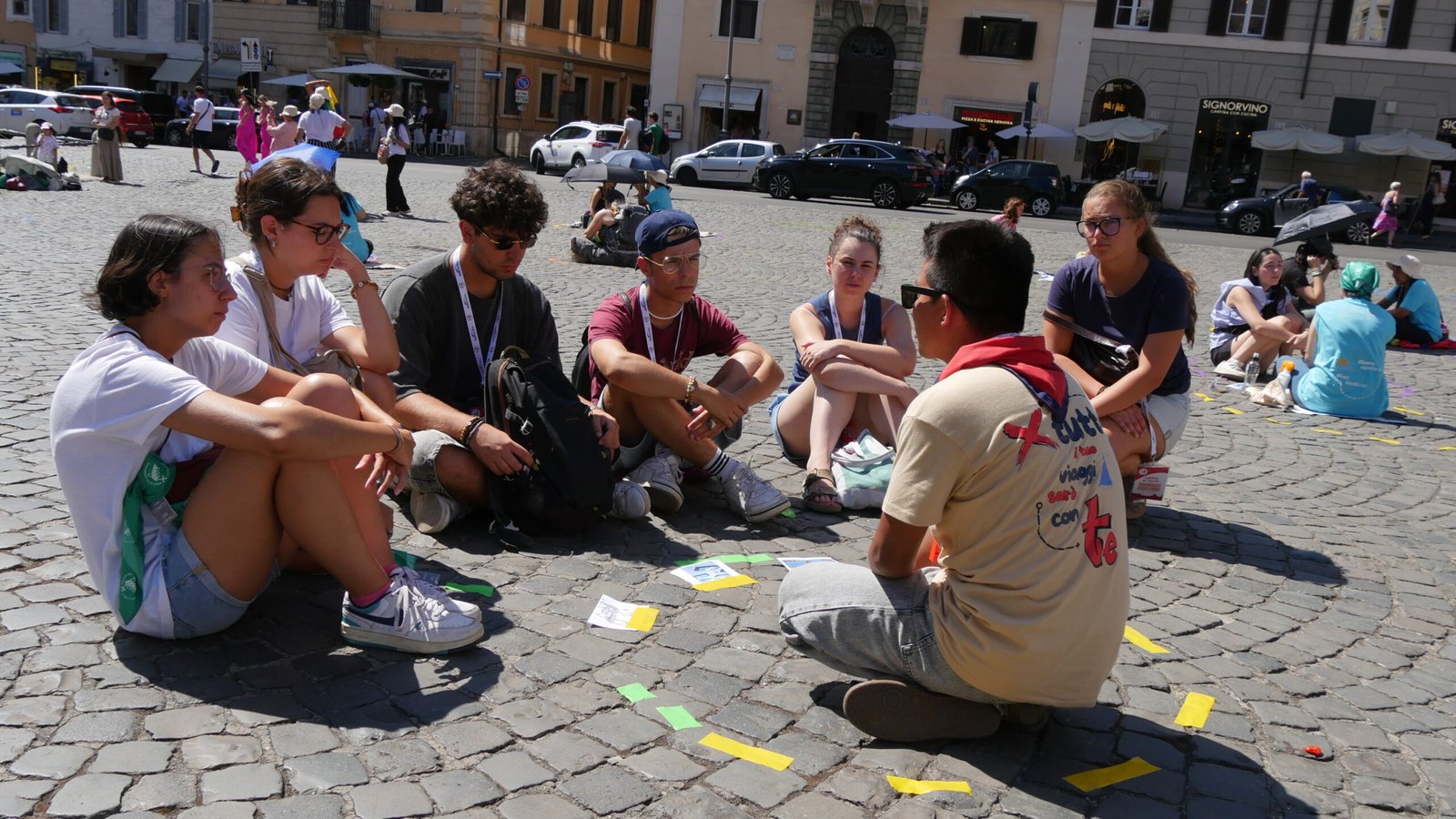
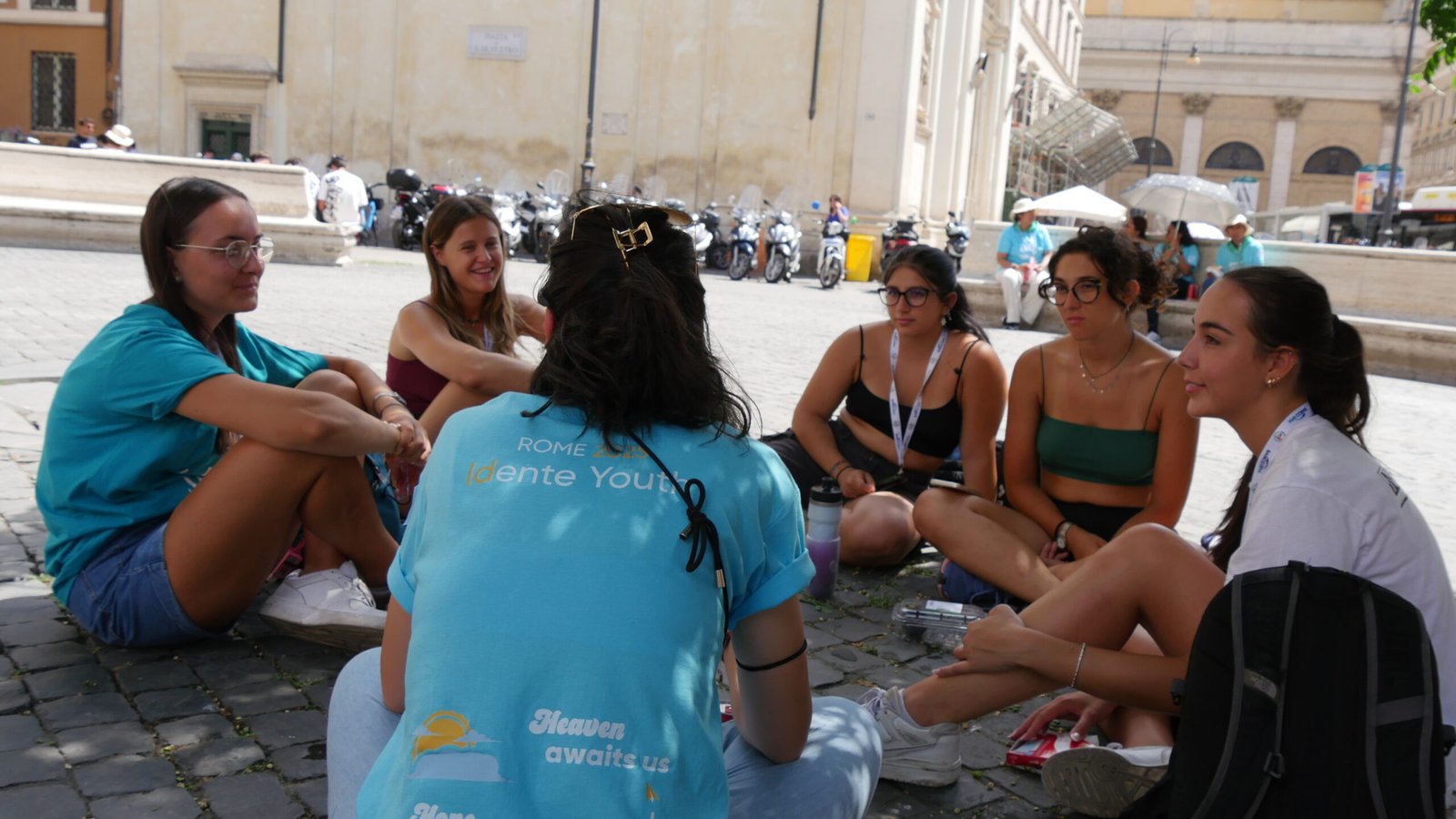
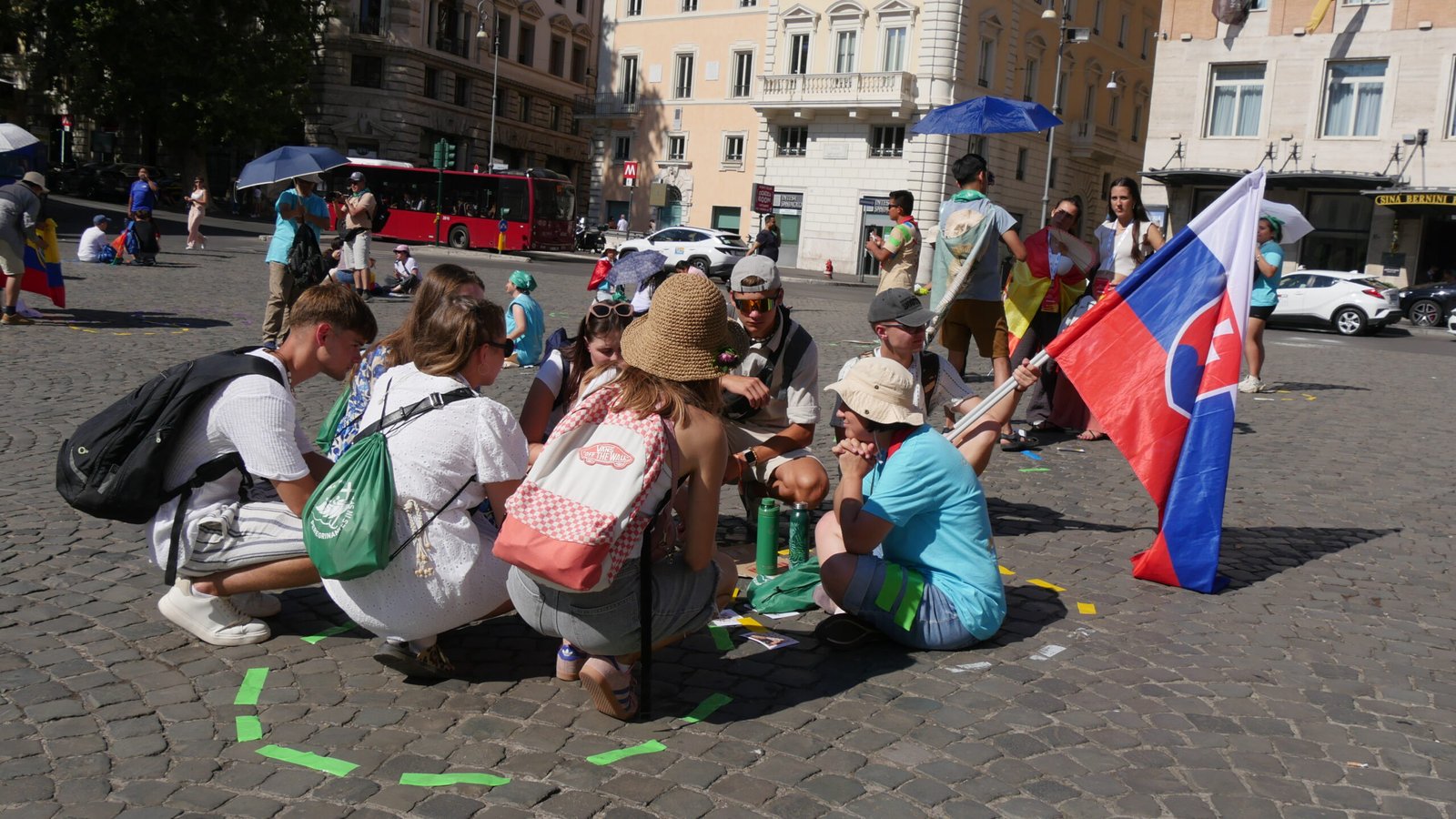
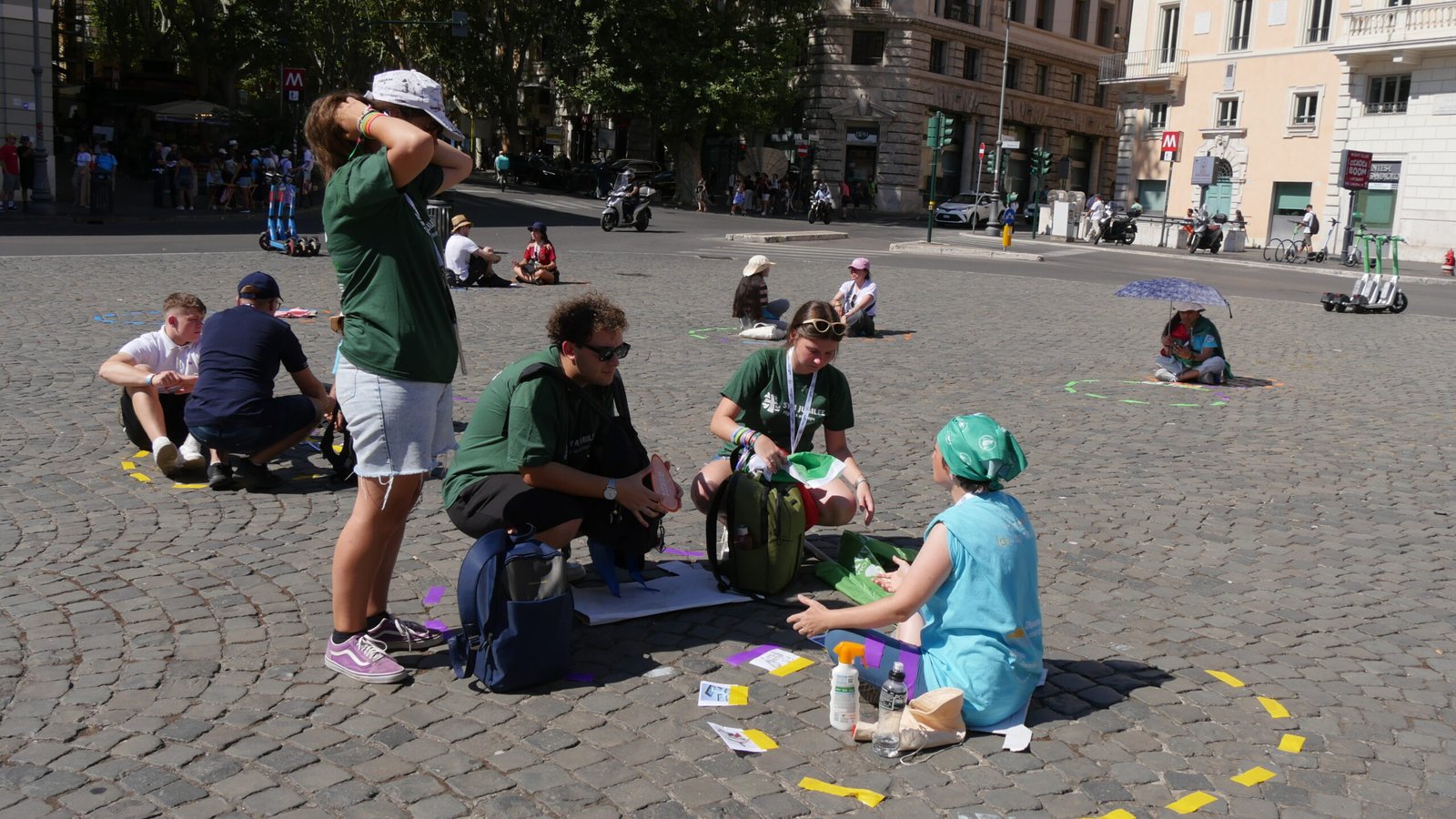
The Break the Circle workshop brings into public spaces the challenge against appearance, comparison, usefulness, vanity, and the need for approval. In open urban settings, young people from different countries sit face to face to disarm five threats to peace. Conceived as a public provocation rather than a conventional workshop, it transforms squares and churches into places of listening, art, and shared silence, dismantling roots of hostility from which no one is entirely immune.
This experience took shape in Rome during the summer of 2025, at a time when the city became a crossroads of languages, stories, and searching hearts. Within the context of the Jubilee of Young People—one of the major international gatherings of that year—Break the Circle found a privileged space to open itself to young people from all over the world, bringing to the heart of the city a simple and radical proposal: to sit before another person and allow the encounter to do its work.
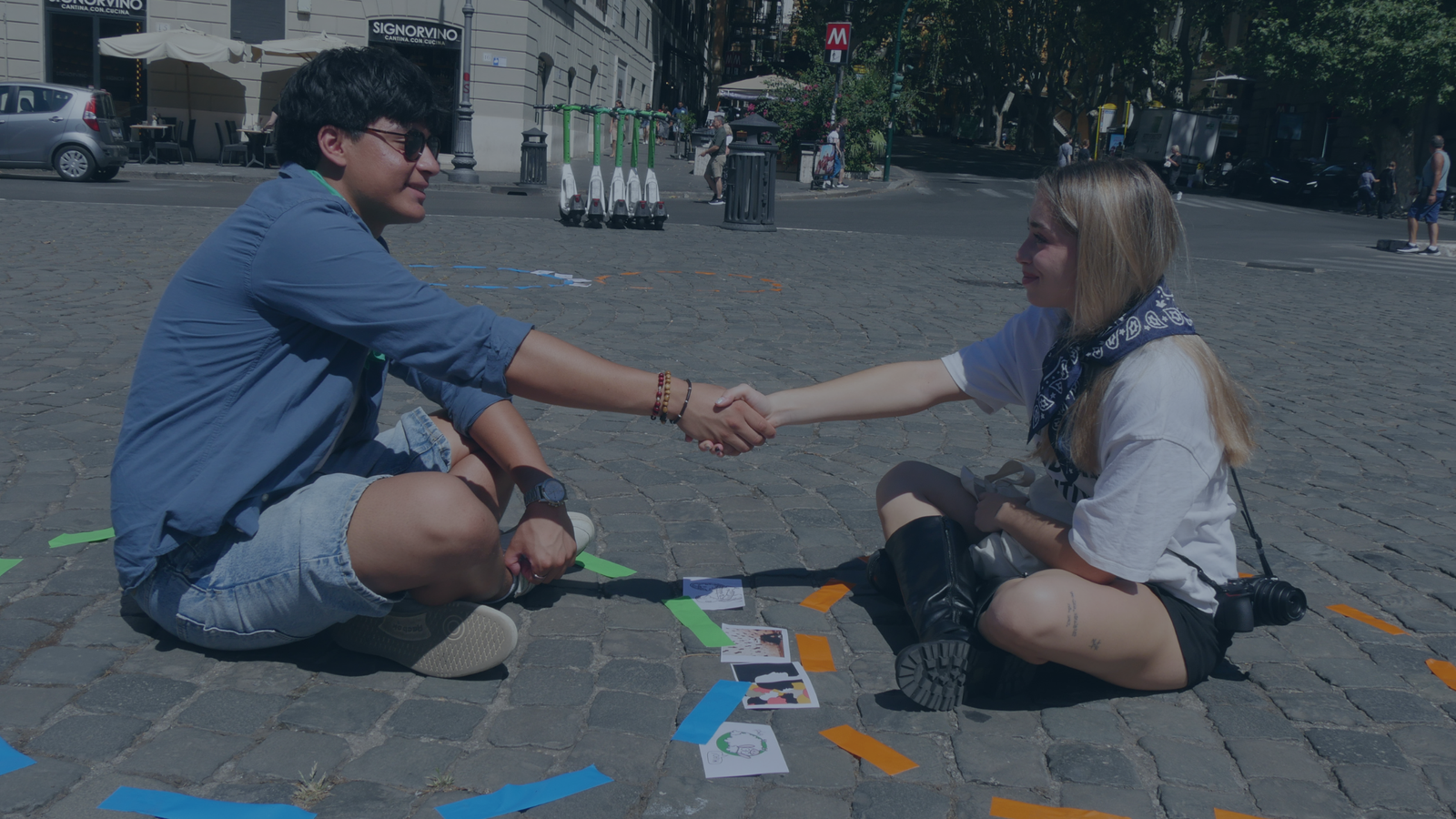
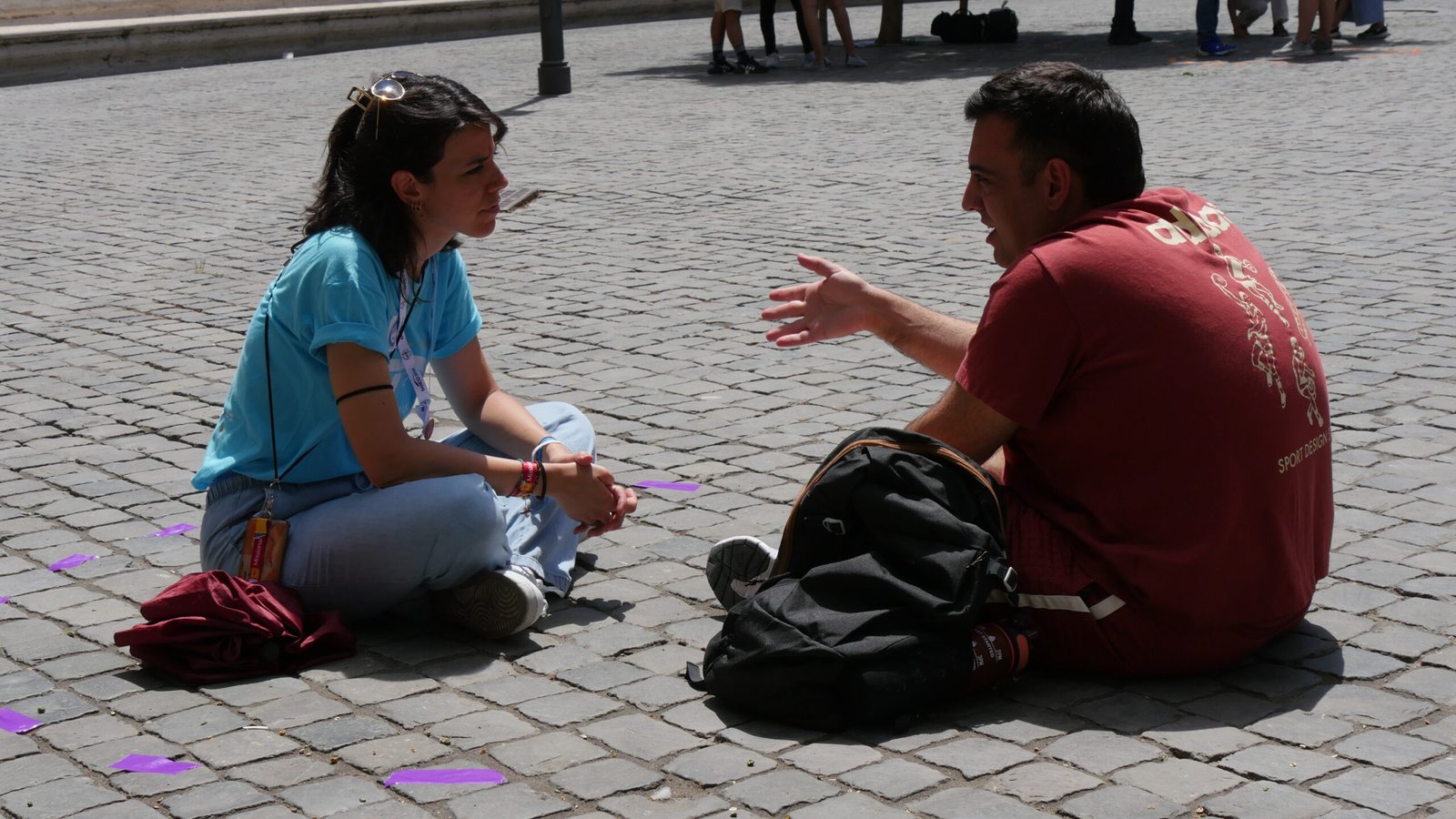
Young people from diverse backgrounds trace pairs of coloured circles on the pavement: one occupied, the other empty. Whoever crosses that threshold sits opposite a stranger to share wounds and listen to those of the other, reaching them within an invisible prison—a wound, a barrier, a loneliness. Promoted by the international association Idente Youth, Break the Circle was conceived to foster a living and concrete reflection on the relationship between estrangement and peace.
“This is not a game”
Irene, an Italian participant, prepares the square for the activity: she hangs blank sheets of paper around a fountain, while others trace circles on the cobblestones with adhesive tape. “I ask myself: what am I more afraid of? Being in the circle, meeting people, interacting.” Suddenly, she—who speaks French—is told, “Come on, quickly, step into the circle.”
The first to sit opposite her is a young woman with a fresh and curious expression. “They told me you need help.”
“Yes, it’s true. I feel trapped,” Irene replies. She speaks of wounded relationships and of the emptiness that accompanies a life that appears full. “This is not a game, do you understand? Can you help me?” Tears come, and with them the young French woman opens up.
“In the circle, the unthinkable happens: the city comes to a halt, the noise falls silent, and estrangement becomes an ally,” Irene explains. “You meet someone in a place where, often, not even a friend has been allowed to enter. Then we say goodbye: I give a piece of my circle, a sign that today you helped someone step outside themselves.”
“Both saved, both saviours”
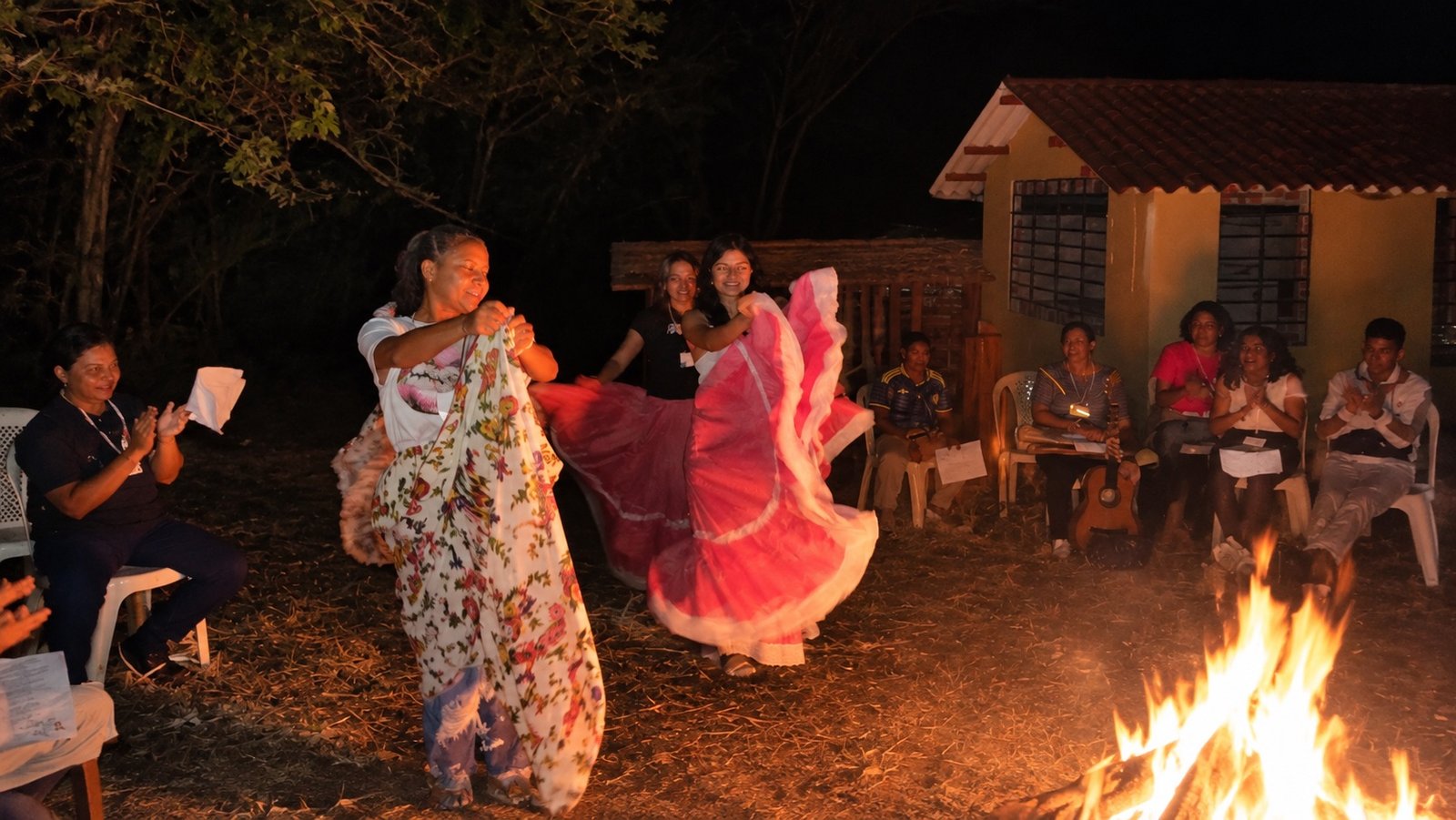
After the circle, Irene confesses, “no one remains the same. Two prisons have been seen and recognised. Both saved, both saviours.” Sometimes the conclusion is an embrace. As night falls, everything is dismantled: young people leave the circles exhausted, filled with faces and stories, with pieces of coloured tape stuck everywhere.
“Memory is not enough for me to remember all the faces. I need the heart, which counts one by one the open wounds and the words that have soothed them. The heart, after the circle, is no longer the same: it has discovered in its own fragility the instrument for beginning a new world, made of authentic encounters and dialogues that spring from the root.”
Getting to know one another between two souls
For Steven, from Colombia, “Break the Circle means getting to know one another between two souls.” He recounts meeting young people who have lost the meaning of life, who cannot find a purpose and think about suicide or self-harm. “We came here to listen, to offer concrete signs that we are brothers and sisters.”
Creating spaces of trust
“When someone crosses the empty circle to free one of us from an inner prison,” says Kimberly from France, “they enter our intimacy. We welcome them into a space of trust, where they can speak and feel listened to with care. And this happens regardless of what we believe or our religious background.”
United also in suffering
From the Philippines, Danielle reflects: “We are not separated, neither in suffering nor in joy. By sharing my wounds, others shared theirs as well. The situations are different, but what unites us is the immense love of Christ.”
The beauty of vulnerability
Angelic, also from the Philippines, adds: “Approaching strangers had always intimidated me. I prayed and found the courage to speak. Some said they would stop only for a moment, and then stayed much longer. That generosity moved me deeply. I saw how healing begins when someone shares their experience.”
Five threats to peace
Within the circle, dialogue begins from five threats to peace: appearance, comparison, usefulness, vanity, and the need for approval. These are traps of a culture of estrangement that create distance and isolation, until the bond that unites us is forgotten. Breaking the circle means, before stepping out, allowing someone to step in. It means discovering that it is easier to help than to allow oneself to be helped—and that, while helping, one is healed.
Irene finds herself facing a man who listens as though in a therapy session. Only at the end does he introduce himself: “I am a Gestalt psychotherapist.” Irene smiles. “How fortunate I am.” And he replies, “While I am speaking with you, I am doing good to myself as well.”
“It is a small revolution,” Irene says, “one that can give rise to lasting change: living for another without burning out, and discovering in that openness true richness.” And in that same openness, Someone works the miracle of two castaways who meet and extend a hand to one another, moving from ‘I’ to ‘we’, and from the darkness of loneliness to the comfort of knowing they are accompanied.
“Why can’t we live like this all the time?”
“The most moving moment,” recounts Galo from Ecuador, “was the exchange of peace among young people from every country. And I ask myself: why can’t we live like this all the time? We young people have no difficulty being friends with anyone, wherever they come from. At what point does this break down?”
That question remains open.
Like a warning impossible to shake off.