Gospel according to Saint John 11:1-45
Now a man was ill, Lazarus from Bethany, the village of Mary and her sister Martha. Mary was the one who had anointed the Lord with perfumed oil and dried his feet with her hair; it was her brother Lazarus who was ill.
So the sisters sent word to him, saying, “Master, the one you love is ill.” When Jesus heard this he said, “This illness is not to end in death, but is for the glory of God, that the Son of God may be glorified through it.” Now Jesus loved Martha and her sister and Lazarus. So when he heard that he was ill, he remained for two days in the place where he was.
Then after this he said to his disciples, “Let us go back to Judea.” The disciples said to him, “Rabbi, the Jews were just trying to stone you, and you want to go back there?” Jesus answered, “Are there not twelve hours in a day? If one walks during the day, he does not stumble, because he sees the light of this world. But if one walks at night, he stumbles, because the light is not in him.” He said this, and then told them, “Our friend Lazarus is asleep, but I am going to awaken him.” So the disciples said to him, “Master, if he is asleep, he will be saved.” But Jesus was talking about his death, while they thought that he meant ordinary sleep. So then Jesus said to them clearly, “Lazarus has died. And I am glad for you that I was not there, that you may believe. Let us go to him.” So Thomas, called Didymus, said to his fellow disciples, “Let us also go to die with him.”
When Jesus arrived, he found that Lazarus had already been in the tomb for four days. Now Bethany was near Jerusalem, only about two miles away. And many of the Jews had come to Martha and Mary to comfort them about their brother. When Martha heard that Jesus was coming, she went to meet him; but Mary sat at home. Martha said to Jesus, “Lord, if you had been here, my brother would not have died. But even now I know that whatever you ask of God, God will give you.” Jesus said to her, “Your brother will rise.” Martha said to him, “I know he will rise, in the resurrection on the last day.” Jesus told her, “I am the resurrection and the life; whoever believes in me, even if he dies, will live, and everyone who lives and believes in me will never die. Do you believe this?” She said to him, “Yes, Lord. I have come to believe that you are the Messiah, the Son of God, the one who is coming into the world.”
When she had said this, she went and called her sister Mary secretly, saying, “The teacher is here and is asking for you.” As soon as she heard this, she rose quickly and went to him. For Jesus had not yet come into the village, but was still where Martha had met him. So when the Jews who were with her in the house comforting her saw Mary get up quickly and go out, they followed her, presuming that she was going to the tomb to weep there. When Mary came to where Jesus was and saw him, she fell at his feet and said to him, “Lord, if you had been here, my brother would not have died.” When Jesus saw her weeping and the Jews who had come with her weeping, he became perturbed and deeply troubled, and said, “Where have you laid him?” They said to him, “Sir, come and see.” And Jesus wept. So the Jews said, “See how he loved him.” But some of them said, “Could not the one who opened the eyes of the blind man have done something so that this man would not have died?”
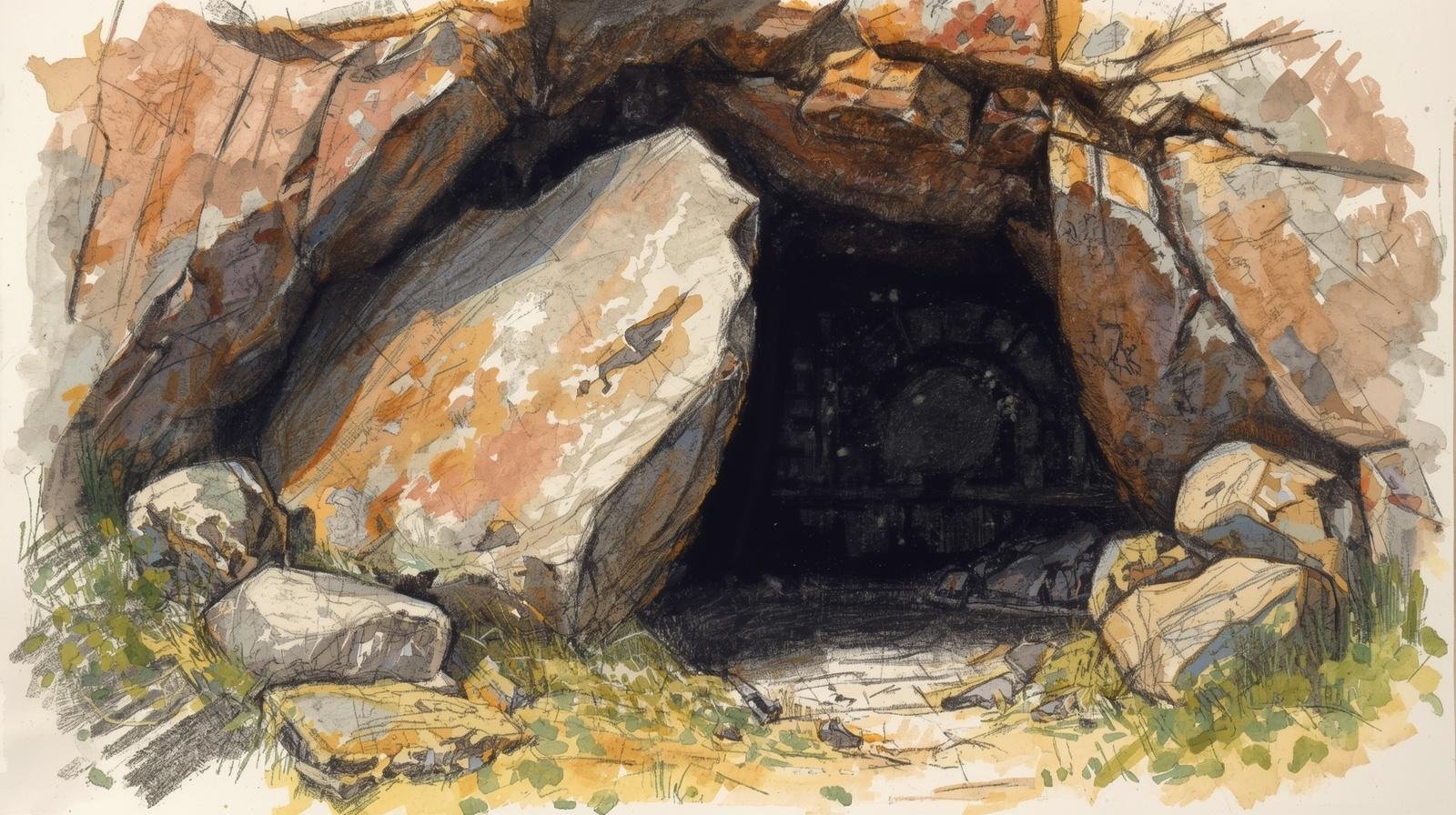
So Jesus, perturbed again, came to the tomb. It was a cave, and a stone lay across it. Jesus said, “Take away the stone.” Martha, the dead man’s sister, said to him, “Lord, by now there will be a stench; he has been dead for four days.” Jesus said to her, “Did I not tell you that if you believe you will see the glory of God?” So they took away the stone. And Jesus raised his eyes and said, “Father, I thank you for hearing me. I know that you always hear me; but because of the crowd here I have said this, that they may believe that you sent me.” And when he had said this, he cried out in a loud voice, “Lazarus, come out!”
The dead man came out, tied hand and foot with burial bands, and his face was wrapped in a cloth. So Jesus said to them, “Untie him and let him go.” Now many of the Jews who had come to Mary and seen what he had done began to believe in him.
Let us also go to die with him
Luis CASASUS President of the Idente Missionaries
Rome, March 22, 2026 | Fifth Sunday of Lent
Ez 37: 12-14; Rom 8: 8-11; Jn 11: 1-45
Resurrection, according to Christ. When Jesus healed the man born blind, he said that his blindness was “so that the works of God might be revealed.” Today, faced with Lazarus’ death, he says that “his illness is not unto death, but for the glory of God, so that the Son of God may be glorified through it.”
In this Sunday’s reading, the Master proposes to his disciples that they return to Judea to see Lazarus, but they have doubts; they say to him: Not long ago the Jews wanted to stone you, and now you are going back there? Then Thomas concludes by saying to the other disciples: Let us also go, that we may die with him.
The witnesses found it difficult to understand how illness and death could serve to give glory to God, but everything had a happy ending with the healing of the blind man and the brother of Martha and Mary.
However, we do not easily find comfort in the pain of those we love and our own pain. A few days ago, I was talking to an elderly person who could barely walk because of the pain, had to use strong painkillers all the time, and, in any case, whose greatest suffering was not being able to help her children and grandchildren.
In reality, both the blind man and Lazarus later died. And that, without a doubt, would be a cause for tears for those who loved them. Christ did not come into the world to eliminate all suffering, but rather to join in our suffering, even to the point of martyrdom and the cross.
Thomas’ proposal, Let us also die with Him, is not pessimistic at all; rather, it represents his desire to leave this world, to lose his life, if living is without Christ. It recalls the famous poetic expression of St. Teresa of Jesus: I die because I do not die. Even when the path seems absurd and painful, this is the cry of the soul that cannot bear to be separated from the Beloved, that cannot imagine a meaning for any act or initiative, however grand it may seem, if it cannot be guaranteed to be carried out with Him.
Let us also die with Him, is the response to Christ’s willingness to die for us. It is the only possible way to embrace pain and death, even without being able to fully understand them. That is why our Founding Father said in his message for the Mystical Poetry Prize:
My message, written from my sickbed, is simply a reflection on suffering: an inevitable event that is present, with varying degrees of intensity, in every human being from the moment they see the light of day. Suffering, like death, when taken to its deepest rational conclusion, is meaningless in itself. Absurdity and the blackest darkness surround this inert mass that weighs on the cautious optimism of human intelligence which, open to the infinite, has tried in some way to find a solution to what in itself has no solution.
My intelligence, formed by a loving faith and hope, can only lead me to one reality: Christ the Redeemer, a divine person, recapitulates in his human nature all the suffering of humanity, making this suffering the most qualified, loving, and endearing pain of love (December 14, 1998).
Although Lazarus’ sisters were unhappy that Jesus did not come immediately to prevent their brother’s illness, the truth is that Christ’s mission was not to suppress biological death or everyday suffering. In fact, what we call “the resurrection of Lazarus” was, in reality, a resuscitation, something similar to what would be done today with a defibrillator in the case of cardiac arrest, although in this case it was more spectacular, since the patient had been in the tomb for four days. But the main objective was fulfilled, which Jesus himself states: That they may believe that you, Father, have sent me.
In this way, we are confirmed in something that every human being, at least, senses within themselves: we are created for eternal love. In that respect, it does not matter if a person does not believe in God or cannot imagine what lies beyond death. That impression is universal, and that is why it is urgent to know something about what will become of us after death.
—ooOoo—
Resurrection in first-century Jewish culture and in today’s world. In much of the oldest part of the Old Testament, individual resurrection was not seen as a clear hope. It was believed that death led to Sheol, the place of shadows. Hope was mainly collective and earthly, that is, a long life, abundant offspring, and leaving a glorious memory among the people.
Thus, the relationship with God was lived in this life; what came after was unclear. In the prophet Daniel (2nd century BC), there is a shift: Many of those who sleep in the dust of the earth shall awake: some to everlasting life, others to shame and everlasting horror (Dan 12:2). Here, for the first time, the resurrection of the dead, judgment, and eternal life (for some) appear together, while others await condemnation.
The Book of Wisdom (3:1) speaks of the immortality of the righteous: The souls of the righteous are in the hands of God.
In Jesus’ time, the concept of resurrection was alive but not unified, for the Pharisees believed in bodily resurrection at the end of time, while the Sadducees denied resurrection and the afterlife. On the other hand, the Essenes believed in a form of afterlife, often described as immortality of the soul, although the emphasis on bodily resurrection is less clear.
Christ brings something decisive: resurrection is centered on his own person: I am the resurrection and the life (Jn 11:25), eternal life begins already in relationship with Him.
Regarding what awaits us after death, for the average person today there is no single answer, but there are dominant trends in Western societies.
֍ For the majority: “There is something after… but I don’t know what.” “Perhaps an energy, a spirit, a continuity.” The most widespread position is not atheism, but spiritual indefiniteness; it is a vague intuition, not a doctrine.
֍ There is also a belief in the “survival of the soul,” a form of spiritual continuity influenced by misunderstood Eastern spiritualities, transpersonal psychology, New Age culture, and near-death experiences.
֍ A significant secularized segment, especially in Western Europe, maintains that death is the end, “consciousness is extinguished.”
Why does the average person today have difficulty with resurrection?
First, because of the scientific-materialist imagination: the dominant culture identifies ‘real’ with “measurable.” Resurrection then seems mythological.
Another factor is the influence of soul-body dualism, so that the idea of an “immortal soul” is more intuitive than that of a “resurrected body.”
Third, today’s individualism makes it difficult to understand biblical resurrection, which has a communal, family, heavenly home character. Modern man thinks of “my soul,” not “the new creation.”
Finally, there is a loss of the eschatological horizon: we live focused on the present. Death is hidden, medicalized, silenced.
Despite everything, there are three universal intuitions that remain alive:
* The desire for justice, the idea that death cannot have the last word over innocent victims or unredressed injustices.
* An irrepressible desire for communion, above all selfishness. The hope of somehow reuniting with loved ones is a popular form of “relational resurrection.”
* The desire for fulfillment; as mentioned above, the intuition that human beings are made for something more than this life.
The average person sometimes believes in spiritual continuity, but not in a new bodily creation, because they imagine that we are talking about the same body we have in this life.
—ooOoo—
Perhaps a practical lesson for us can be not to try to “convince” anyone of the existence of an afterlife, but rather of the possibility of experiences that truly have an eternal flavor, because they link our existence to that of Christ. He convinces us that our intuition was right: This sad world cannot be the end, but he does not use logical arguments. Instead, he makes us feel that we are part of a plan that has already begun and will never end, as he did with those who heard the Beatitudes.
Participating in this project—which is our heavenly Father’s—allows us to perceive how giving our lives as Christ did makes us like Him… that is why death loses its power and control over our spirits. It is like tasting a resurrection from now on. That was St. Paul’s experience:
Death has been swallowed up in victory. Where, O death, is your victory? Where, O grave, is your sting? (1 Cor 54-55).
And also, what our Founding Father invites us to consider:
Think that your death
gives importance to life.
There is an ecstasy of gold
like a very lofty wind,
subtle and pure,
which, if you truly love it,
bears you away from time
and from death (In his book Transfiguration)
_______________________________
In the Sacred Hearts of Jesus, Mary and Joseph,
Luis CASASUS
President