Gospel according to Saint Matthew 2,13-15.19-23
When the magi had departed, behold, the angel of the Lord appeared to Joseph in a dream and said, “Rise, take the child and his mother, flee to Egypt, and stay there until I tell you. Herod is going to search for the child to destroy him.” Joseph rose and took the child and his mother by night and departed for Egypt. He stayed there until the death of Herod, that what the Lord had said through the prophet might be fulfilled, “Out of Egypt I called my son.”
When Herod had died, behold, the angel of the Lord appeared in a dream to Joseph in Egypt and said, “Rise, take the child and his mother and go to the land of Israel, for those who sought the child’s life are dead.” He rose, took the child and his mother, and went to the land of Israel. But when he heard that Archelaus was ruling over Judea in place of his father Herod, he was afraid to go back there. And because he had been warned in a dream, he departed for the region of Galilee. He went and dwelt in a town called Nazareth, so that what had been spoken through the prophets might be fulfilled, “He shall be called a Nazorean.”
God the Father and Epigenetics
Luis CASASUS President of the Idente Missionaries
Rome, December 28, 2025 | The Holy Family
Sir 3: 2-6.12-14; Col 3: 12-21; Mt 2: 13-15.19-23
Today’s three Readings speak of the family from different perspectives. The Book of Sirach, written two centuries before Christ, instructs us on filial obedience and piety; the Epistle to the Colossians, composed in prison, seeks to free them from the influence of certain philosophies, mysticism, and rites that were destroying communities; finally, the Gospel of Matthew recounts the tribulations of the Holy Family.
Of course, even with the best of intentions, there is a risk that these Readings will have only emotional and historical value for us… which is already something. But despite (or thanks to) the diversity of the circumstances in which they were written, they seek to highlight today the importance of the family, whose current difficulties and tribulations we all know. We are invited to reflect on its central role in human life, and we must do so with a broad vision.
Without a doubt, Christ gives us the key by confessing himself as the Son, by continually referring to his Father, and by coming into this world in a family that we recognize as Holy.
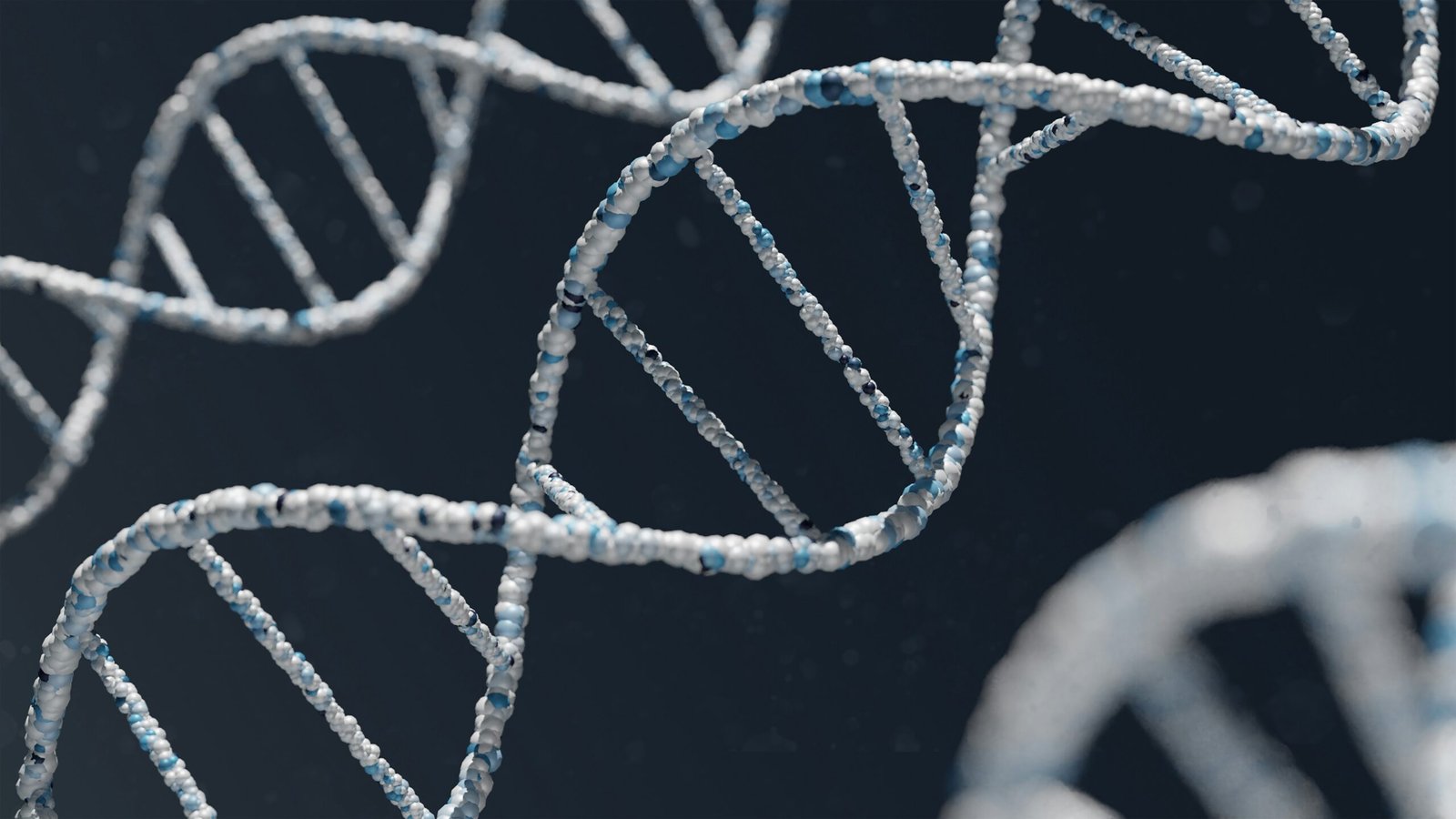
Today, even science confirms and reveals, with greater emphasis than a few years ago, the essential role of parents in a child’s life. It is not just a matter of bringing them into the world, feeding them, or educating them. Recently, the discipline known as Epigenetics has been revealing how everything around us, especially the unborn child and the baby, has a decisive effect on our lives. In Greek, epimeans “on, off, around,” and, as is well known, genetics refers to genes, the thousands of DNA segments that make us unique individuals.
For example, to understand the importance of the influence (conscious or not) of parents, especially the mother, we know that the most important stage for brain development is from the womb and during the first year of life. It has been estimated that this rapid growth of the brain and its circuits occurs at an astonishing rate: between 700 and 1,000 synaptic connections per second during this period. The loving presence or bitter absence of parents plays a role in all of this and much more.
There is growing evidence from the fields of developmental psychology, neurobiology, and epigenetic studies that abandonment, parental inconsistency, and lack of love can lead to long-term mental health problems, as well as reduced overall potential and happiness. There is ample evidence to support this claim across various disciplines, showing that supporting infants and their parents during the first two years of life is a crucial goal for community public health groups.
There are striking effects (called changes in methylation) in the brains of mice that have now also been observed in humans. Studies of the brains of people who committed suicide and suffered abuse during childhood show the same chemical patterns as mice that were “neglected” by their mothers.
Of course, in human beings, this goes much further. Thus, it is true that faith is transmitted in many ways, at least as an opening of the heart, which is difficult to achieve, or is not achieved in the same way, if maternal and paternal love has been lacking in childhood. In many areas of our lives, such as coming into this world or experiencing faith, God has not wanted to act alone, but with our humble help.
When our Father Founder tells us that progress in holiness (or in perfection, or in fullness of life, which are synonymous), is equivalent to growing in filial consciousness, he is NOT referring only to understanding our origin, but to awakening to all the bonds that unite us to God and to our neighbor, regardless of our belief, our fidelity, or our generosity. The filial experience with our parents prepares us for this path of fulfillment, in which “giving one’s life” is not only a heroic act, but the only way to achieve a freedom and serenity that cannot be attained by individualistic means, such as success or worldly pleasures of any kind. That is why Jesus declares: Truly, truly, I say to you, unless a grain of wheat falls into the earth and dies, it remains alone; but if it dies, it bears much fruit. He who loves his life will lose it, and he who hates his life in this world will keep it for eternal life (Jn 12:24-25).
In some way, those who lived before Christ intuited this. At the time when the Book of Sirach was written, belief in eternal life was just beginning; rather, there was talk of a “long life,” like Abraham’s, which is expressly mentioned in this First Reading as a reward for those who honor their father: He who honors his father will have a long life.
Attention to children can sometimes be a manifestation of possessive love, but attention to grandparents, especially when they need everything, can never be misinterpreted; it is an incomparable lesson in life. Children, as we know, learn more with their eyes than with their ears. They see and do not forget their parents’ behavior toward their grandparents.
The Book of Ecclesiasticus also places such a high value on fully lived filial piety that it even achieves the remission of sins:
He who honors his father is free from sin, and he who respects his mother accumulates treasures (…) The good done to your father will not be forgotten and will be taken into account for your sins.
Furthermore, in the verse immediately following today’s Reading, we read: Children, listen to me, I am your father, behave in such a way that you may be saved (Sir 3:1). That salvation that Sirach saw in his own way, we know that it begins now, as we are saved from a stunted and meaningless life.
—ooOoo—
Today’s Gospel account includes the flight to Egypt and the return to Israel, two undoubtedly difficult moments for the Holy Family, which included leaving behind many securities and habits of life and encountering new difficulties, such as the mistreatment suffered by the Jews in Egypt. This is offered today for our meditation so that we may understand how fraternal coexistence is possible if we are faithful, amidst unforeseen events, insecurities, fatigue, and differences in sensibilities.
What is the secret of Jesus, Mary, and Joseph? Not only good will, but, as we see in St. Joseph, seeking God’s will day and night, in the contemplation of everything (including dreams) and in the faces of those around him.
Today, Saint Paul summarizes how a community should behave when it is aware that God himself has brought them together:
As God’s chosen ones, holy and beloved, clothe yourselves with tender compassion, kindness, humility, meekness, and patience. Bear with one another and forgive one another, if anyone has a complaint against another. As Christ forgave you, so also do you. Above all these things, clothe yourselves with love, which is the bond of unity.
In the difficulties of living together, instead of living the Gospel Spirit and contrary to Jesus’ desire, the following instinctive reactions often occur when we feel “attacked”:
* Verbal aggression, emphasizing the other person’s faults with shouting, insults, or reproaches.
* Isolation, trying not to greet the other person, taking refuge in personal obligations, and avoiding almost any conversation. Much less taking an interest in the other person’s concerns, health, or work. This attitude is often accompanied by this shameful justification: It’s better this way, to avoid greater evils.
* Not asking forgiveness for any mistake or annoyance caused, whether minor or serious.
* Out of fear or submission, accepting aggression without questioning it.
* Becoming blocked, without the emotional capacity to respond.
In summary, instinctive reactions to what we consider aggression in the community or family tend to range from defense, silence, flight, or submission, all of which are understandable but insufficient to resolve the conflict, much less to give the witness that Jesus expects of his disciples. All this leads to painful separation in various ways and, of course, is reflected in the relationships of that family or community with the rest of the world, resulting in an unattractive group, regardless of their beliefs, ideas, or activities.
The proper attitude, in keeping with the Gospel Spirit, cannot be improvised; it arises only from continuous prayer, which can be summed up in the desire to be ambassadors of Christ, as St. Paul also said (2 Cor 5: 20). That is why he advises us today: Whatever you do in word or deed, do everything in the name of the Lord Jesus, giving thanks to God the Father through him.
It is St. Paul who most clearly contrasts the values “of Adam” with those of Christ. And the truth is that the difficulties, crises, and obstacles faced in communion and in the name of Christ paradoxically generate even greater unity, and with grace, even the worst situation can be transformed into an opportunity to bear witness to the divine presence.
A spectacular example, but one that is a model of what happens to us if we are faithful, is the story of Paul and Silas in Acts 16:25-26, when they sang hymns in prison and their witness opened hearts, even provoking divine action, with an earthquake that broke their chains and brought about the conversion of the jailer and his whole family. The prison was truly transformed into a temple.
It is the grace of Baptism that makes this possible, as St. Paul says, for that sacrament clothes us with the new man.
_______________________________
In the Sacred Hearts of Jesus, Mary and Joseph,
Luis CASASUS
President