Gospel according to Saint Matthew 21:33-43:
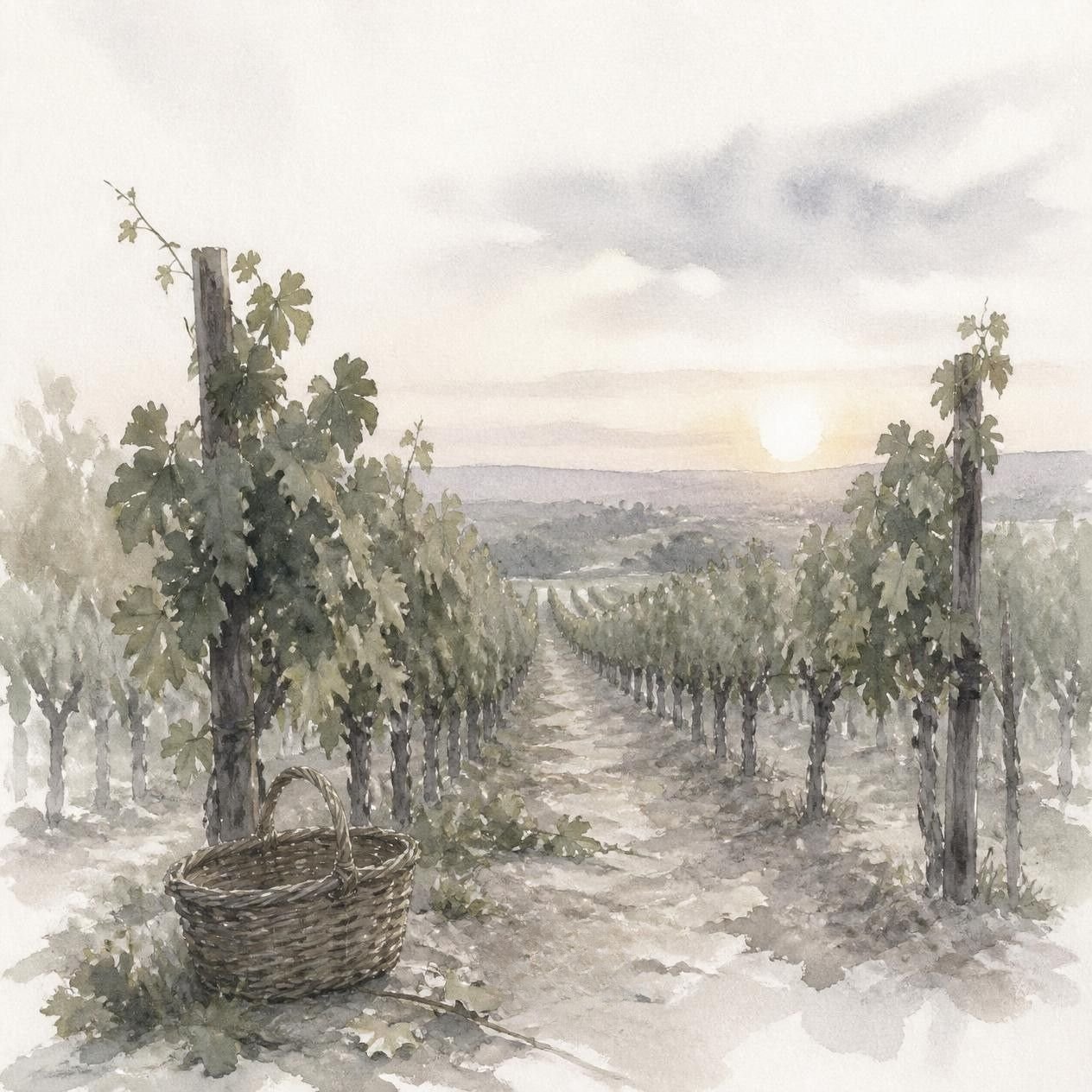
Jesus said to the chief priests and the elders of the people: “Hear another parable. There was a landowner who planted a vineyard, put a hedge around it, dug a wine press in it, and built a tower. Then he leased it to tenants and went on a journey. When vintage time drew near, he sent his servants to the tenants to obtain his produce. But the tenants seized the servants and one they beat, another they killed, and a third they stoned. Again he sent other servants, more numerous than the first ones, but they treated them in the same way. Finally, he sent his son to them, thinking, ‘They will respect my son.’
But when the tenants saw the son, they said to one another, ‘This is the heir. Come, let us kill him and acquire his inheritance.’ They seized him, threw him out of the vineyard, and killed him. What will the owner of the vineyard do to those tenants when he comes?” They answered him, “He will put those wretched men to a wretched death and lease his vineyard to other tenants who will give him the produce at the proper times.” Jesus said to them, “Did you never read in the Scriptures: The stone that the builders rejected has become the cornerstone; by the Lord has this been done, and it is wonderful in our eyes? Therefore, I say to you, the kingdom of God will be taken away from you and given to a people that will produce its fruit.”
What are the fruits of the Lord’s vineyard?
Luis CASASUS President of the Idente Missionaries
Rome, October 04, 2026 | XXVII Sunday in Ordinary Time
Isa 5: 1-7; Phil 4: 6-9; Mt 21: 33-43
How many times have we heard phrases like these in families, communities, and organizations?:
– It’s impossible to work with Eulalio; he’s incapable of listening or accepting any opinion other than his own.
– I’d rather organize this activity on my own, because nobody cares and everyone has other priorities.
– I’d rather just avoid conflicts, because any initiative I take is met with criticism or indifference. At least this way, I preserve harmony.
The First Reading, the Psalm (79), and the Gospel passage speak of conflicts and the bitter fruits of that vine that represents the chosen people—called to produce the finest grapes, yet causing scandal through their divisions and acts of arrogance. We, of course, are part of that chosen people.
The lack of communion is so serious that it renders most of the efforts of leaders or superiors futile, which explains Christ’s forceful words at the end of his discourse: The kingdom of God will be taken away from you and given to a nation that produces the fruits of the kingdom.
God’s plans cannot be destroyed, but the workers who refuse to carry them out can be replaced. These unworthy workers can be clearly and forcefully characterized by Christ’s words: They desire to be served, which is the exact opposite attitude of Jesus, who did not come to be served, but to serve and to give his life as a ransom for many (Mt 20:28), according to his own words. We often speak of the importance of “serving,” which implies being willing to perform tasks that do not seem relevant to me, yet in doing so we bring relief to our neighbor; likewise, service includes making the mission of others possible, which requires attentiveness, a willingness to deal with all kinds of unforeseen circumstances, and, ultimately, serving as an example, as a humble model.
Regarding this last point—modestly helping others find ways to live fruitfully—Pope Leo XIV said to those attending the inauguration of the Pastoral Year in Rome (September 18, 2026):
The Church does not exist for itself, but to lead every person to an encounter with the Lord.
Undoubtedly, this is the fruit that God the Father, Lord of the vineyard, expects from us, both personally and as a community; once again, let us recall Jesus’ words about himself and about us: to give his life as a ransom for many—that is, to free our neighbors from every form of slavery in this world and to show them the path to the Father that they can follow right now.
—ooOoo—
For the unworthy workers, who in some way beat, stone, and kill the true servants, the most terrible punishment is poetically expressed in the First Reading: rather than being trampled underfoot, overgrown with thorns, and turned into pasture, what is truly harsh is that for those lives, for those vineyards, the owner of the vineyard will forbid the clouds from raining on them. This means, of course, that they will lose the grace that was reserved for them, which is neither symbolic nor abstract: God will not grant them souls to care for, even if they hold important positions, even if they diligently carry out many activities, even if they have brilliant ideas and speak with authority.
That barrenness is certainly a profoundly significant punishment, which will prevent them from entering heaven accompanied by the souls they could have cared for. It is the universal—and in this case, very real—version of what so many peoples, such as the Jews, considered a punishment from heaven: the inability to start a family. But it is also a punishment that begins in this world, for no social, intellectual, or economic success can replace the joy of directly caring for souls—no matter how demanding this may be—since it means participating in the mission of the Good Shepherd himself. This refers to spiritual motherhood or fatherhood.
There are numerous examples in the Old and New Testaments of the opposite situation: how Providence grants the most unexpected fruitfulness to those who remain faithful in the midst of difficulty and suffering.
Let us recall the case of Hannah, the mother of the prophet Samuel (1 Sam. 1–2). Hannah experiences personal devastation, marked by barrenness, public humiliation, and the constant taunts of Peninnah, Elkanah’s other wife, for this woman envied the love Elkanah had for Hannah. She could not “do” anything to resolve her pain, but within her an inner fruit was born that transformed her story: With bitterness of soul, she prayed to the Lord and wept profusely (1 Sam 1:10).
That inner gesture—not an external action, but an attitude of openness of the heart—opens itself to God from a place of vulnerability, thus creating a space for God to rebuild what was broken. Hannah does not rebuild her life through grand, visible acts, nor by hiding her pain or using it to manipulate others. She does so through an inner fruit—a heart that opens to God in truth. This is what St. Paul recommends to the Philippians today: in prayer and supplication with thanksgiving, let your requests be made known to God.
That fruit allows God to do what she cannot: create life where there was barrenness. Her son Samuel was one of the greatest heroes of the people of Israel.
A New Testament example where an inner fruit of the heart allows God to rebuild what has been destroyed is that of Peter, after he denied Jesus. It is one of the most profound accounts of inner transformation in all of Scripture. Peter had failed devastatingly, denying Jesus three times and thus breaking communion,
Nothing external could repair that; no action could make up for such a betrayal. But an inner fruit was born within him that opened the door to restoration: a repentance that does not flee, but returns to Jesus.
And going out, he wept bitterly (Lk 22:62).
That weeping is not just pain; it is truth from the heart, it is humility, it is openness. It is the inner fruit that allows God to rebuild what Peter has broken. That inner fruit prepares the way for the decisive encounter in John 21:
“Do you love me?”
“Lord, you know everything; you know that I love you.”
Peter offers no actions, promises, or merits, but presents his broken heart. And from that heart, it is Jesus who rebuilds: friendship, mission, and trust.
Thus, he goes from traitor to shepherd—not because of his external deeds, but because of an inner fruit that made room for grace. He remembers Jesus’ gaze, and his tears are a wordless prayer, without excuses. In this way, he manages to return to Jesus instead of fleeing, as Judas Iscariot did.
—ooOoo—
The image of the vineyard offers us the opportunity to understand and love our heavenly Father as Christ did—that is, by contemplating His Affliction, His most intimate pain as a Person, as one who loves His children. That led Him to give His life not only out of love for human beings—sinners—but especially to embrace His Father’s suffering.
We, too, have that experience when we see so many missed opportunities in people’s lives, especially among the youngest. That contemplation moves us more powerfully than any of our own ideas or plans, for it touches the very depths of our being. I believe we can point to two examples more powerful than any rational explanation.
֍ One is the mother of the seven Maccabean brothers in 2 Maccabees 7. Her story is one of the most radical testimonies of maternal love, faith, and martyrdom in the entire Bible. A king tries to force seven young men to renounce their faith. One after another, they are tortured and executed. The mother is there, present, watching as each son is led to his death. And yet, despite the excruciating suffering, she does not break; for this, she receives and embraces a special grace. Her grief does not paralyze her; rather, it becomes an inner strength that sustains her sons at the decisive moment.
She embraces each son before his martyrdom, as if to impart her own breath to them; she speaks to them with tenderness and firmness, reminding them that God is stronger than pain and instilling courage in them—not “to die,” but to remain in the truth. In this way, she offers up her own inner life, for each of her sons’ deaths is also a death within her.
Her maternal love is shared martyrdom. She dies seven times before dying just once. Of course, she does not seek suffering, but rather to protect her children’s identity, even when she can no longer protect their bodies.
Her grief becomes a form of giving life, as she pours out her whole heart in every farewell and also because her pain is transformed into courage for them.
֍ The second example is Irena Sendler (1910–2008), a Catholic nurse and social worker who became one of the most shining examples of active compassion. Her affliction for the Jewish children trapped in the Warsaw Ghetto led her to literally risk her life every day. She entered the ghetto with fake permits, officially for medical duties.
She smuggled children out hidden in sacks, toolboxes, ambulances, trash cans, and even empty coffins. She gave them new identities, placed them with families and in Catholic convents, and kept their real names in jars buried under a tree.
She knew that if she were discovered, she would be killed, and indeed, she was captured, tortured, and sentenced to death. She survived only because other members of the resistance bribed the guards. She continued to work in secret, even with broken bones.
Although Irena was not the biological mother of those children, her anguish at seeing them hungry, sick, and destined to die awakened in her a radical spiritual motherhood.
She suffered for the children she could not fully protect, risking her life so that they might live and dying emotionally every time she entrusted a child to a family… without knowing if she would ever see them again. In this way, she not only saved lives but also built a future for each one.
This was possible not only because of the strength and generosity of this exceptional woman, but also because of the way she nurtured the faith she had received, which enabled her to overcome her fear of pain and death.
That is what Jesus does for us, and that is exactly what he expects us to do with the grace we have been given—to be fruitful, to literally give authentic life to those whom their own history has mistreated and left unable to walk.
_____________________________
In the Sacred Hearts of Jesus, Mary and Joseph,
Luis CASASUS
President