Gospel according to Saint Matthew 4:12-23
When Jesus heard that John had been arrested, he withdrew to Galilee. He left Nazareth and went to live in Capernaum by the sea, in the region of Zebulun and Naphtali, that what had been said through Isaiah the prophet might be fulfilled: “Land of Zebulun and land of Naphtali, the way to the sea, beyond the Jordan, Galilee of the Gentiles, the people who sit in darkness have seen a great light, on those dwelling in a land overshadowed by death light has arisen.” From that time on, Jesus began to preach and say, “Repent, for the kingdom of heaven is at hand.”
As he was walking by the Sea of Galilee, he saw two brothers, Simon who is called Peter, and his brother Andrew, casting a net into the sea; they were fishermen. He said to them, “Come after me, and I will make you fishers of men.” At once they left their nets and followed him. He walked along from there and saw two other brothers, James, the son of Zebedee, and his brother John. They were in a boat, with their father Zebedee, mending their nets. He called them, and immediately they left their boat and their father and followed him. He went around all of Galilee, teaching in their synagogues, proclaiming the gospel of the kingdom, and curing every disease and illness among the people.
The vocation of a lighthouse keeper
Luis CASASUS President of the Idente Missionaries
Rome, January 25, 2025 | III Sunday in Ordinary Time
Is 8: 23b–9,3; 1Cor 1: 10-13.17; Mt 4: 12-23
On many occasions, Pope Francis has told the story of his own vocation, when he felt that God was calling him to serve Him as a priest.
On September 21, 1953, a 16-year-old boy named Jorge Bergoglio was planning to go out with his friends to celebrate an Argentine national holiday called Student Day. Jorge decided to begin the festivities by going to pray at his parish church, dedicated to St. Joseph.
When he arrived at the church, he saw a priest he did not recognize, but who seemed to radiate kindness. He decided to approach him and asked him to hear his confession. We do not know what Jorge said to the priest, nor what the priest replied. But we do know that this confession completely changed not only the teenager’s plans for that day, but for his entire life. During the Jubilee Year of Mercy, Pope Francis said:
For me, this was an experience of encounter: I discovered that Someone was waiting for me. However, I don’t know what happened. I don’t remember. I don’t know why that particular priest, whom I didn’t know, was there, or why I felt that desire to confess. But the truth is that Someone was waiting for me. He had been waiting for me for a long time. After confessing, I felt that something had changed. I was no longer the same. I had heard something like a voice or a call. I was convinced that I had to become a priest.
It is a beautiful experience. Although each vocation is different, there are common features to all of them, including vocations to a profession or an artistic activity. Every vocation is a response to a call, and not just to an inner inclination, to self-realization, or to one’s own project.
One of the most beautiful ways this happens in the soul of a young person is when they feel the urge to “be like that geography teacher,” or “like that musician,” or “like that doctor who took care of my father.” Of course, vocation invades our whole being when we feel the impulse to be “like Christ,” perhaps through the witness of someone who reminds us of Jesus. It is a call that is often made without words; we would say that it is something magnetic, so we gladly allow ourselves to be caught up in it.
Such was the case of our unforgettable Chilean brother Rodolfo Valdez Phillips, who passed away at the age of 95 in 2016, on the feast day of St. John Paul II. He was a cultured and educated person who lived as a fighter for social justice, a lover of his country, and a collaborator of St. Alberto Hurtado, from whom he inherited his disposition to always seek to help the most disadvantaged. When he discovered the Idente charism, he did not hesitate to persevere to the end, and today his life is a source of inspiration for our Chilean community and for all of us.
Even if a vocation is followed with selfish or narcissistic undertones (we all know of certain artists), it is still a calling, in this case from one’s own self. This is the case of those who “help” while needing to be seen helping; those who respond to the pain of others, but only as long as that pain confirms their importance. There may be dedication: hours of effort, even hard sacrifice. But, inwardly, the call is not that of the needy, but that of one’s own reflection: to be indispensable, to be admired, to be recognized as good. This “servant” does not listen fully to the other, because deep down he is listening to himself. He is not happy that his brother is growing up and no longer needs him, but fears becoming unnecessary.
It is a vocation that could be called “displaced”: it does not respond to “follow me,” but to “look at me.” That explains why Christ warns: When you give alms, do not let your left hand know what your right hand is doing, not to hide the good, but to purify the heart of the one who serves. This is because true service frees the other person, and also frees the server from himself.
It could be said that a vocation is born where what I am capable of doing, what gives meaning to my life, and what others need intersect. This happens even when the vocation comes at times of difficulty and stress. This explains why the Master tells us: Come to me, all you who are weary and burdened, and I will give you rest (Mt 11:28). But this is an invitation to an unexpected active life, which is why he adds: Take my yoke upon you and learn from me, for I am gentle and humble in heart, and you will find rest for your souls.
Not all professional vocations have an explicit component of helping and assisting those in immediate need (such as medicine or teaching), but even technical, cleaning, maintenance, artistic, or scientific jobs improve the lives of others, sustain society, and create goods, beauty, knowledge, or useful structures. Those who live their vocational activity with this awareness of service and response to a need do so enthusiastically, with a contagious spirit.
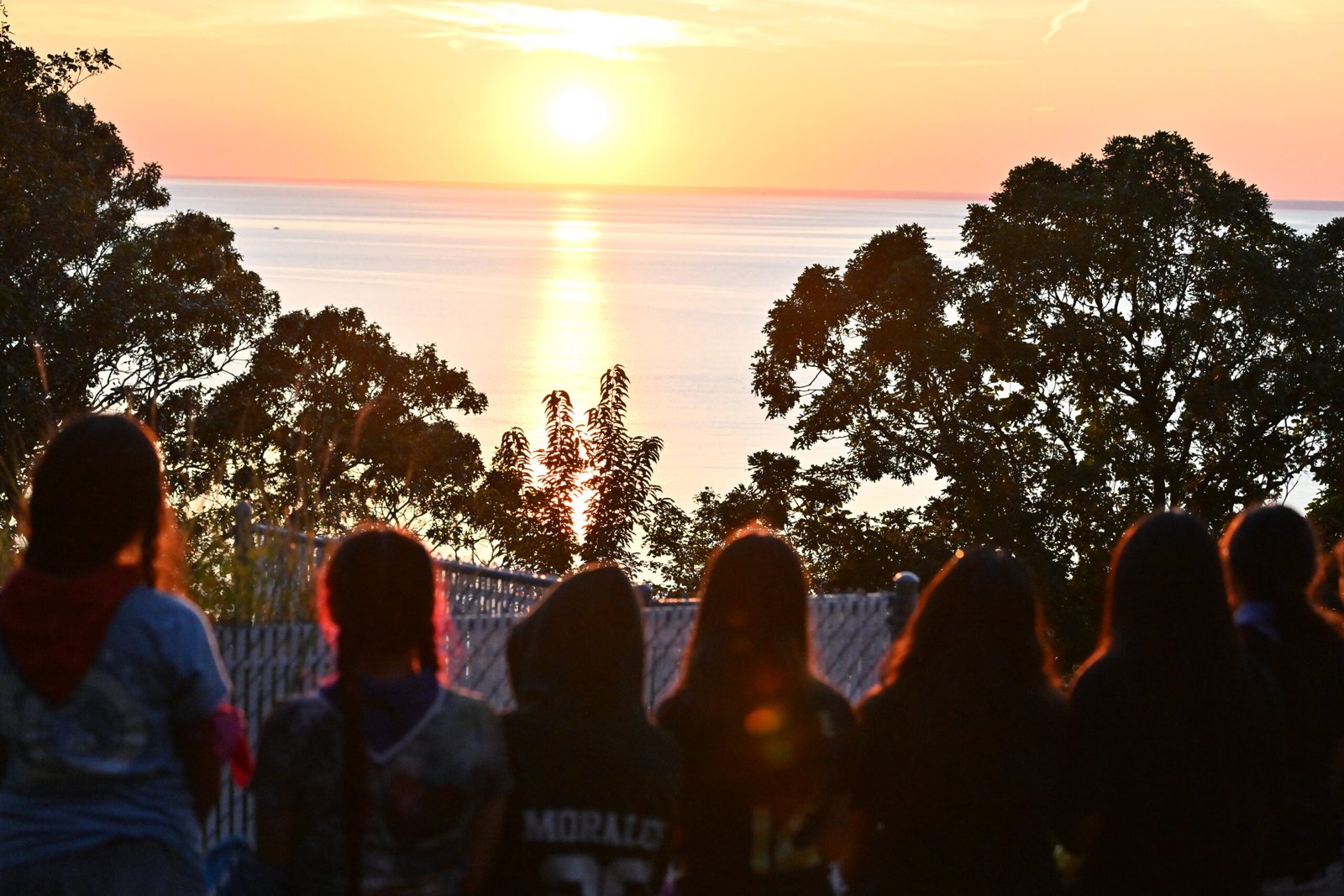
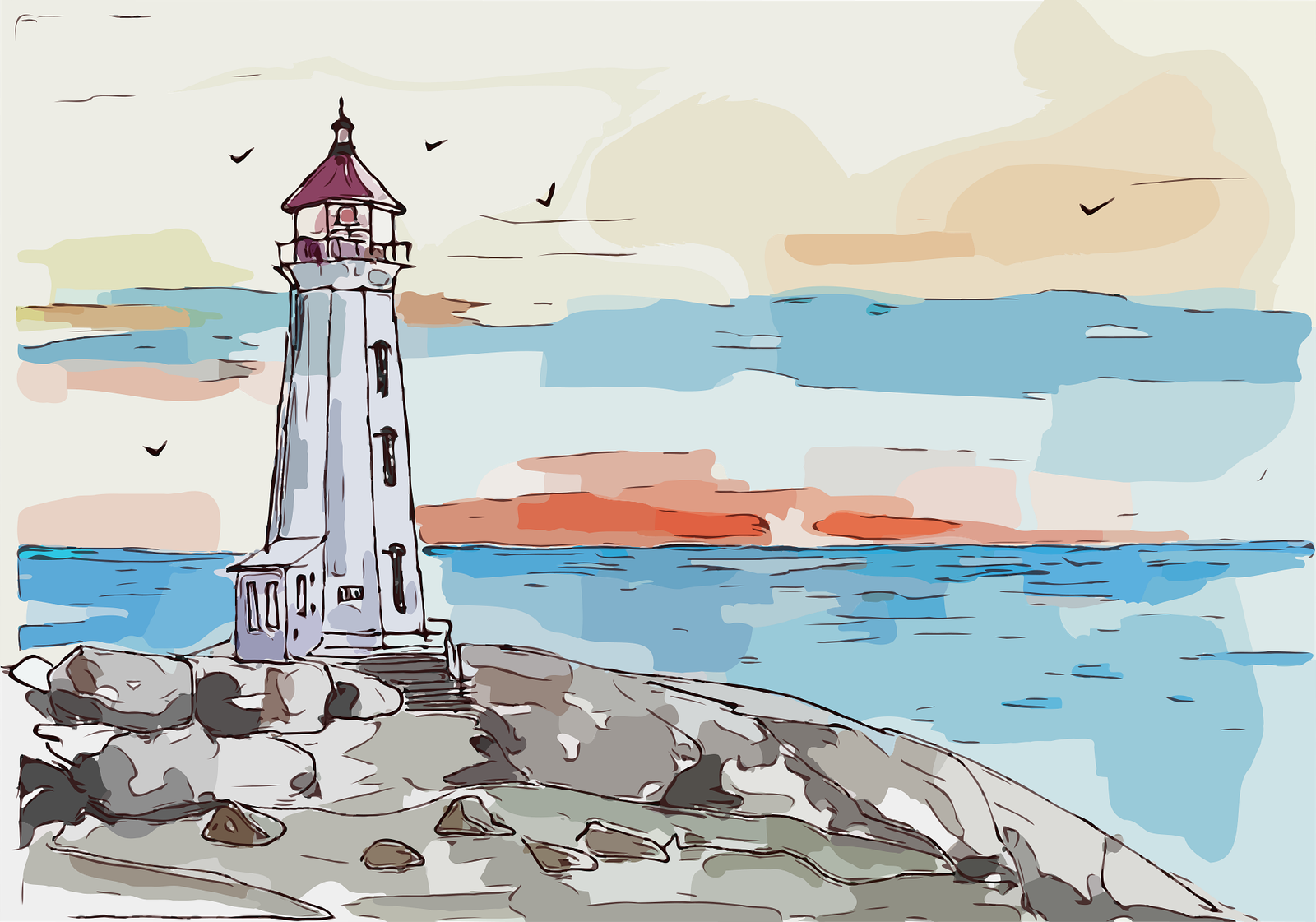
I remember the story of a modest employee in charge of a lighthouse. Every afternoon, at sunset, he would climb the steep hill and light the lighthouse. The work was always the same, heavy, lonely, and monotonous.
Some lighthouse keepers before him had done the same task, but reluctantly. They climbed the steps, turned on the light, and went back down, waiting for the end of the day.
But before lighting the lantern, this lantern keeper would gaze at the horizon. He would think about the ships he couldn’t see, the sailors who relied on a distant light, the lives he would never know. And then his step would become lighter, because he remembered what he was there for.
One night someone asked him: Don’t you get tired of always doing the same thing?
The lamplighter replied: I would get tired if I lit a lamp. But I light a path.
—ooOoo—
But we cannot be naive. We have all seen beautiful vocations that are destroyed at a certain point. It is useful to understand that this can happen not only because of fatigue or dryness, but also because of a new “calling,” stronger than a momentary whim, which can well be described as a temptation, inviting us to change course.
In a passage from The Odyssey, Homer’s famous epic poem, it is recounted how Ulysses, during his return to Ithaca, must pass by the island of the Sirens, creatures who possessed voices of immense sweetness and musicality. Thanks to their gift, they attracted sailors’ ships; the sailors were so enchanted by such beautiful music that they jumped off the ship to hear it better, drowning in the waters.
The sorceress Circe warned Ulysses about the power of the Sirens and suggested a strategy: Ulysses ordered his companions to cover their ears with wax so they would not hear the melody. And in order to listen to the song without danger, he had himself tied firmly to the mast of the ship. He asked his men that, if he begged them to untie him, they should tie him even tighter and ignore his pleas. Thus, the Sirens sang, Ulysses felt the desire to free himself, but his men obeyed his order, and the ship passed without incident, leaving the island of the Sirens behind.
This episode is a famous example of inspired and intelligent self-sacrifice, which Ulysses used preventively to protect himself from future temptation, especially when his own will was weakening.
In practice, it is clear that the greatest difficulty in pursuing a religious vocation is disagreement and division. Today, in the Second Reading, St. Paul tells us of his concern for the divisions he observed in the church of Corinth, typical of those who do not recognize that God… “also” calls our neighbor, even though we see, above all, their faults and shortcomings.
That is why saints, such as Blessed María Ana Mogas Fontcuberta (1827-1886), founder of the Franciscan Missionaries of the Mother of the Divine Shepherd, give us advice on living together, often full of wisdom and good humor. She wrote to her daughters: Bear with one another, as I have borne with you all. On the positive side of living together, and undoubtedly thinking of this fraternal testimony, our Founder, Fernando Rielo, says to the Idente missionaries: Do not do separately what you can do together. It is not an obvious call to be stronger and more effective by being united, but to prepare the ground where the Holy Spirit can sow.
It is not just a matter of avoiding conflict, but of allowing our coexistence to become a testimony that cannot be given individually.
—ooOoo—
One of the most urgent vocations in today’s world, for any adult and especially for consecrated persons, is to help young people grow in their emotional, affective, intellectual, social, and spiritual capacities.
To fish for men is to form people to become what they are called to be in God’s plan. Surely, today it is more difficult than before, which is not a personal impression, but a symptom that can be seen in the difficulties experienced by schools, universities, youth associations… unable to assimilate all the changes in societies and cultures, accelerated by globalization and hyper-connection.
This is, in reality, a new expression of something old, as already manifested in Adam and Eve with their desire to be independent, to make decisions without consulting anyone. That is why it is so important to grow in filial consciousness, to contemplate all that we have received as our inheritance and what has been entrusted to us as our task. The first disciples, in the midst of severe difficulties, prejudice, and envy, were able to keep their eyes on their Master, and this was enough for them to give everything.
That is why Christ makes a continuous effort to manifest his presence. As today’s Gospel text concludes:
Jesus went throughout Galilee, teaching in their synagogues, proclaiming the Good News of the Kingdom, and healing every disease and sickness among the people.
In the Eucharist, in the hunger and thirst for truth of so many people, in the loneliness that waits, in the witness of the “saints next door” (an expression of Pope Francis), in the hidden pain of our neighbor, in the purest dreams of the youngest… Christ continues to accompany and call us.
_______________________________
In the Sacred Hearts of Jesus, Mary and Joseph,
Luis CASASUS
President