Gospel according to Saint Matthew 9:36—10:8
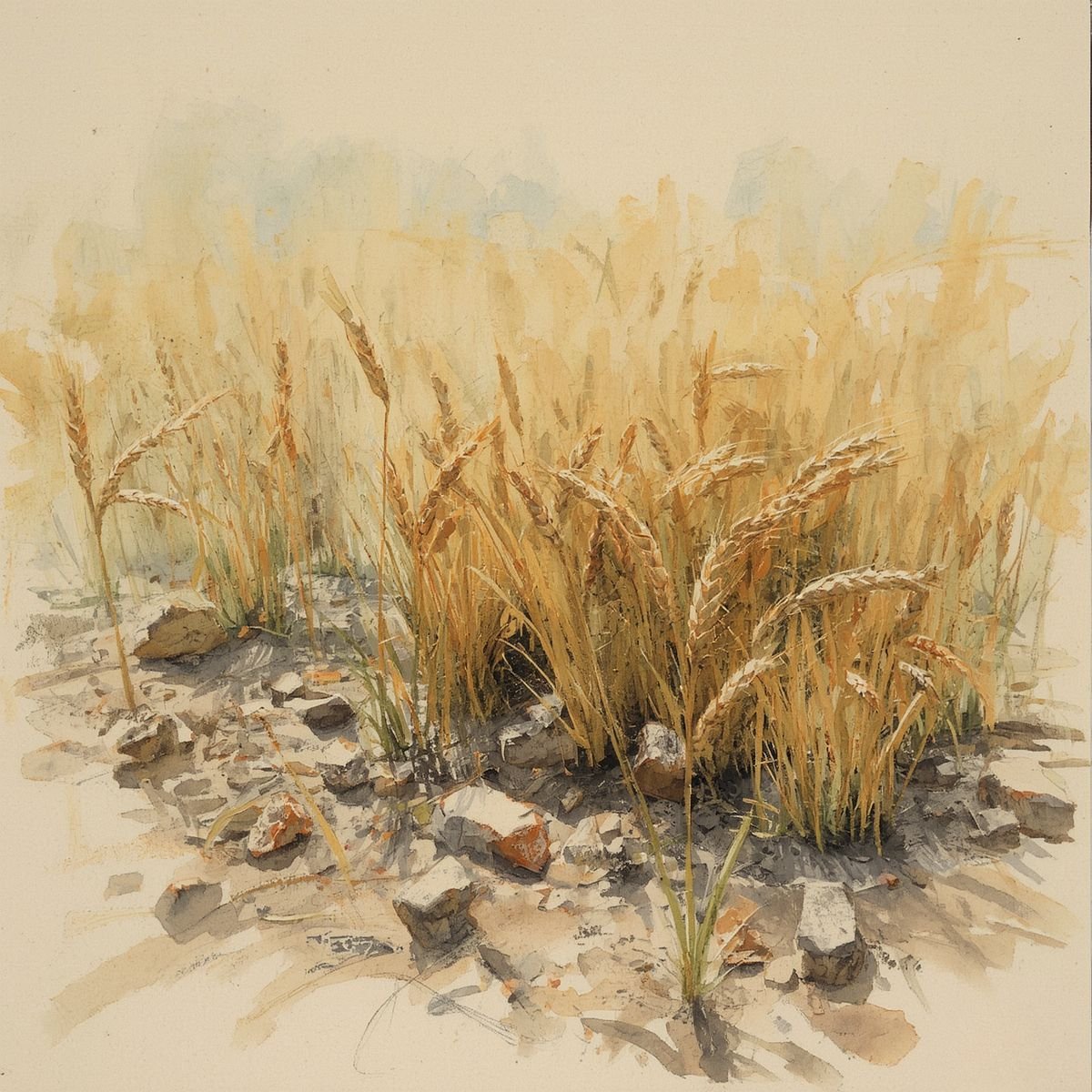
At the sight of the crowds, Jesus’ heart was moved with pity for them because they were troubled and abandoned, like sheep without a shepherd. Then he said to his disciples, “The harvest is abundant but the laborers are few; so ask the master of the harvest to send out laborers for his harvest.”
Then he summoned his twelve disciples and gave them authority over unclean spirits to drive them out and to cure every disease and every illness. The names of the twelve apostles are these: first, Simon called Peter, and his brother Andrew; James, the son of Zebedee, and his brother John; Philip and Bartholomew, Thomas and Matthew the tax collector; James, the son of Alphaeus, and Thaddeus; Simon from Cana, and Judas Iscariot who betrayed him.
Jesus sent out these twelve after instructing them thus, “Do not go into pagan territory or enter a Samaritan town. Go rather to the lost sheep of the house of Israel. As you go, make this proclamation: ‘The kingdom of heaven is at hand.’ Cure the sick, raise the dead, cleanse lepers, drive out demons. Without cost you have received; without cost you are to give.”
He traveled through all the towns and villages
Luis CASASUS President of the Idente Missionaries
Rome, June 14, 2026 | XI Sunday in Ordinary Time
Ex 19: 2-6a; Rom 5: 6-11; Mt 9: 36-10:8
It all began with Jesus’ compassion “when he saw the crowd.” The text uses the Greek word that means “moved to the depths of his being.” This, then, is not merely a deep emotion, but a life-changing sorrow and compassion that goes far beyond what anyone would naturally feel.
Jesus had just healed a paralytic, freed Matthew from his greed, healed a chronically ill woman, two blind men, a mute man… and he had also raised Jairus’s daughter from the dead. But now he takes it a step further; he invites his disciples to perform the same actions, which he summarizes in two gestures: proclaiming that the kingdom of heaven is near and performing all kinds of healings.
These disciples did not seem to have exceptional talents, but today we call them “saints” because they accepted the power to heal all diseases and infirmities and cast out unclean spirits. They allowed themselves to be infected by Jesus’ longing, which He brings to life through simple acts, such as taking Jairus’ daughter by the hand to bring her back to life. Of course, you and I have received the same call from the Master, because we can reach people whom He could not have by His side—all those we call “our neighbors,” all those who, in many ways, are distressed and downcast, even if it does not seem so, even if they do not recognize it.
Perhaps the most relevant case is that of those we consider weak or less capable, such as the sick or children, whom Jesus places above the strong and the experienced.
For example, a few days ago, in Peru, we were received by a bishop suffering from advanced-stage cancer, with multiple metastases and a prognosis that doctors deemed far from promising. This religious leader did not speak of his illness; he simply set out to continue visiting every day as many parishes as he could, because people sought his presence and received from him a spiritual vitality that he conveys through the simplicity of his presence. It is no surprise that he chose as his episcopal motto Christ’s words: I have come that they may have life, and have it to the full.
When it comes to children, I recall recently meeting a nine-year-old girl who has suffered abandonment and violence, with significant lasting effects; yet she cares for another girl even younger than herself, who has difficulty speaking and walking, thus putting her own needs aside and—clearly—receiving a grace that enables her to heal others.
How often do we fail to hear the call to heal our neighbor because we pay excessive attention to our own pain and worries, which are undoubtedly real!
Jean Valjean is the protagonist of Les Misérables (1862), Victor Hugo’s famous novel, and one of the most profound and transformative characters in all of literature. He is an ex-convict sentenced for stealing a loaf of bread for his starving family, a man scarred by 19 years of hard labor, who has known humiliation, violence, and dehumanization… until mercy touches him.
That touch is his encounter with Bishop Myriel, who offers him not only refuge but a forgiveness that shatters his inner logic and compels him to be reborn.
He changes his name, founds a factory, becomes mayor, and dedicates his life to doing good. In contrast, Javert is a police inspector obsessed with absolute compliance with the law. He was born in a prison, the son of a fortune-teller and a convict, and that marked him deeply. To escape that origin, he clung to the law as a lifeline and sees the world divided into two: the righteous and the criminals. For him, Jean Valjean belongs forever to the second group.
Fantine arrives at the town hall of Montreuil-sur-Mer a shadow of her former self. She has lost her job, sold her hair and her teeth, and turned to prostitution to send money to Cosette.
When she is arrested for defending herself against a man who has insulted her, she is sick, broken, full of rage and shame, convinced that no one in the world looks at her with dignity.
She enters the mayor’s office without knowing that it is Jean Valjean.
Javert accuses her. Fantine, trembling, awaits a sentence. But Valjean looks at her… and sees something no one else sees: not a guilty woman, but a wounded woman.
While Javert demands punishment, Valjean feels that his heart—marked by years of suffering—recognizes her pain. And then he utters the phrase that defies the logic of the world: This woman is not guilty. With those words, Valjean not only frees her, but restores her. What is extraordinary is that Valjean is living through his own drama: his identity is in danger, Javert is watching him, his past threatens to destroy him—and yet, he does not focus on his own pain. He focuses on Fantine’s.
He picks her up from the ground, calls her “madam, takes her to a hospital, and promises to bring Cosette to her. Fantine, who had been treated like trash, hears for the first time in a long while a voice addressing her with dignity.
This compassion that Christ shows, we must not only imitate, but multiply, so that many may live it out. It is not a quantitative matter, but rather represents the fullness of love, something every human being longs to experience, no matter how far removed they may feel from the Church, religious practices, or faith. The twelve disciples sent by Jesus do not represent the religious men and women of the world, but rather all of humanity.
Why are there so few workers? Because few are in communion with the Father and the Son. It is in communion with the Father and the Son that I find that love, that compassion which draws me toward my brother and makes me a worker, a collaborator with God the Father, makes me a son. So it is precisely prayer—this profound experience of God’s love for me—that frees me from myself. It is the experience of being loved that allows me to love just as I am loved.
We live in a ruthless world where everyone instinctively thinks of themselves, where the other is a competitor, an enemy, and I do not feel like a brother. So, I am not a son either. However, understanding this compassion, this infinite love of God for humanity, this tenderness for these people, gives me the same heart as God the Father, and thus I live as a brother toward them, excluding no one. If I exclude one, the one I exclude is the Lord who made himself the least of all.
Asking the Master of the vineyard to send workers is not begging for an increase in the number of consecrated men and women, but for every human being to open their heart to this concern of Christ: that we may be healed, all living out mercy and thus be happy and share this happiness with our neighbor. Praying for more vocations to religious life is something else—something necessary that must go hand in hand with our witness and the way we accompany those who might be inspired by a charism and, above all, by a personal and communal witness.
The First Reading already invited the people of Israel—and all of us—to be “a kingdom of priests.” This is a privilege, not because of its connotation of social status, but because of the opportunity to serve, which can be a generous and sometimes deeply self-sacrificing act, but above all, the fulfillment of our lives in this world.
—ooOoo—
An observation, in the style of St. Ignatius, for when we feel weariness, frustration, or deep disappointment while trying to follow Christ on his tireless journey.
The fact that Jesus teaches in all the towns and villages means that there is no place, no situation, and no person that is overlooked or insignificant.
For St. Ignatius, “being desolate” means experiencing an inner movement of darkness, confusion, and estrangement from God, a state in which a person feels their faith weakening, their hope diminishing, and their love growing cold. This definition appears within the framework of spiritual discernment in the Spiritual Exercises, where Ignatius describes desolation as one of the two great movements of the soul, alongside consolation. Desolation is a spiritual state of perceived confusion and estrangement, but also a place where God works silently to purify, strengthen, and direct the heart toward a freer and more mature love.
What is the first thing to do when I am desolate? The first thing to do is not to do anything that comes to mind at that moment. When someone is desolate, usually, if they are walking, they decide to stop. All the good decisions I had made the day before vanish; faced with the difficulty, I begin to tell myself: It seems I was wrong, maybe it’s not fair, maybe it’s not the right time yet… that is, I am assailed by endless doubts. If these doubts arise, it is because I am desolate, and because the enemy always seeks to prevent me from doing good through these obstacles.
So, when I am desolate, the first thing I must do is… not do what I would do at that moment. I should rather do what I had decided the day before in a moment of consolation, because good decisions are made in moments of consolation, in the light of the Spirit. Otherwise, if when difficulty arises I begin to follow the suggestion of the difficulty, of fear, I will never achieve anything.
So, the first rule of conduct in the face of fear, mistrust, or sadness is never to change the good decisions I had made. In this way we also learn to free ourselves from our inner fickleness, from our moods, and not to be slaves to the ego. If I cannot do this first thing, I will never move forward. It will happen to me as it did to the people of Israel, who, as soon as they went out into the desert, began to feel hungry and said: Woe is me! We were better off in Egypt; there were pots of meat there. God has brought us out of there to deceive us. Then he will make us die in the desert. There is always the fear of moving forward. So, this is the first rule of conduct. What to do in desolation? Do nothing, make no decisions. Do not change my intention, because it is not mine alone.
I would sum up what I like to do during those moments of boredom or fatigue as follows:
On a grey day of dust and silence,
when nothing shone,
you told me in a whisper
without a single word
that you expected no birds or flowers,
not even the songs of children
only the quiet complicity of friendly eyes
searching in yours
for the next station of their destiny.
_____________________________
In the Sacred Hearts of Jesus, Mary and Joseph,
Luis CASASUS
President