Gospel according to Saint Luke 23:33.39-43
When they came to the place called the Skull, they crucified him and the criminals there, one on his right, the other on his left. Now one of the criminals hanging there reviled Jesus, saying, “Are you not the Messiah? Save yourself and us.” The other, however, rebuking him, said in reply, “Have you no fear of God, for you are subject to the same condemnation? And indeed, we have been condemned justly, for the sentence we received corresponds to our crimes, but this man has done nothing criminal.” Then he said, “Jesus, remember me when you come into your kingdom.” He replied to him, “Amen, I say to you, today you will be with me in Paradise.”
Death helps us to live (F. Rielo)
Luis CASASUS President of the Idente Missionaries
Rome, November 02, 2025 | All the Faithful Departed
Wis 3: 1-9; Rom 5: 5-11; Lk 23: 33.39-43
Lord, if you had been here, my brother would not have died (Jn 11:21). This expression by Martha, Lazarus’ sister, is yet another example of how the death of a loved one causes us distress, in the face of which, consciously or not, we seek comfort, something to ease our pain and encourage us to move forward. It is not something that everyone achieves. Not even those of us who have received the gift of faith can free ourselves from pain, just as Jesus could not help but shed tears, which joined those of Martha and Mary. Look how much she loved him! said some witnesses.
For many human beings, fear and anxiety about death stem from our ignorance, our lack of experience about what happens next. We fear what we do not know; we are frightened by the apparent nothingness after life, the possibility that the most beautiful moments lived with loved ones will evaporate forever.
Martha’s words sum up the universal aspiration for a presence that defeats this relentless enemy, before which every attempt to make man absolute inevitably fails: death. But these words have more scope than they seem; they refer not only to physical death, but also to sin, which constantly separates us from God and causes us to suffer. In truth, all suffering is a form of dying. This explains why St. Francis of Assisi, in his Canticle of the Creatures, asks us to praise God for “our sister bodily Death,” calling it this because he understands that it is not so much an end, but rather a passage to eternal life in the Creator.
Similarly, St. Paul says that the last enemy to be destroyed is death (1 Cor 15:26) because it represents the final barrier between humanity and eternal life in God. Death is seen as the ultimate consequence of sin, and its defeat symbolizes Christ’s total victory.
Death will be “destroyed” when there is no longer any separation between God and his children. Revelation also says that “there will be no more death” (Rev 21:4), confirming this promise. Poetically and humorously, our Founding Father writes in Transfiguration, his book of proverbs: Death helps us to live.
Today’s Gospel contains a statement by Christ, addressed to the thief who was crucified alongside Him, which helps us to understand two truths:
* There is more than just the “memory” of those we love who have departed from this world.
* True consolation is experienced in the company of those who have ended their earthly life.
Certainly. Since our time in this world is so brief, Jesus can also say to you and me: I assure you: today you will be with me in Paradise.
—ooOoo—
But rather than giving complicated theological arguments, I would like to express it with a simple story:
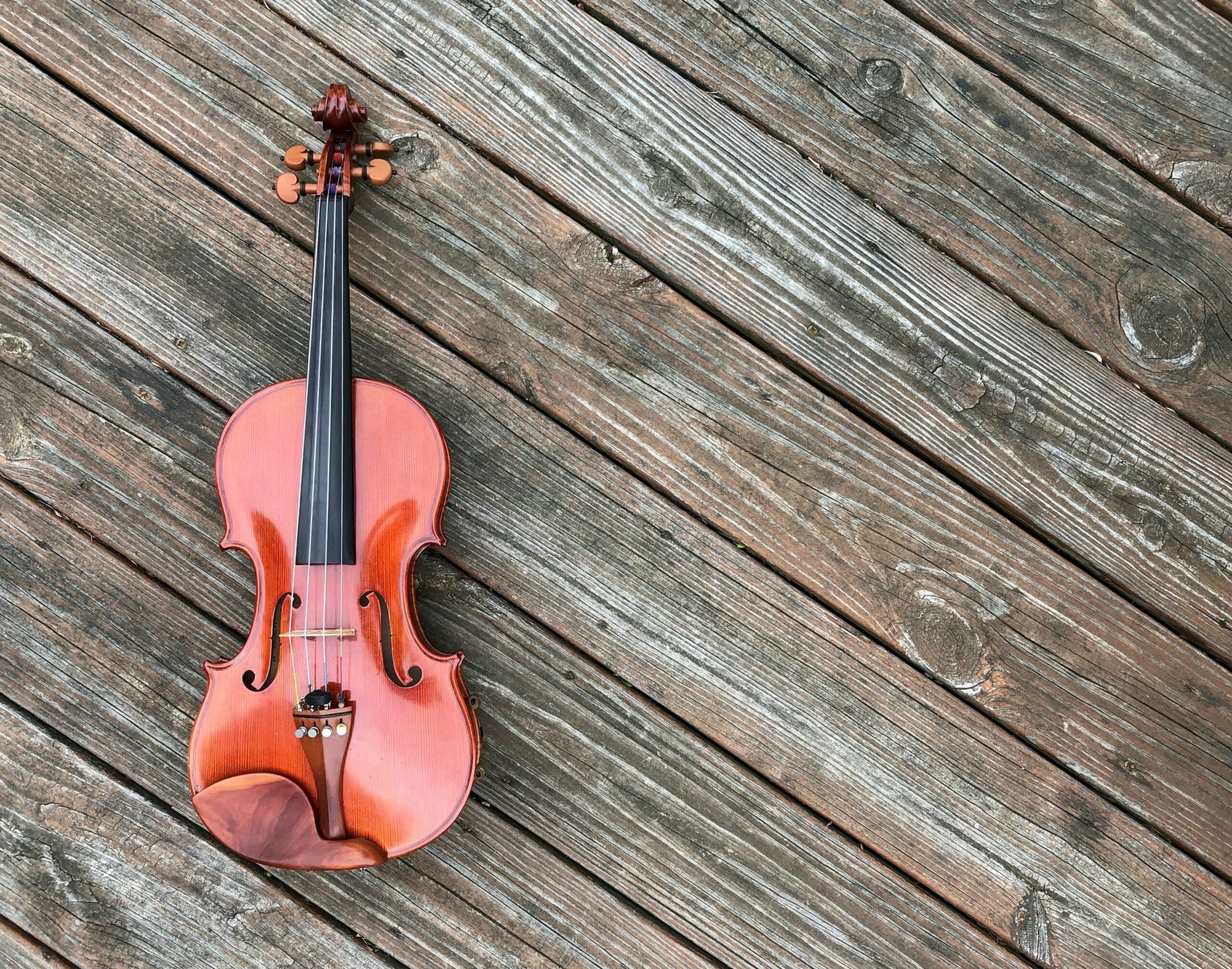
The bench in Carlos’s old violin workshop had been built for two people.
It was a wide workbench, made of heavy walnut, stained by decades of varnish and marked by the slip of sharp chisels. For forty-eight years, Carlos had sat on the left and Lucía, his wife, on the right. He was the luthier, the master of wood and form. She was the artist of sound, the one who tuned the soul of the instrument, adjusting the bridge and the sound post with a patience that Carlos found divine. The “sound post” is the name given to the small wooden post inside the instrument that transmits vibration and that Lucia called “the heart.”
Their life was a duet. Their silences were filled with shared work. He would pass her a newly assembled violin, “unfinished,” and she would take it, listen to it, and say with a smile: It doesn’t sing yet, Carlos. It’s still just wood.
When Lucía died, the silence ceased to be a communion and became a void.
The workshop became unbearable.
The walnut bench was now sadly large. The right side, where she used to sit, accumulated a thin layer of dust. Carlos closed the workshop door, put the key in a drawer, and devoted himself to sitting in the living room, letting the clocks mark a time that no longer had rhythm. The separation was total. It was a clean break, like a violin string snapped in the middle of a concert.
Months passed. Spring arrived, and with it, a commission he couldn’t refuse. It was a young cellist, a true prodigy, whose instrument had suffered a serious fracture in an accident. It was an antique, valuable cello, and the young man was heartbroken.
Carlos, feeling more like a carpenter than a luthier, accepted the job out of pure professional obligation.
He dusted off the workshop. Light streamed through the dirty window and illuminated Lucía’s empty side. Carlos clenched his jaw and focused on the broken wood.
It was mechanical work. He glued the fracture, secured the clamps, sanded the joint. But when it came time to mount the bridge and adjust the sound post, Carlos stopped.
That was her job.
He looked at the tools on the right side of the bench: the small knives, the tuners, the dentist’s mirror that Lucía used to look inside the instrument. He didn’t know how to do it. Not like that. He could put it in place, but he couldn’t make it sing.
He was about to give up. He sat down on his left side of the bench; an old man defeated by a piece of wood.
It doesn’t sing, Carlos, he remembered her voice, soft and mocking, crying. It’s still just wood.
Almost angrily, he took her tools. He inserted the soul into the cello. He tightened it. He plucked a string. The sound was dead, metallic. The gap was an abyss. He was not her.
He closed his eyes in frustration. And then, instead of trying, he began to remember.
He remembered the exact movement of Lucía’s wrist. How she tilted her head, not to look, but to listen to the tension of the wood. He remembered how she once explained to him: The sound post doesn’t go where it should, Carlos. It goes where the soundboard asks it to be. You have to feel the vibration in your fingers, not in your ears.
Carlos took a deep breath. He stopped thinking like Carlos, the builder, and tried to feel like Lucía, the listener.
His hands, gnarled with age, began to move with a delicacy he didn’t think he possessed. He moved the sound post a fraction of a millimeter. He tried again. Nothing. He moved it another fraction, toward the heart of the instrument.
And then, the impossible happened.
When he ran the bow across the A string, the cello didn’t sound: it exploded. The sound filled the workshop, a note so rich, deep, and full of nuances that Carlos felt even the dust on the beams vibrating in harmony.
He stood frozen.
He looked at his hands. Then he looked at the empty right side of the bench.
And he understood.
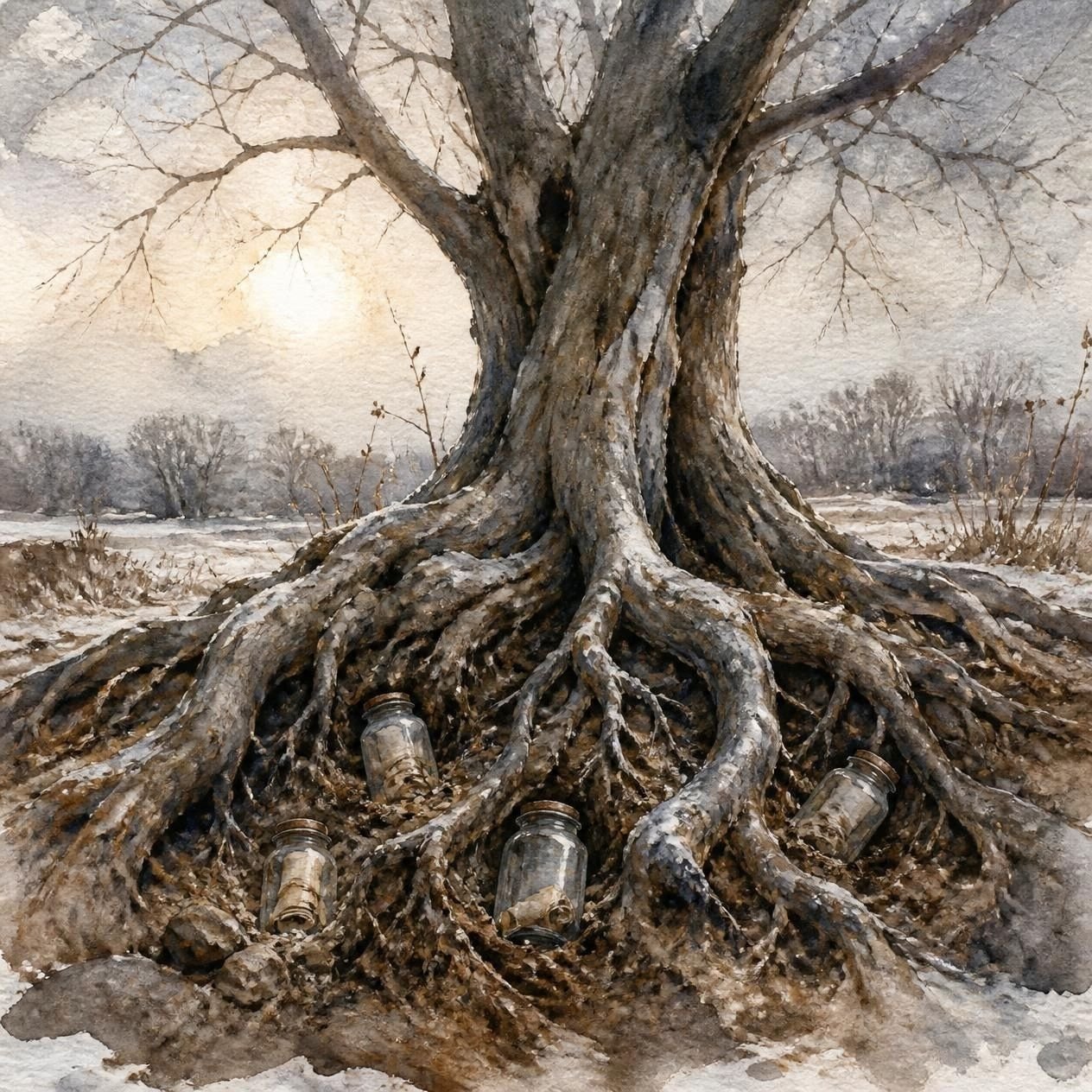
Lucía had not left. Everything she was—her patience, her wisdom, her perfect pitch—had been passed on to him during forty-eight years of shared silences. Her love was not in her body, which now lay under an oak tree, but in her sensitivity and her knowledge. And all of that was alive, right here, in his own hands and, above all, in his heart.
Death had ended her physical presence, but not her function. He had become the custodian of her genius.
Carlos finished adjusting the cello. When the young musician returned and played it, tears ran down his face. Maestro, he said in amazement, it sounds better than before. It’s… it’s as if it has a new sound post.
Carlos looked at the walnut bench, which no longer seemed too big, but complete.
No, said Carlos, with the first genuine smile in a year. It’s not a new sound post. It’s the same one as always, which has learned to sing louder.
—ooOoo—
On this All-Souls’ Day, let us pray for them, remembering that we will be the first to benefit from this prayer, with which we demonstrate not only our nostalgia for days gone by, but also our desire to embrace their presence in our hearts, to appreciate what we received from them and the role they played and continue to play in our life of faith.
_______________________________
In the Sacred Hearts of Jesus, Mary and Joseph,
Luis CASASUS
President