Gospel according to Saint Matthew 5:17-37
Jesus said to his disciples: “Do not think that I have come to abolish the law or the prophets. I have come not to abolish but to fulfill. Amen, I say to you, until heaven and earth pass away, not the smallest letter or the smallest part of a letter will pass from the law, until all things have taken place. Therefore, whoever breaks one of the least of these commandments and teaches others to do so will be called least in the kingdom of heaven. But whoever obeys and teaches these commandments will be called greatest in the kingdom of heaven. I tell you, unless your righteousness surpasses that of the scribes and Pharisees, you will not enter into the kingdom of heaven.
“You have heard that it was said to your ancestors, ‘You shall not kill; and whoever kills will be liable to judgment.’ But I say to you, whoever is angry with his brother will be liable to judgment, and whoever says to his brother, ‘Raqa,’ will be answerable to the Sanhedrin, and whoever says, ‘You fool,’ will be liable to fiery Gehenna. Therefore, if you bring your gift to the altar, and there recall that your brother has anything against you, leave your gift there at the altar, go first and be reconciled with your brother, and then come and offer your gift. Settle with your opponent quickly while on the way to court with him. Otherwise your opponent will hand you over to the judge, and the judge will hand you over to the guard, and you will be thrown into prison. Amen, I say to you, you will not be released until you have paid the last penny.
“You have heard that it was said, ‘You shall not commit adultery.’ But I say to you, everyone who looks at a woman with lust has already committed adultery with her in his heart. If your right eye causes you to sin, tear it out and throw it away. It is better for you to lose one of your members than to have your whole body thrown into Gehenna. And if your right hand causes you to sin, cut it off and throw it away. It is better for you to lose one of your members than to have your whole body go into Gehenna.
“It was also said, ‘Whoever divorces his wife must give her a bill of divorce.’ But I say to you, whoever divorces his wife —unless the marriage is unlawful— causes her to commit adultery, and whoever marries a divorced woman commits adultery. Again you have heard that it was said to your ancestors, ‘Do not take a false oath, but make good to the Lord all that you vow.’ But I say to you, do not swear at all; not by heaven, for it is God’s throne; nor by the earth, for it is his footstool; nor by Jerusalem, for it is the city of the great King. Do not swear by your head, for you cannot make a single hair white or black. Let your ‘Yes’ mean ‘Yes,’ and your ‘No’ mean ‘No.’ Anything more is from the evil one.”
The cockroach and the precepts
Luis CASASUS President of the Idente Missionaries
Rome, February 15, 2026 | VI Sunday in Ordinary Time
Sir 15: 16-210; 1Cor 2: 6-10; Mt 5: 17-37
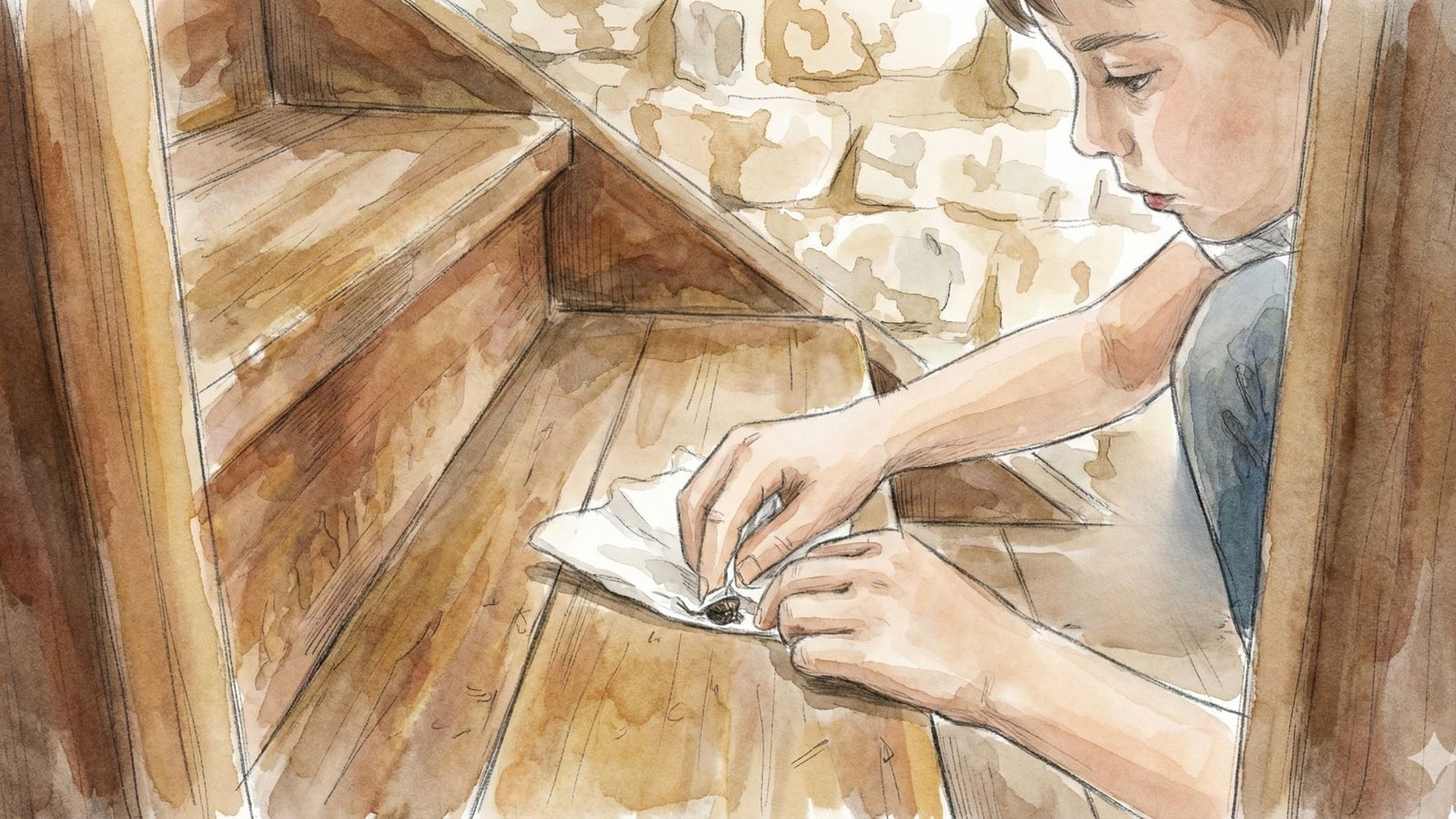
No one removed the dead cockroach from the staircase. The superior had to attend to delicate and urgent matters; he probably didn’t even see it. Father Eulalio wasn’t bothered by that insignificant creature. Father Nicasio indignantly wondered who should do it and why it was taking so long. Father Octavio was spending a week as a guest in the house, and when he saw the poor dead insect, he felt disgust and thought that the community was very careless.
In practice, our ways of contemplating the Law (written or unwritten) are selfish, full of indifference and evasion, with no reference to our neighbor.
However, a little girl, the cook’s daughter, climbed the stairs, took out a tissue, and removed the cockroach, even though it made her quite disgusted, but she didn’t want her mother to have to do it.
Small actions reveal who you really are, when no one is watching or when the task seems insignificant, because he who is faithful in little things is also faithful in much… Jesus says this right after telling the story of a steward (Lk 16:1–9) who, knowing he will be dismissed, reduces his master’s clients’ debts to win their favor. He is a morally questionable figure, but Jesus uses him to teach something deeper: sagacity, responsibility, and the intelligent use of the resources at hand, of the opportunities and occasions that come our way every day.
֍ So, to take advantage of today’s Gospel, perhaps the first thing I should do is be more aware of how I behave in what I consider to be of little importance or insignificant, such as ignoring a dead cockroach, doing nothing about a messy room, indulging in a lack of punctuality, forgetting that a brother has just visited the doctor…
“The little” in the parable of the unfaithful steward refers to material riches, even called “unrighteous riches” (Lk 16:11), not because they are evil in themselves, but because they are fleeting, limited, and often a source of injustice in the world. “The many things” point to true spiritual riches: eternal life, the mission of the Kingdom, divine trust, or profound responsibilities toward one’s neighbor.
And this is precisely what Christ repeats to us today, asking us to pay attention to the smallest commandments, those that we do not believe are important for our relationship with others, nor do we consider them to be written by God in our hearts.
This explains why our founding father, Fernando Rielo, speaks to us of “good taste,” which is not an inclination toward expensive objects or luxury, but rather toward everything that can be pleasing to our neighbor, everything that provides them with a little peace, relief, a feeling of being welcomed.
It is an aspect of charity that the Master emphasized on many occasions, such as when (Mk 14:3-9) in Bethany, a woman breaks a jar of very expensive perfume and pours it over him. Some of those present criticize her harshly: What a waste! That perfume could have been sold… However, Jesus’ reaction is elegant and full of good taste; he does not allow himself to be carried away by the obvious and cold logic of economic calculation, but highlights the beauty of the gesture and defends the woman with extraordinary delicacy: Leave her alone. She has done a beautiful thing for me. That “beautiful deed” (in Greek kalón ergon) literally means “a beautiful, noble, graceful act,” which certainly pleased Jesus so much that he declared: Wherever the gospel is proclaimed, throughout the whole world, what she has done will also be told in memory of her.
Similarly, Christ sees beauty in small things when he praises the modest offering of the poor widow or performs a simple and tactful act by writing on the ground before the woman accused of adultery.
Surely, trying to live with good taste is the best way to understand and live the Law, not only the Commandments, but the law written in our hearts, which we often disregard because we imagine that charity “is something else.” The prophets understood well that knowing this law of good taste, of pleasing God and neighbor, is a singular grace. Baruch expresses this well, extolling the tradition of his people: Blessed are we, O Israel, for what pleases God has been revealed to us (Baruch 4:4).
That is why St. Paul tells us in the Second Reading: None of the princes of this world has known it, for if they had known it, they would never have crucified the Lord of glory. These are laws based on nature, on the way God has created us. But above nature, we have been given the freedom to love in His way, because we share His likeness and image. Therefore, the laws that have been given to us are not against us, but reflect and indicate how to live in a way that does not disturb the flow of nature. When we go against it, we go against ourselves, thus destroying our happiness in life. In fact, this is what today’s First Reading says: Man has before him life and death. It is up to us to choose.
And we see how Christ begins his lesson today to the disciples by saying that we should not think that everything expressed in the Law and the Prophets has expired.
֍ When speaking about today’s Gospel, it is often emphasized that “mercy is above the Law,” but Jesus does not contrast Law with mercy, as if one canceled out the other. What he does is something more demanding: Christ radicalizes the Law, making us see, as we said before, that it is written and deeply rooted in us, and allowing us to see when we begin to stray from the path of justice by appropriating our neighbor in many ways, especially when we do not live poverty, chastity, and obedience, committing faults of action and omission in these Evangelical Counsels.
For example, it is common to focus on how Christ affirms that Anyone who looks at a woman with lust has already committed adultery with her in his heart, but we must also pay attention to what he says next: Anyone who divorces his wife, except in the case of fornication, causes her to commit adultery.
As is well known, in first-century Judaism, a man could divorce his wife very easily: all he had to do was hand over a bill of divorce. This was often done for trivial reasons, leaving the woman socially and economically vulnerable. In practice, she almost always had to remarry in order to survive. So, Jesus is saying: If you divorce her unjustly, you are responsible for the adultery she will be forced to commit in order to survive. By remarrying, she appears to be an adulteress, not because she wants to be, but because the first bond was unjustly broken.
In this way, Christ takes us much further than the law that forbids us to commit impure acts, even to have dishonest desires; it is a matter of protecting the chastity of our neighbor, which we fail to do if we unfortunately think that “it is none of my business.”
Let’s look at some examples.
- It happens to many young people who, due to a lack of sensitivity, cowardice, or selfishness:
* Do not set limits when they know that certain conversations, content, or environments disturb them internally, or when the same thing happens to those who participate in those conversations.
* Do not ask for help when they notice that they are falling into habits that damage their emotional balance, nor do they help their friends when they observe these situations in them, usually accompanied by ignorance of the fruits of chastity.
* Nor do they care for friendship, allowing ambiguous flirting that confuses the other person.
Here, the omission manifests itself as a failure to act responsibly regarding their own emotional growth.
- Many adults do not exercise their responsibility to educate others. This omission manifests itself innot offering guidance when they see that a young person is emotionally confused, or in not setting a good example in treating others with respect.
- Some married people do not talk about emotional needs, thus allowing the relationship to grow cold. This happens in various ways:
* They do not cultivate tenderness, patience, and attention to the other.
* They do not work on or concern themselves with the probable personal wounds that affect the intimate, emotional, and spiritual relationship.
Here, the omission is not doing what is necessary to love one’s spouse as the Gospel asks.
On the contrary, we see in the life of Christ how he carefully avoids creating emotional dependencies, vigorously seeking to direct people’s love toward God the Father.
His love is warm, close, compassionate… but always liberating, never possessive. And he constantly redirects people’s hearts toward the Father. This is strongly evident in many moments that can serve as inspiration for us:
- Jesus does not allow Mary Magdalene to cling to him (Jn 20:17). When Mary recognizes him with emotion after the resurrection, Jesus responds: Do not hold on to me; not because he rejects her love, but because Mary must learn to relate to him in a new way. In particular, her mission is not to “stay with him,” but to proclaim him. Jesus, in inviting her to elevate her love toward the Father and toward the mission, makes a gesture of tenderness and freedom at the same time.
- Jesus withdraws when the people want to hold him back (Lk 4:42–43) after healing many in Capernaum. He responds: I must proclaim the Kingdom to other cities as well, thus showing that He does not allow Himself to be “possessed” by one group and that His mission is greater than the emotional desire of those who want Him close to them.
- Jesus does not allow the disciples to become attached to His physical presence (Jn 16:7), so He tells them something surprising: It is better for you that I go away. In this way, they will not depend on his physical presence, and if he leaves, they will receive the Spirit and learn to live from the Father. Christ wants mature disciples, not dependent ones. It is an impressive lesson in affectivity.
- Jesus prevents the crowd from turning him into an emotional or political leader (Jn 6:15) after multiplying the loaves, because the people want to make him king. At that moment, the Master withdraws alone to the mountain and does not feed emotional or political expectations that would divert them from the Father. At the same time, he makes it clear that his identity does not depend on applause or mass affection.
- Jesus corrects Peter when he tries to “hold him back” emotionally (Mt 16:22–23). The great apostle, with sincere affection, referring to the cross, says to him: That cannot happen to you! Jesus responds firmly: You think like men, not like God, because Peter wants a Jesus without a cross, comfortable, close, “for him.” In this way, he invites him to elevate his love toward the Father’s plan.
- Jesus does not allow himself to be manipulated by family affections (Mk 3:33–35). When his family seeks him, he responds: My mother and my brothers are those who hear the word of God. In doing so, he does not reject his family, but he does not allow emotional ties to limit his mission and teaches that true relationship comes from the Father.
_______________________________
In the Sacred Hearts of Jesus, Mary and Joseph,
Luis CASASUS
President